What Counts as a Dental Emergency for Broken Teeth and Lost Fillings?
Wondering if a chipped tooth or lost filling is a dental emergency? Learn what requires urgent care and call our Long Beach team right away for fast relief.
Read More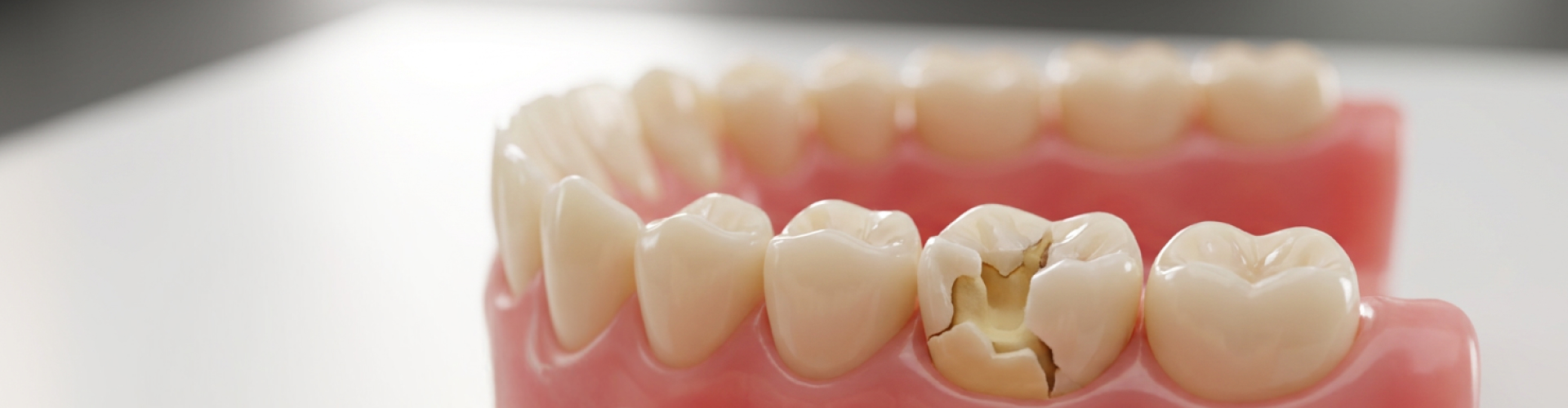
Not every cracked tooth or lost filling demands a same-day call — but some do, and waiting even 48 hours on the wrong one can mean the difference between a simple repair and a root canal. This guide helps Long Beach residents triage broken teeth and lost fillings using visible clues, so you know exactly where to go and how fast.
Most people judge urgency by pain. That's a mistake.
A tooth has three visible layers, and which one is exposed after a break tells you far more than pain alone — because exposed dentin causes zero discomfort in roughly a third of cases, yet bacterial invasion into the pulp chamber can begin within 48 to 72 hours. If you're unsure whether your situation qualifies as a dental emergency, the framework below can help you decide before you call.
Here's how to read what you're seeing:
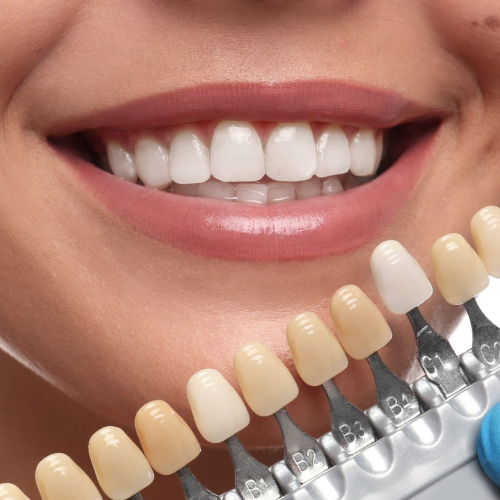
White (Enamel chip): The broken surface looks chalky white and feels smooth or slightly rough. No sensitivity when you breathe cold air. This is a cosmetic issue. A 1–2 week window to schedule a routine appointment is generally safe, though you should still call your dentist to confirm.
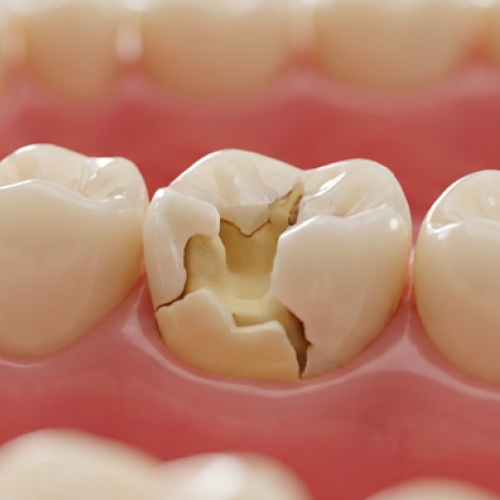
Yellow (Dentin exposure): The exposed surface looks creamy yellow or off-white, like the inside of an eggshell. You may feel a brief zing with cold water or air — or nothing at all. This is an urgent situation. Dentin is porous; bacteria track through microscopic tubules toward the pulp even when there is no pain. A 48–72 hour window is the clinical threshold. Call your dentist the same day for a next-day appointment.
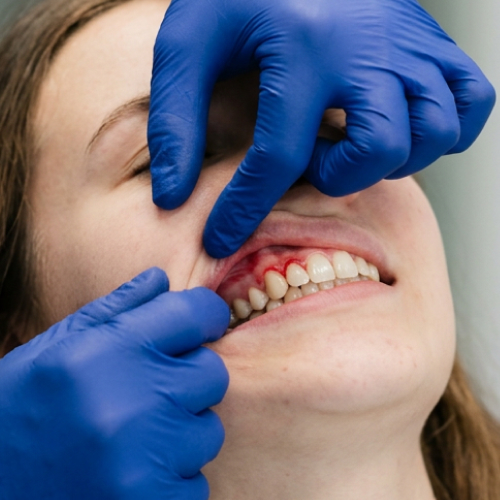
Red or Pink (Pulp exposure): A pinpoint red spot, visible bleeding from the tooth itself, or throbbing pain that doesn't stop. This is a true 24-hour emergency. Exposed pulp tissue becomes infected rapidly, and avoiding a root canal depends on how quickly the exposure is covered or treated. Call your dentist immediately.
According to the American Association of Endodontists, any tooth injury — including one that looks minor — requires immediate examination because neighboring teeth can sustain unnoticed damage detectable only by a thorough dental exam.
A lost filling is rarely a true emergency on a Friday night — but it becomes one faster than most people expect, and for a reason most articles never explain.
When a filling falls out, the exposed dentin is unprotected. Bacteria accumulate quickly in the empty space, and the soft dentin layer beneath decays significantly faster than enamel. Saltwater rinses, sugarless gum pressed into the cavity, or over-the-counter temporary filling material from a pharmacy can protect the tooth for 24–48 hours while you arrange an appointment. Healthline notes that failing to replace a filling within a few days risks decay progression and significant dentin sensitivity.
The bigger issue is what the dentist finds when you arrive — specifically, how much tooth structure remains.
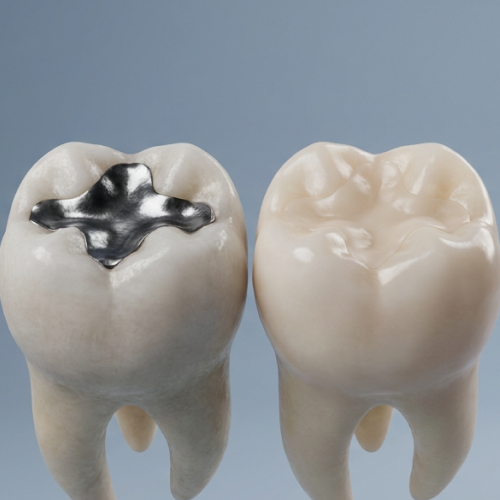
The cusp-loss rule matters here. A cusp is the raised outer chewing wall of a back tooth. If a break or decay has removed more than roughly half the tooth's original structure, or if one of those outer walls is gone, placing a new cavity filling is structurally unsafe. A filling packed into a cusp-deficient tooth acts as a wedge under chewing forces, transmitting stress downward and risking a catastrophic vertical root fracture — the kind that makes the tooth unrestorable. In that scenario, a dentist will place a sedative temporary filling or a stainless steel band to stabilize the tooth until a tooth crown or onlay can be fabricated. That temporary step is not a lesser treatment; it's the correct one.
If your filling came out and the remaining tooth feels sharp, crumbly, or visibly reduced in height, treat it as an urgent call — not a "wait and see."
The most common piece of advice on this topic — "the ER can only give you pain medication" — is both true and dangerously incomplete.
ERs cannot bond, fill, crown, or reimplant teeth. They have no dental handpieces, no dental adhesives, no restorative materials. A hospital emergency department can prescribe antibiotics and analgesics, and it can image your jaw. That's the extent of definitive dental care available there.
So when does the ER become the right choice?
The Cleveland Clinic advises that broken facial bones, bleeding that won't stop, or severe pain unresponsive to medication requires emergency room care. Beyond those, there are specific anatomical warning signs that indicate a spreading infection has crossed into life-threatening territory:
If any of these are present, go directly to the nearest emergency room. Do not wait for a dental office to open.
For everything else — broken teeth, lost fillings, knocked-out teeth, dental abscesses without neck involvement — an on-call emergency dentist is the correct destination. As the ADA outlines, dentists are expected to be available to patients of record for emergencies at any hour, with after-hours contact information provided.
A knocked-out permanent tooth has the best chance of survival if it's returned to its socket within one hour. Hold the tooth by the crown only — never the root. Rinse it gently with water if dirty, but don't scrub or remove any tissue. If reinsertion isn't possible, store it in milk or between your cheek and gum, and get to a dentist immediately.
Cracked teeth are trickier. According to the Cleveland Clinic, cracks can extend through the pulp to the root and may not be visible or painful initially. A crack that reaches the pulp requires endodontic root canal therapy; one that splits the root may mean extraction. Early evaluation is the only way to determine which path applies.
For chipped teeth, apply the white-yellow-red framework above. A small enamel chip with no sensitivity can wait a week. A chip that exposes yellow dentin — even without pain — warrants a call within 24 hours to schedule a next-day appointment.
WebMD recommends applying a cold compress to the outside of the cheek to manage swelling after any tooth injury, and avoiding aspirin placed directly against gum tissue, as it can burn soft tissue.
Dental emergencies don't follow business hours, and neither does the need for clear answers. Long Beach Family Dentist serves patients throughout the Long Beach area and is available to help you determine whether your situation needs same-day attention or can be safely scheduled. Whether you need a routine cleaning and exam or urgent care for a broken tooth, call our office, describe what you're seeing, and we'll guide you to the right next step.
Medical disclaimer: This article is for informational purposes only and does not constitute professional dental or medical advice, diagnosis, or treatment. Always consult a licensed dentist or qualified healthcare provider regarding any dental concern or emergency.
Fresh news from the dental world


Mon 8AM - 5PM
Tue 8AM - 5PM
Wed-Thu 8AM - 5PM
Fri 8AM - 5PM
Sat 9AM - 3PM
Sun Closed
Check out what our patients are saying in Long Beach, CA...


“Answers any questions...”
I been a patient here for over twelve years. Andrea greeted me and got my folder set up. Toni is very friendly and answers any questions you have promptly, when I always come in she greets you with a smile and makes your appointment enjoyable. Today Jovani and Dr. Joan made this experience great. I recommend this dentist for new patients.

“Clean and friendly...”
Very clean and friendly crew. I really enjoyed myself.

“My favorite dentist...”
The service here is amazing and they make you feel comfortable. I'm one of those people that hates to go to the dentist and the dentists that I went to in the past were not that great with service. Overall I found my favorite dentist service now at Long Beach Family Dentist.

“A positive experience...”
Very clean and organized office! Entire staff was pleasant and friendly, and seems interested in ensuring I had a positive experience. Will definitely return! Affordable rates.
“Answers any questions...”
I been a patient here for over twelve years. Andrea greeted me and got my folder set up. Toni is very friendly and answers any questions you have promptly, when I always come in she greets you with a smile and makes your appointment enjoyable. Today Jovani and Dr. Joan made this experience great. I recommend this dentist for new patients.
“Clean and friendly...”
Very clean and friendly crew. I really enjoyed myself.
Check out our accreditations, sources, and relationships in the wide world of dentistry...


Check us out and follow our Long Beach, CA practice on social media...