Dental Implants vs. Bridges: Pain, Longevity, and Which Works Best for Front Teeth
Comparing dental implants vs. bridges for pain, lifespan, and front teeth? Discover the best option for your smile and schedule your consultation today!
Read More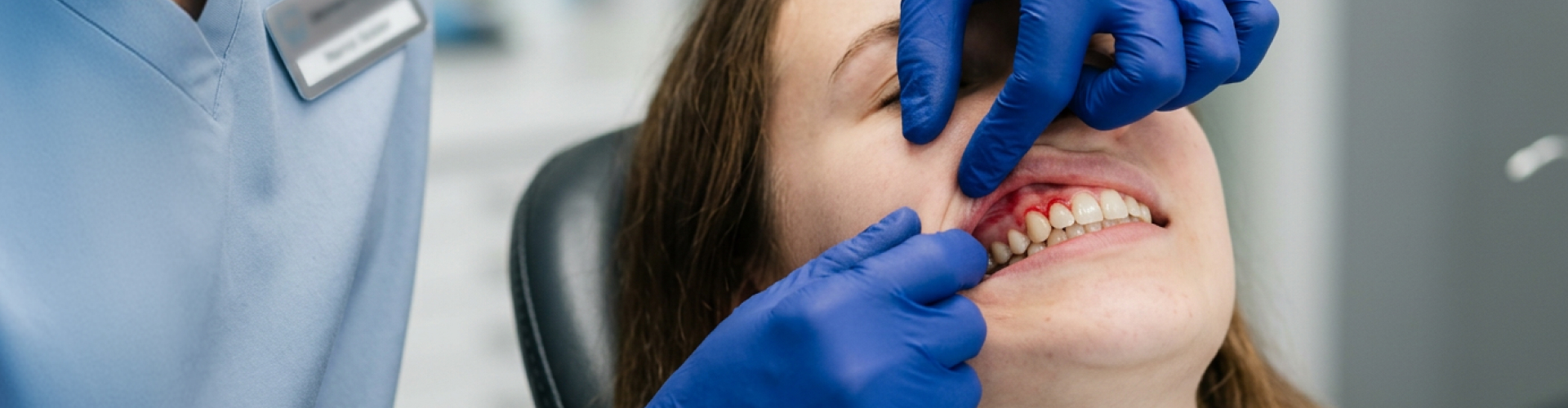
Scaling and root planing removes bacterial buildup below the gumline to stop gum disease gingivitis from destroying bone and tissue. The procedure is well-tolerated with proper numbing, but what happens after treatment — the healing phase, the follow-up measurements, and the aesthetic changes — is what most patients aren't prepared for.
Most patients leave a deep cleaning thinking the hard part is over. It is — but the six-week re-evaluation appointment is where your dentist learns whether the treatment worked.
For Long Beach patients, at that visit, your hygienist re-probes every pocket around each tooth. According to the NIDCR, healthy pockets measure between 1 and 3 millimeters. Scaling and root planing is typically recommended when pockets exceed 4mm. So the benchmark isn't just "did your gums feel better?" — it's measurable.
A pocket that dropped from 7mm to 4mm is a genuine clinical win. The tissue reattached, inflammation reduced, and home care is working. But a pocket that stays at 5mm or deeper — especially with continued bleeding on probing — signals that bacteria are still active below the gumline. That outcome typically triggers a referral conversation about surgical options: osseous surgery to reshape the bone, bone grafting to restore lost structure, or laser-assisted procedures targeting infected tissue.
Understanding this upfront changes how you approach the recovery. Your compliance with brushing, flossing, and follow-up appointments directly influences which outcome you land in.
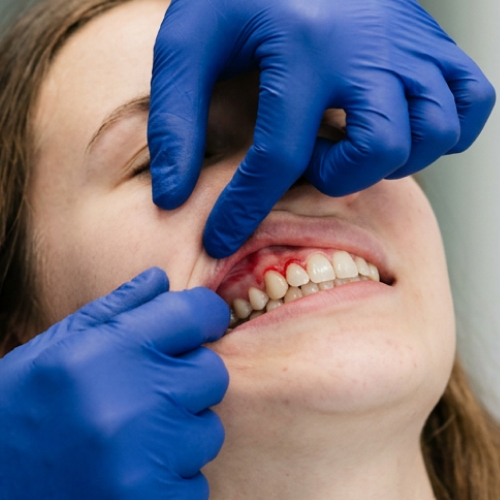
Here's something competitors rarely explain: after a deep cleaning, your gums often look worse before they look better. Inflamed gum tissue is swollen. Once the infection clears, that swelling resolves — and the gums tighten and recede slightly, revealing dark triangular gaps between teeth and exposed root surfaces.
This is biology, not damage. The gum tissue isn't gone — it was never healthy to begin with. Those gaps are called open embrasures, and the exposed root surface is cementum, which is far more sensitive to temperature than enamel.
For sensitivity, your dentist may apply an in-office fluoride varnish immediately after treatment to seal exposed cementum. At home, potassium nitrate toothpastes (many sold as "sensitivity" formulas) calm the nerve response over two to four weeks. Avoid pro teeth whitening toothpastes during this period — the abrasives aggravate exposed roots.
For cleaning those open embrasures, standard floss often slips right through without contacting the sides. Interdental brushes sized specifically for wider gaps — your hygienist can measure the correct size — clean the proximal surfaces without traumatizing the healing tissue. Using an oversized brush forces the wire against the root, which causes more recession. Sizing matters.
Pain anxiety is the most common reason patients delay treatment for gum disease — and often the most avoidable one. As Healthline explains, scaling and root planing involves removing plaque and tartar from below the gumline, which requires effective anesthesia to be comfortable.
Traditional local injections (nerve blocks) are reliable and work well for deeper pockets. The tradeoff is the familiar numb lip and cheek that can last two to four hours post-appointment.
A needle-free alternative — subgingival anesthetic gel containing lidocaine and prilocaine — is applied directly into the pocket. It sets into a gel that numbs the tissue locally without systemic spread. There's no injection, no facial numbness, and no lingering paralysis. For shallower pockets (generally 4–6mm), this approach is often sufficient. For very deep pockets or patients with high anxiety requiring more profound anesthesia, a traditional block remains more effective.
Treatment can also be staged quadrant-by-quadrant across two to four appointments, limiting how much anesthetic is used at once and giving tissue time to begin healing between sessions. The ADA's guidelines on nonsurgical periodontitis treatment support scaling and root planing as the standard initial approach — and staging it thoughtfully reduces both physical and psychological burden.
Gum disease begins with plaque — the bacterial film that forms on teeth daily. When plaque hardens into tartar, it can only be removed professionally. The NCBI's periodontitis treatment overview outlines how systematic treatment requires removing subgingival deposits, followed by structured re-evaluation and supportive periodontal therapy.
Scaling removes hardened deposits above and below the gumline. Root planing smooths the root surface so bacteria have fewer places to anchor and so the gum tissue can reattach cleanly. Research cited by the ADA's MouthHealthy resource found scaling and root planing beneficial for patients with chronic periodontitis — a condition affecting nearly half of American adults over 30.
The procedure doesn't reverse bone loss that's already occurred. What it does is stop the progression, reduce pocket depth, and create conditions where your immune system and home care can maintain stability long-term. That's a meaningful outcome — especially when untreated periodontitis is linked to increased cardiovascular complications, as Harvard Health reports. Staying current with your cleaning and exam appointments is one of the most effective ways to catch and manage periodontal disease before it advances.
If you've noticed bleeding gums, sensitivity, or it's been a while since your last periodontal evaluation, don't wait for symptoms to worsen. A dental emergency can arise quickly when gum disease goes untreated, so early intervention matters. Long Beach Family Dentist serves patients throughout the Long Beach metro area with comprehensive gum disease evaluation and treatment. Contact us to schedule your appointment and find out exactly where your gum health stands.
Medical disclaimer: This article is for informational purposes only and does not constitute professional dental or medical advice. Always consult a licensed dentist for diagnosis and treatment recommendations specific to your situation.
Fresh news from the dental world



Mon 8AM - 5PM
Tue 8AM - 5PM
Wed-Thu 8AM - 5PM
Fri 8AM - 5PM
Sat 9AM - 3PM
Sun Closed
Check out what our patients are saying in Long Beach, CA...


“My favorite dentist...”
The service here is amazing and they make you feel comfortable. I'm one of those people that hates to go to the dentist and the dentists that I went to in the past were not that great with service. Overall I found my favorite dentist service now at Long Beach Family Dentist.

“Clean and friendly...”
Very clean and friendly crew. I really enjoyed myself.

“A positive experience...”
Very clean and organized office! Entire staff was pleasant and friendly, and seems interested in ensuring I had a positive experience. Will definitely return! Affordable rates.

“Answers any questions...”
I been a patient here for over twelve years. Andrea greeted me and got my folder set up. Toni is very friendly and answers any questions you have promptly, when I always come in she greets you with a smile and makes your appointment enjoyable. Today Jovani and Dr. Joan made this experience great. I recommend this dentist for new patients.
“My favorite dentist...”
The service here is amazing and they make you feel comfortable. I'm one of those people that hates to go to the dentist and the dentists that I went to in the past were not that great with service. Overall I found my favorite dentist service now at Long Beach Family Dentist.
“Clean and friendly...”
Very clean and friendly crew. I really enjoyed myself.
Check out our accreditations, sources, and relationships in the wide world of dentistry...


Check us out and follow our Long Beach, CA practice on social media...