Dental Implants vs. Bridges: Pain, Longevity, and Which Works Best for Front Teeth
Comparing dental implants vs. bridges for pain, lifespan, and front teeth? Discover the best option for your smile and schedule your consultation today!
Read More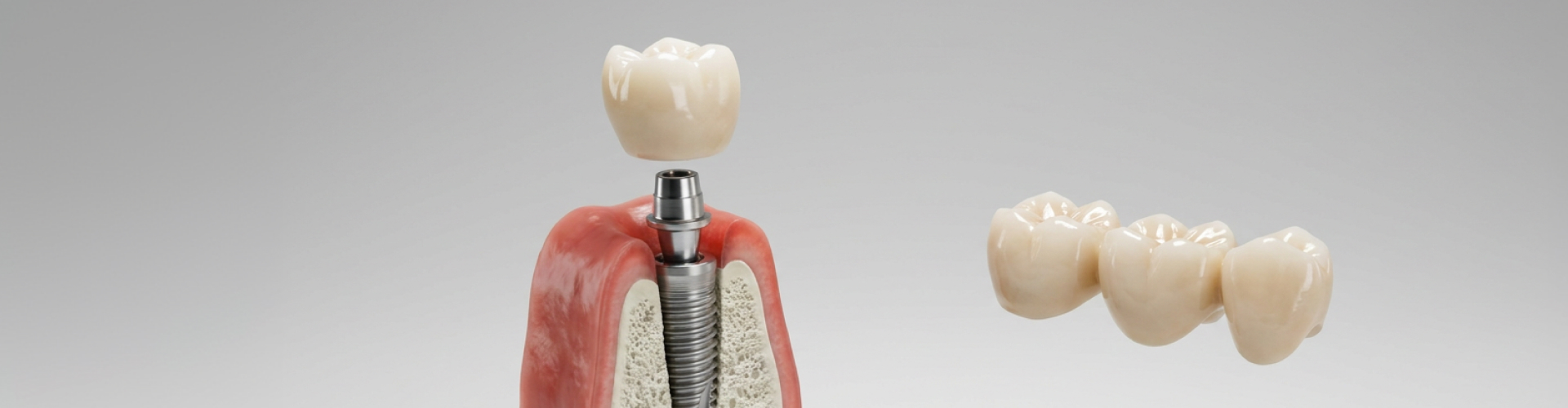
Dental implants and bridges each come with distinct trade-offs around discomfort, lifespan, and aesthetics. Understanding the hidden long-term risks — not just the day-of experience — is what separates a smart tooth replacement decision from one you'll regret years later.
For Long Beach-area patients weighing their options, most comparisons stop at the obvious: implant surgery sounds more intense, so implants must hurt more. That framing misses something important.
Yes, implant placement involves minor oral surgery. Expect soft-tissue soreness for a few days, managed comfortably with standard over-the-counter options. That discomfort follows a predictable healing curve and resolves within a week or two.
Bridges skip surgery — but they require aggressively grinding down the two healthy teeth on either side of the gap to serve as anchors. That enamel removal is permanent. And here's what most articles don't mention: grinding down a previously healthy tooth puts the nerve inside it under significant thermal and mechanical stress. A meaningful percentage of those anchor teeth experience pulp necrosis — nerve death — months after the procedure. The result isn't mild sensitivity. It's acute, throbbing pain requiring an emergency endodontic root canal on a tooth that was perfectly fine before the bridge was placed.
So the real comparison isn't surgical soreness versus no soreness. It's predictable short-term healing (implant) versus a lower upfront experience with a delayed risk of serious nerve complications in previously healthy teeth (bridge). Healthline's overview of dental bridges and implants confirms that bridges carry a higher risk of cavities and complications in surrounding teeth — a pattern that begins with the preparation itself.
Standard lifespan statistics tell part of the story. Research published in PMC notes high bridge survival rates under ideal conditions, but the clinical reality of failure is where the comparison shifts dramatically.
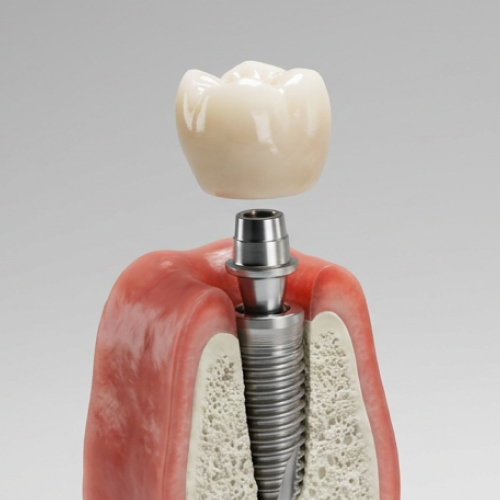
Bridges typically last 10 to 15 years. Dental implants, when properly placed and maintained, can last 15 years or more — with survival rates around 97% at the 10-year mark, according to Healthline's implant benefits overview.
What matters more than those numbers is how each option fails.
When a bridge fails, it almost always fails due to recurrent decay developing under the crowns on the anchor teeth. Those anchor teeth were already structurally compromised during preparation. By the time decay takes hold, extraction is frequently unavoidable. What started as a single missing tooth has now become a three-tooth gap — requiring a much larger, more complex restoration. One problem has cascaded into three.
When an implant fails, the adjacent natural teeth are completely untouched. The implant site can often be retreated without any collateral damage to neighboring teeth. The failure is contained.
This domino effect of bridge failure is rarely discussed upfront, but it's one of the most clinically significant long-term factors in the decision. Choosing a bridge to avoid surgery today can mean significantly more invasive treatment 15 years from now.
Front teeth add a layer of complexity that generic "implants look more natural" advice glosses over entirely: gum tissue biology.
Patients have different gingival biotypes — thin/scalloped gum tissue versus thick/flat gum tissue. This distinction matters enormously for front-tooth aesthetics.
Patients with thin gum biotypes face two specific risks with implants in the aesthetic zone. First, the titanium implant post can show through as a gray shadow at the gumline over time. Second, and more visibly, the interdental papilla — the small triangle of gum tissue between teeth — can recede after implant placement, leaving dark triangular gaps between front teeth. These "black triangles" are difficult to correct and can be more noticeable than the original missing tooth.
In these cases, a bridge using an ovate pontic design (where the artificial tooth is shaped to press gently into the gum tissue) can actually sculpt the gumline more predictably, producing superior aesthetic dentistry results for patients with high smile lines and thin tissue.
Patients with thick, flat gum biotypes typically tolerate implants in the front of the mouth without these complications. A customized zirconia implant abutment — rather than a standard titanium one — also reduces the gray show-through risk significantly.
CareCredit's implant vs. bridge comparison notes that both options can deliver natural-looking results, but the right choice depends heavily on individual anatomy and your dental professional's assessment — exactly the kind of evaluation that gum biotype screening provides.
The short answer: implants are often the better long-term choice for front teeth, but not universally. Gum tissue thickness and smile line height should guide that decision, not a blanket recommendation.
Neither option is universally superior. Implants offer better long-term structural independence, preserve jawbone, and don't put adjacent teeth at risk. Bridges remain a reasonable option when surgery isn't possible, when bone volume is insufficient for an implant, or when gum anatomy makes an ovate pontic bridge the smarter aesthetic choice.
What's clear is that the "which hurts more" question is the wrong starting point. The better questions are: What does failure look like in 15 years? What does my gum tissue look like? And what are the long-term consequences for my neighboring teeth?
Those are exactly the questions worth exploring with a dentist before committing to either path. A routine cleaning and exam is also a great opportunity to discuss tooth replacement options with your dentist and get a clearer picture of your oral health before making any decisions.
If you're weighing dental implants versus a bridge in the Long Beach area, a thorough evaluation makes all the difference. Long Beach Family Dentist provides comprehensive tooth replacement consultations for patients throughout Long Beach, California — helping you understand your options clearly before making a decision.
This article is for informational purposes only and does not constitute dental or medical advice. Always consult a licensed dental professional for diagnosis and treatment recommendations specific to your situation.
Fresh news from the dental world



Mon 8AM - 5PM
Tue 8AM - 5PM
Wed-Thu 8AM - 5PM
Fri 8AM - 5PM
Sat 9AM - 3PM
Sun Closed
Check out what our patients are saying in Long Beach, CA...


“My favorite dentist...”
The service here is amazing and they make you feel comfortable. I'm one of those people that hates to go to the dentist and the dentists that I went to in the past were not that great with service. Overall I found my favorite dentist service now at Long Beach Family Dentist.

“Clean and friendly...”
Very clean and friendly crew. I really enjoyed myself.

“A positive experience...”
Very clean and organized office! Entire staff was pleasant and friendly, and seems interested in ensuring I had a positive experience. Will definitely return! Affordable rates.

“Answers any questions...”
I been a patient here for over twelve years. Andrea greeted me and got my folder set up. Toni is very friendly and answers any questions you have promptly, when I always come in she greets you with a smile and makes your appointment enjoyable. Today Jovani and Dr. Joan made this experience great. I recommend this dentist for new patients.
“My favorite dentist...”
The service here is amazing and they make you feel comfortable. I'm one of those people that hates to go to the dentist and the dentists that I went to in the past were not that great with service. Overall I found my favorite dentist service now at Long Beach Family Dentist.
“Clean and friendly...”
Very clean and friendly crew. I really enjoyed myself.
Check out our accreditations, sources, and relationships in the wide world of dentistry...


Check us out and follow our Long Beach, CA practice on social media...