Are Veneers Really Worth the Long-Term Cost Compared to Braces?
Comparing veneers vs braces cost? Discover which smile makeover fits your budget and goals. Call Long Beach Family Dentist today to book your consultation!
Read More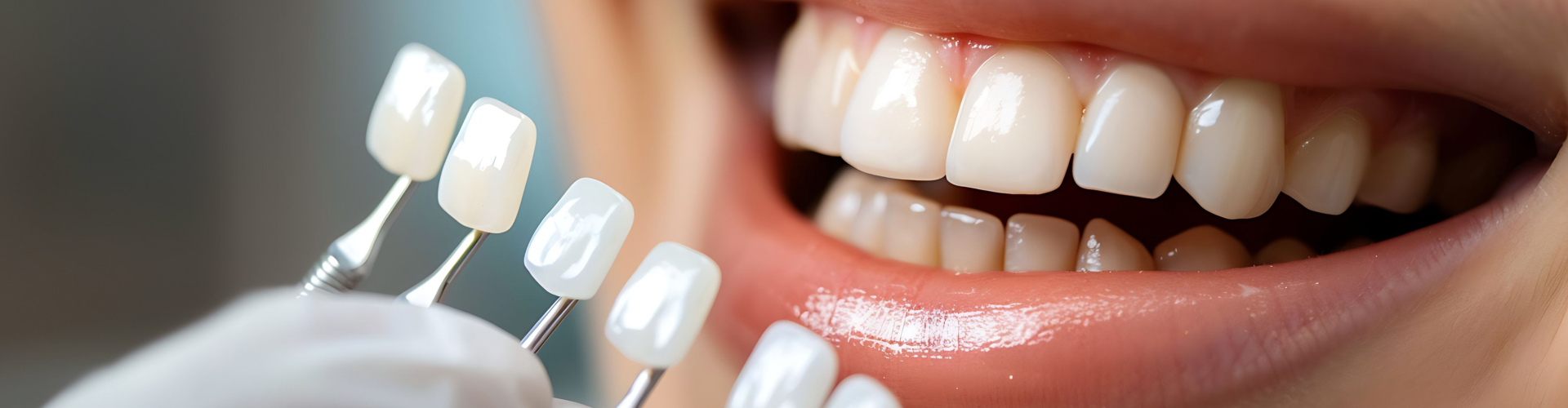
Veneers can transform your smile quickly, but they carry a replacement cycle that compounds over a lifetime. Braces address the root cause of misalignment and may protect more tooth structure long-term. The right choice depends on your bite, your goals, and how your teeth are positioned to begin with.
For Long Beach-area patients, veneers are often presented as a one-time purchase. They aren't. According to Healthline, porcelain veneers last roughly 10 to 15 years on average, with some research citing shorter lifespans when teeth weren't adequately prepared beforehand.
Do the math on a patient who gets veneers in their late twenties. By their sixties, they're looking at two or three full replacement cycles — each requiring the same prep work on teeth that have progressively less natural enamel to work with. Enamel removal is irreversible. Every replacement round starts from a structurally weaker baseline than the one before it.
There's also the maintenance layer. Night guards are commonly recommended to protect porcelain from grinding forces. Composite veneers require more frequent replacement than porcelain. And if a veneer de-bonds or chips between cycles, that's an unplanned repair on top of a planned one.
Braces, by contrast, move existing teeth into better positions without removing healthy tooth structure. A single course of adult orthodontics, paired with a long-term retainer, addresses the alignment issue once. Retainer replacements are the main recurring expense — not full arch restorations.
The trajectory is very different over 30 years. Patients who frame the decision as "veneers now vs. braces now" are only looking at the first chapter of a much longer story. American Dental Association guidelines consistently emphasize preserving natural tooth structure as a foundational principle of long-term oral health.
Here's what most cosmetic dentistry content skips entirely: veneers placed over an uncorrected bite problem are structurally at risk from day one.
A WebMD overview on veneers and crowns notes that veneers are a strong option for discoloration, uneven spacing, and chips — but they're not designed to absorb the shear forces that come from a deep overbite, an edge-to-edge bite, or a crossbite. When those underlying occlusal issues go unaddressed, porcelain fractures. Not because the veneer was poorly made, but because it was placed in a mechanically hostile environment.
Patients with these bite patterns who choose veneers to "fast-track" straight teeth often find themselves dealing with chipped or de-bonded restorations within 12 to 24 months. That's not a materials failure — it's a sequencing failure. Braces aren't always just cosmetic. For specific bite types, orthodontic correction is functionally non-negotiable before any cosmetic restoration can hold long-term.
Mouthhealthy.org emphasizes that veneers should only be placed by a licensed dentist who can evaluate whether teeth are healthy enough to support them — which includes assessing bite mechanics, not just surface appearance.
If a dentist recommends teeth straightening braces before veneers, that's not upselling. That's protecting the investment you're about to make.
The framing of "veneers vs. braces" misses the most practical option for many patients: using both, in sequence, to reduce the total number of veneers needed.
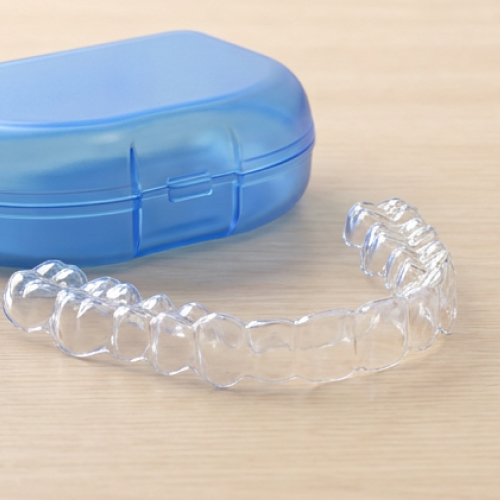
A full smile makeover involving 8 to 10 veneer units is a significant commitment of tooth structure, time, and resources. But if arch symmetry and mild crowding are corrected first — through a shorter course of Invisalign clear aligner treatment — the number of teeth that actually need cosmetic refinement often drops to just 2 to 4. Those remaining veneers can be placed more conservatively, with less enamel removal, because the teeth are already well-positioned.
Healthline's overview of dental veneers points out that no-prep and minimal-prep veneers are viable when teeth are already in good alignment — which is exactly the situation a pre-aligner patient ends up in. Less prep means more preserved enamel, which means a stronger starting point for every future replacement cycle.
This hybrid approach isn't widely discussed in patient-facing content, but it's worth raising at a consultation. The goal isn't to do more treatment — it's to do the right sequence of treatment so each phase supports the next one rather than working against it.
For the right candidate, yes. WebMD's overview of veneers outlines them as a strong solution for discolored, worn, chipped, or irregularly shaped teeth where alignment is already sound. When the bite is stable and the teeth are healthy, veneers deliver reliable cosmetic results. Our aesthetic dentistry services are designed with exactly these principles in mind.
But "worth it" depends on what problem you're actually solving. If the core issue is misalignment or bite collapse, veneers mask the symptom without treating the cause — and the replacement cycle makes that a compounding problem over time. If the issue is purely cosmetic on otherwise well-positioned teeth, veneers make a lot of sense.
The honest answer is that neither veneers nor braces are universally superior. What matters is the sequence, the starting condition of your teeth, and whether the treatment plan accounts for what your smile will need 20 years from now — not just next year.
Long Beach Family Dentist works with patients throughout Long Beach to evaluate whether orthodontics, veneers, or a combined approach makes the most sense for their specific teeth, bite, and long-term goals. If you're weighing your options, scheduling a cleaning and exam is the right place to start — not a side-by-side comparison online.
Medical disclaimer: This article is for informational purposes only and does not constitute dental or medical advice. Always consult a licensed dental professional before beginning any treatment.
Fresh news from the dental world

Mon 8AM - 5PM
Tue 8AM - 5PM
Wed-Thu 8AM - 5PM
Fri 8AM - 5PM
Sat 9AM - 3PM
Sun Closed
Check out what our patients are saying in Long Beach, CA...


“My favorite dentist...”
The service here is amazing and they make you feel comfortable. I'm one of those people that hates to go to the dentist and the dentists that I went to in the past were not that great with service. Overall I found my favorite dentist service now at Long Beach Family Dentist.

“Clean and friendly...”
Very clean and friendly crew. I really enjoyed myself.

“A positive experience...”
Very clean and organized office! Entire staff was pleasant and friendly, and seems interested in ensuring I had a positive experience. Will definitely return! Affordable rates.

“Answers any questions...”
I been a patient here for over twelve years. Andrea greeted me and got my folder set up. Toni is very friendly and answers any questions you have promptly, when I always come in she greets you with a smile and makes your appointment enjoyable. Today Jovani and Dr. Joan made this experience great. I recommend this dentist for new patients.
“My favorite dentist...”
The service here is amazing and they make you feel comfortable. I'm one of those people that hates to go to the dentist and the dentists that I went to in the past were not that great with service. Overall I found my favorite dentist service now at Long Beach Family Dentist.
“Clean and friendly...”
Very clean and friendly crew. I really enjoyed myself.
Check out our accreditations, sources, and relationships in the wide world of dentistry...


Check us out and follow our Long Beach, CA practice on social media...