Can a Smile Makeover Fix Crooked Teeth Without Braces Safely?
Can a smile makeover fix crooked teeth without braces? Discover safe cosmetic dentistry options to straighten your smile. Schedule your visit in Long Beach today!
Read More
A smile makeover isn't just "more procedures" — it's a coordinated treatment strategy that considers your bite, bone, gums, and tooth structure together. Choosing individual veneers or crowns without that bigger picture can lead to mismatched results, premature failures, and irreversible tooth damage that a comprehensive plan would have avoided.
Most people searching for veneers or crowns are focused entirely on appearance. That's understandable. For Long Beach-area patients, understanding how these treatments interact is crucial. But here's what competing options rarely explain: if your bite isn't analyzed first, even beautifully crafted porcelain restorations can fail within a few years.
This is where the Trial Smile phase separates a smile makeover from piecemeal dentistry. Before any permanent porcelain is fabricated, a cosmetic dentist creates a temporary diagnostic mock-up — often called a wax-up or provisional restoration — that replicates your planned final result in acrylic. You wear it. You eat with it. You speak with it.
That testing period reveals critical information. Does the new tooth length affect your "s" sounds? Does your back molar hit too hard on the new bite plane? Are there chewing forces concentrated on one veneer that will eventually shear it off? All of this gets identified and corrected before anything permanent is cemented.
Patients who simply book individual crowns or veneers to fix cosmetic concerns often skip this phase entirely. If you have even mild bruxism or a minor misalignment, placing restorations without calibrating the entire chewing system is a significant risk. According to WebMD's cosmetic dentistry overview, maintenance needs and bite considerations are essential factors to clarify before any cosmetic procedure begins. Exploring aesthetic dentistry options with a comprehensive evaluation can help ensure your restorations are planned with the full picture in mind.
A smile makeover builds this diagnostic protection in from the start. Individual procedures typically don't.
This is the angle that rarely gets discussed when patients compare individual cosmetic crowns to a full smile makeover.
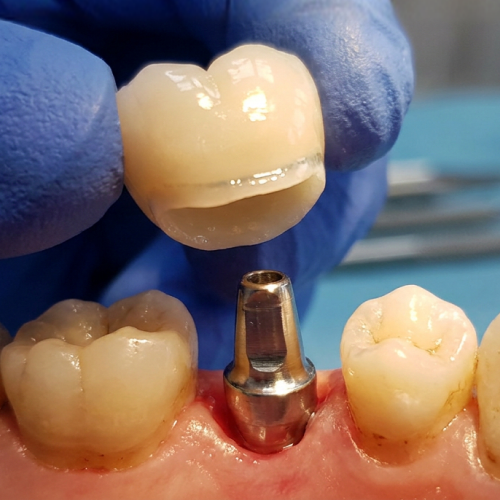
A tooth crown requires removing a substantial portion of your natural tooth structure — often 60–70% — to create room for the restoration to fit over the entire tooth. As Healthline explains in their veneers vs. crowns comparison, a crown is approximately 2mm thick and wraps around the whole tooth, requiring aggressive preparation even on teeth that are structurally sound.
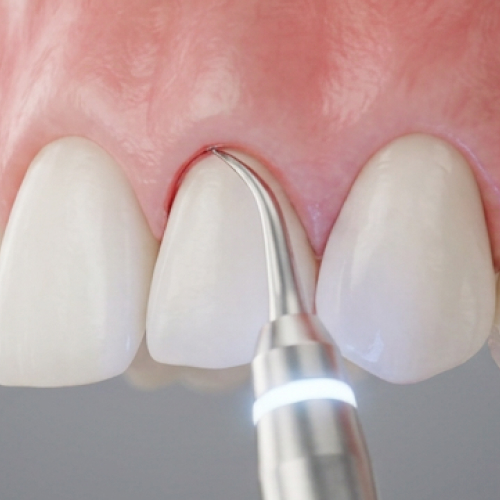
A smile makeover, by contrast, is built around a minimally invasive philosophy. The treatment plan might combine pre-treatment clear aligners to reposition teeth before any enamel is touched, conservative gum contouring to adjust tissue levels, and ultra-thin veneers (as thin as 0.3–0.5mm) that preserve up to 90% of your natural enamel. Crowns within that same plan are reserved for teeth that genuinely need full coverage — those with root canals, large existing restorations, or significant structural damage.
Research published in PMC confirms that direct and indirect veneers represent a minimally invasive category of aesthetic restoration, designed specifically to preserve natural tooth structure while delivering long-lasting results.
When a patient chooses individual cosmetic crowns on otherwise healthy front teeth simply to change their shape or color, they're taking on biological debt that compounds over time. Each crown eventually needs replacement. Each replacement requires a tooth that's already been significantly reduced. A smile makeover's multi-disciplinary approach is specifically designed to avoid that cycle.
One of the most overlooked challenges in comprehensive smile work is what happens when veneers and crowns exist side by side in the same smile — which is extremely common in a real-world treatment plan.
Patients often assume they'll get either all veneers or all crowns. In practice, a thorough smile makeover frequently uses both. Front teeth with healthy structure get ultra-thin porcelain veneers. A molar that had a root canal gets a full crown. A premolar with a large old filling gets a three-quarter crown. These restorations sit millimeters apart, and they must look identical in natural light.
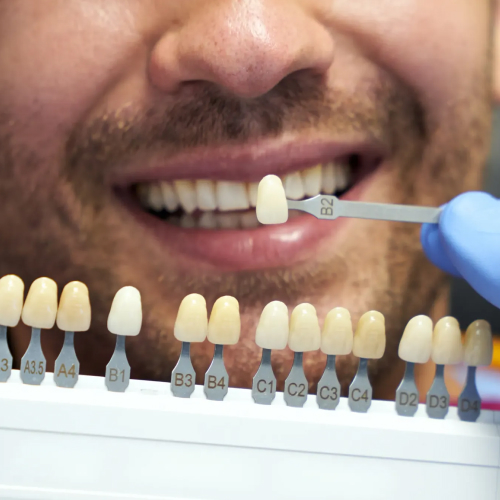
The challenge is that light behaves differently through a 0.3mm veneer than through a 1.5mm crown. Porcelain opacity, translucency, and underlying tooth color (called the stump shade) all affect the final appearance. A root-canaled tooth often goes dark over time, which means the crown on top needs a more opaque internal layer to block that discoloration — while the adjacent veneer on a healthy tooth needs high translucency to look natural.
Coordinating this requires custom stump-shade matching and careful selection of porcelain ingot opacities by an experienced ceramist. Mouthhealthy.org from the ADA notes that both veneers and crowns are designed to match natural tooth appearance — but achieving that match across different restoration types in the same smile requires deliberate planning that goes beyond booking procedures individually.
This is precisely what a smile makeover coordinates. Booking a crown here and veneers there through separate appointments, without an overarching aesthetic plan, is how patients end up with a smile that looks assembled rather than designed.
Not everyone needs a full smile makeover. If you have one chipped tooth, a single veneer or bonding procedure may be entirely appropriate. If a molar fractures and needs structural restoration, a standalone crown is the correct clinical response.
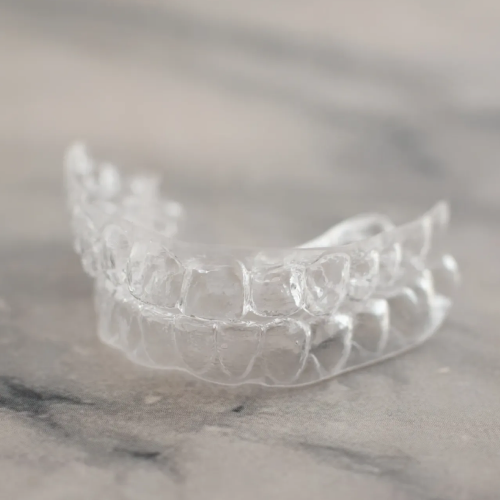
Healthline's guide to composite veneers points out that veneers are well-suited for patients whose teeth are in relatively good shape and who simply want to change color or shape — with no significant bite issues, no misalignment, and no adjacent restorations to coordinate with. For patients with alignment concerns, Invisalign may be an important first step before any cosmetic restorations are placed.
The honest answer is that the scale of your goals determines the right approach. If you're addressing one or two isolated cosmetic concerns on otherwise healthy teeth with a stable bite, individual procedures work well. If you want a cohesive transformation across multiple teeth — especially if some teeth have existing damage, prior dental work, or bite concerns — a smile makeover's coordinated strategy protects both your investment and your long-term oral health.
The best way to know whether a smile makeover, individual veneers, or crowns are right for you is a thorough consultation that examines your bite, existing tooth structure, and aesthetic goals together. Long Beach Family Dentist serves patients throughout Long Beach and the surrounding metro area with exactly that kind of comprehensive evaluation. Schedule a cleaning and exam as a first step to get a treatment plan that's built around your specific situation — not a one-size-fits-all answer.
Medical disclaimer: This article is intended for informational purposes only and does not constitute professional dental or medical advice. Always consult a licensed dental professional for diagnosis and treatment recommendations specific to your oral health needs.
Fresh news from the dental world



Mon 8AM - 5PM
Tue 8AM - 5PM
Wed-Thu 8AM - 5PM
Fri 8AM - 5PM
Sat 9AM - 3PM
Sun Closed
Check out what our patients are saying in Long Beach, CA...


“Clean and friendly...”
Very clean and friendly crew. I really enjoyed myself.

“A positive experience...”
Very clean and organized office! Entire staff was pleasant and friendly, and seems interested in ensuring I had a positive experience. Will definitely return! Affordable rates.

“My favorite dentist...”
The service here is amazing and they make you feel comfortable. I'm one of those people that hates to go to the dentist and the dentists that I went to in the past were not that great with service. Overall I found my favorite dentist service now at Long Beach Family Dentist.

“Answers any questions...”
I been a patient here for over twelve years. Andrea greeted me and got my folder set up. Toni is very friendly and answers any questions you have promptly, when I always come in she greets you with a smile and makes your appointment enjoyable. Today Jovani and Dr. Joan made this experience great. I recommend this dentist for new patients.
“Clean and friendly...”
Very clean and friendly crew. I really enjoyed myself.
“A positive experience...”
Very clean and organized office! Entire staff was pleasant and friendly, and seems interested in ensuring I had a positive experience. Will definitely return! Affordable rates.
Check out our accreditations, sources, and relationships in the wide world of dentistry...


Check us out and follow our Long Beach, CA practice on social media...