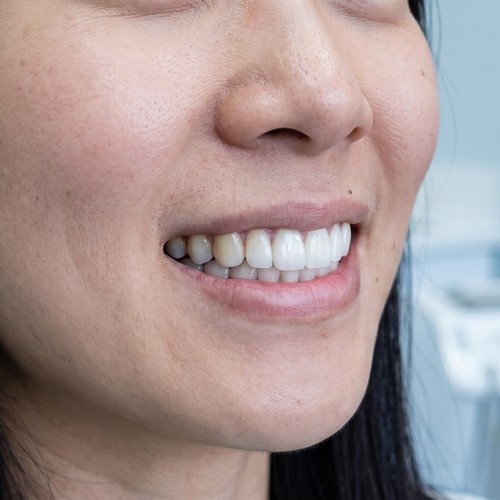
What Patients Ask Before Getting Veneers: Stains, Nightguards, and Whitening
Do veneers stain? Do you need a nightguard? Learn the facts about porcelain veneers and whitening. Schedule your consultation at Long Beach Family Dentist now!
Read More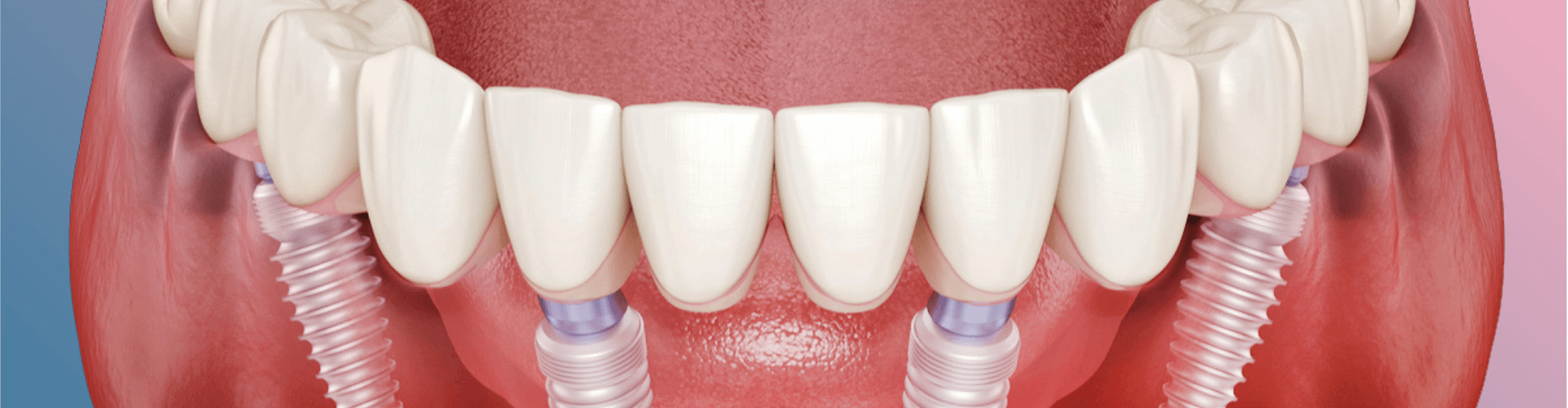
If you’re thinking of replacing a full mouth of missing teeth, the best way to do so is with All-on-4 or All-on-6 dental implants. When people are missing most or all of their teeth, they often think they can only restore their original smile with a complete denture. However, dentures have their faults. They don't preserve the natural bone below, meaning your bite and jaw shape will change over time, and they won't slip on as easily. They aren't fixed in place, so they can slip or fall out if they start fitting loosely. You have to stick to a more limited diet to ensure they don't become damaged, or your food doesn't stick painfully underneath. Instead, more and more patients choose to use the much healthier and advantageous All-on-4 or All-on-6 dental implants. These full mouth prosthetics are permanently secured to your jaw and help to prevent the eventual bone loss process after teeth are removed. They not only last decades longer, if not a lifetime, but also fit just amazing as they did on day one. Three main parts go into these denture implants: Implants: titanium posts surgically inserted into the empty socket to replace the teeth roots that had been there Abutment: a metal connector piece that keeps your dentures tightly secured to the implants Denture: the false teeth prosthetic that screws into the abutment and restores an entire arch of extracted teeth
Should I get All-on-4 or All-on-6? What is the difference? As you may guess by their names, the main difference between All-on-4 and All-on-6 is the number of teeth implants used to support the false teeth. All-on-4 dental implants secure a modified complete denture on four implants spread throughout the jaw, while All-on-6 uses six implants. The more implants that are used, the more security your new smile has. They also place different and heavier pressure, which helps preserve more of the natural jawbone. While All-on-6 may be the overall healthiest choice, several other factors change to affect your overall experience depending on which prosthetic you choose: The more implants are needed, the more costly treatment will be Less healing time is required for fewer implants Patients who previously had singular implants or implant bridges may require more implants to keep a full mouth denture implant stable You’ll need to floss them differently depending on the number of implants to prevent food, plaque, and bacteria from slipping between the gums and denture Who Is A Good Candidate For Dental Implants? Before starting your dental implant procedure, your periodontist or prosthodontist will first need to ensure All-on implants are right for you. As teeth implants are inserted directly into the gum and bone, they heavily rely on your dental and overall health being in great form to be successful. Certain general health conditions like diabetes, Alzheimer’s, osteoporosis, and immune system disorders can negatively impact your smile’s ability to support a tooth implant. Patients with periodontal disease will need to have their gum infection treated before starting the implant process. While early-stage gingivitis leads the gums to become red and inflamed, it doesn’t permanently harm those soft tissues. Later stages dig much deeper to attack and destroy the connective ligaments and alveolar bone that support a tooth. If this structure has been weakened severely enough, the implants can slip or fail without having a solid foundation. However, gum disease isn’t the only reason a patient might not have enough bone structure. In many cases, patients who need full mouth dental implants have previously had a traditional denture or dental bridge. With these dental prosthetics, there isn’t an artificial tooth root cementing them in place. The jaw doesn’t receive the level of daily stimulation from biting and chewing to tell the mouth to upkeep the alveolar bone meant to hold a tooth steady. The bone starts deteriorating in a process called resorption. Bone resorption can start showing itself in your smile in as little as six weeks. Within a year of extraction, up to a quarter of the original jawbone can be lost. While this bone loss rate will slow down and stabilize with time, it won't disappear entirely until you have your All-on-4 or All-on-6 implants in place. What happens if you don't have enough bone for dental implants? Your prosthodontist will require you to get at least one bone graft surgery performed to replace the missing tissue.
How Long Is The Implant Process? Unlike other tooth replacement options, dental implants can't be completed in a few weeks. From the time you come in for your consultation appointment to your final denture fitting, it will take between six months to a year for your new teeth to be in place. This time span allows us to transplant any missing bone tissue needed and attach each prosthetic piece, with time for recovery in-between. Bone Graft Nearly half of all dental implant patients require at least one bone graft surgery to prepare them for new teeth. Bone grafting is a simple but involved process. Your dentist must make a small incision in the gums to give us access to the jawbone before transplanting new tissue where there isn't enough. Depending on which All-on treatment you get, you may need multiple bone grafts to lay down each implant's foundation. Bone grafting material can come from one of these sources: Yourself, taken from elsewhere in the body A donor, usually another person but can be from an animal Synthetic material made in a lab The grafts will spend the following three to four months healing and integrating with the natural alveolar bone. The stimulation provided by the new material also helps promote the creation of brand new, natural bone tissue. Implantation When the jaw is reinforced enough, we can officially start the implant procedure by inserting the implant post. Similarly to grafting, we’ll need to cut the gums to expose the bone. Your periodontist will then drill an opening in the jaw to create a socket perfect for holding the implant. Once placed, the gums are put back in place, though not over the post itself. Over the next four to six months, the implants will need to fuse, or osseointegrate, to the jaw. Titanium is used for this exact purpose as it is uniquely qualified to make this process go smoothly. This recovery process is crucial for your All-on-4 or -6’s success. Being too hasty and moving to install the abutment before the jaw is ready can lead the implant to become loose in the bone. Abutments When we’ve made sure the implants have osseointegrated thoroughly with your jaw, we will connect the abutment pieces to them. The gums will have since healed, so our team will need to have to reopen the cuts to properly access them before closing them back around the abutment. Sometimes, temporary abutments are installed with the implants to let the gums heal around them, rather than the implant posts themselves. This way, once the time comes to place the permanent abutments, minimal incisions and preparation are required. Your mouth will need two to four weeks to heal before we can attach your final full mouth denture. However, some patients may be able to have their permanent abutment attached simultaneously with the implant itself, bypassing the temporary abutment phase altogether. This both saves you an additional surgery and shaves off up to a month of recovery time. Denture Once the abutment is installed and the gums have healed, our prosthodontists can finally complete your All-on implants by attaching your false teeth. The prosthetic will be permanently screwed in or cemented on tightly without any wiggle room for your bite to become unstable. We will watch your smile closely over the next year to ensure your teeth stay secure without any complications. How Much Do Dental Implants Cost? The type of All-on implant, whether bone grafting is needed, and the procedure’s complexity can all affect your dental implant cost. As you may guess, All-on-4 dental implants are generally more affordable because fewer implants are necessary, requiring fewer surgeries and appointments. Additionally, some patients choose to be dentally sedated rather than using a local anesthetic. Dental sedatives like laughing gas and IV sedation are not included as part of the base price. If any teeth will be removed the same day, then the tooth extraction cost will also be a factor. Dental implants are not usually covered by dental insurance. However, some full coverage plans may include part of the denture's price but not the implant or abutment. If you have any questions or concerns about your treatment's exact cost, please don't hesitate to call our dental office in Long Beach at (562) 999-3602. Our dental prosthetics team are happy to discuss your treatment's specifics and your available financing options.
Fresh news from the dental world





Mon 8AM - 5PM
Tue 8AM - 5PM
Wed-Thu 8AM - 5PM
Fri 8AM - 5PM
Sat 9AM - 3PM
Sun Closed
Check out what our patients are saying in Long Beach, CA...


“Answers any questions...”
I been a patient here for over twelve years. Andrea greeted me and got my folder set up. Toni is very friendly and answers any questions you have promptly, when I always come in she greets you with a smile and makes your appointment enjoyable. Today Jovani and Dr. Joan made this experience great. I recommend this dentist for new patients.

“Clean and friendly...”
Very clean and friendly crew. I really enjoyed myself.

“A positive experience...”
Very clean and organized office! Entire staff was pleasant and friendly, and seems interested in ensuring I had a positive experience. Will definitely return! Affordable rates.

“My favorite dentist...”
The service here is amazing and they make you feel comfortable. I'm one of those people that hates to go to the dentist and the dentists that I went to in the past were not that great with service. Overall I found my favorite dentist service now at Long Beach Family Dentist.
“Answers any questions...”
I been a patient here for over twelve years. Andrea greeted me and got my folder set up. Toni is very friendly and answers any questions you have promptly, when I always come in she greets you with a smile and makes your appointment enjoyable. Today Jovani and Dr. Joan made this experience great. I recommend this dentist for new patients.
“Clean and friendly...”
Very clean and friendly crew. I really enjoyed myself.
Check out our accreditations, sources, and relationships in the wide world of dentistry...


Check us out and follow our Long Beach, CA practice on social media...