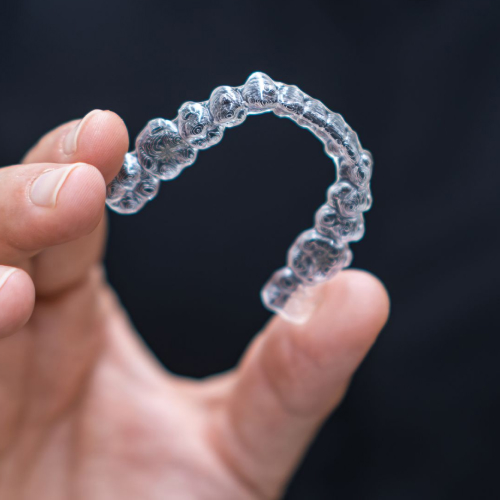
Why Your Invisalign Trays Aren't Fitting — And What to Do About It
Invisalign trays not fitting right in Long Beach? Learn why gaps happen, what tracking means, and when refinements are needed. Get answers from our dental team.
Read More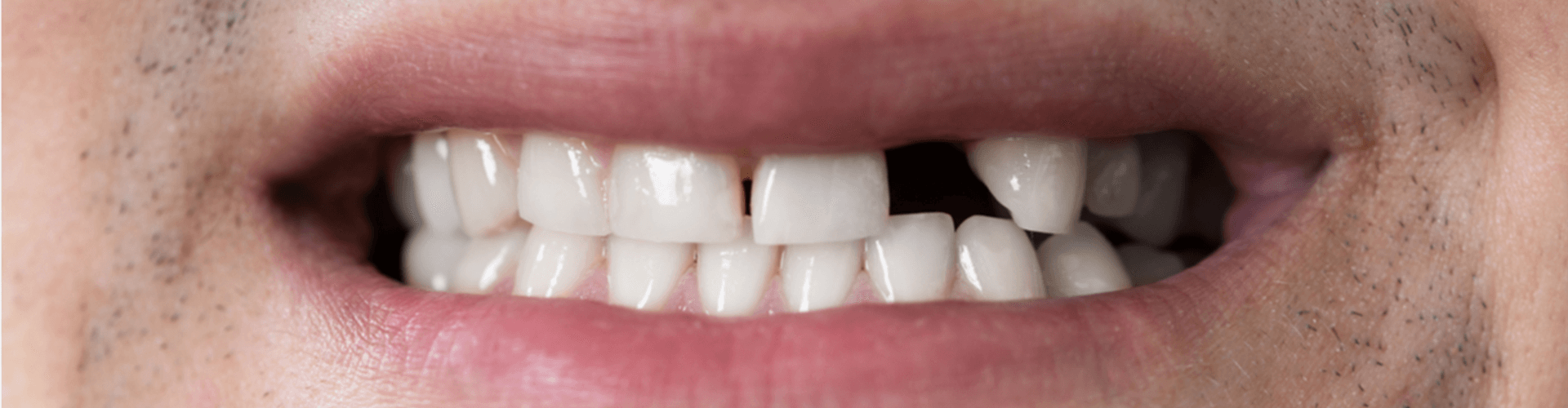
Missing teeth do much more to change your smile than create a visible gap. Tooth decay, gum disease, sports accidents, and overcrowding can all lead to the same thing: tooth extraction. Once the tooth is finally gone, our patients often ask us, “Is it OK not to replace a missing tooth?” After all, a tooth near the back of the mouth is difficult to see, so it seems reasonable that leaving the gap alone will be fine. This couldn’t be further from the truth. We highly recommend replacing a tooth with an implant, dental bridge, or denture in nearly all cases. Once a tooth is removed, the surrounding jawbone weakens. Without your bite's force stimulating the bone tissue, your mouth stops telling the tissue to regenerate. As the jaw is continuously absorbing (resorbing) and recreating bone tissue, resorption continues, and your jaw begins deteriorating. This resorption process can be disastrous for your smile. As the bone weakens, your face will start sagging, and nearby teeth will drift into the gap left behind. If back teeth are removed, more pressure is put on front teeth, which they aren't equipped to handle. Over time, these teeth loosen and fracture, making further extractions common. With replacement teeth, you can keep natural teeth from moving out of alignment and retain your bite's proper force. Certain artificial teeth can even stop resorption in its tracks in the first place. Wisdom and crowded teeth are the only teeth you don't need to find a substitution post-extraction. Wisdom teeth are often removed because there isn't enough room for them to emerge from the gums. There won't be enough space for any new teeth either. When a tooth or two must be removed from overcrowding, it is often for orthodontic reasons. Once your remaining teeth are moved into place with braces, your bone will have enough stimulation to prevent resorption.
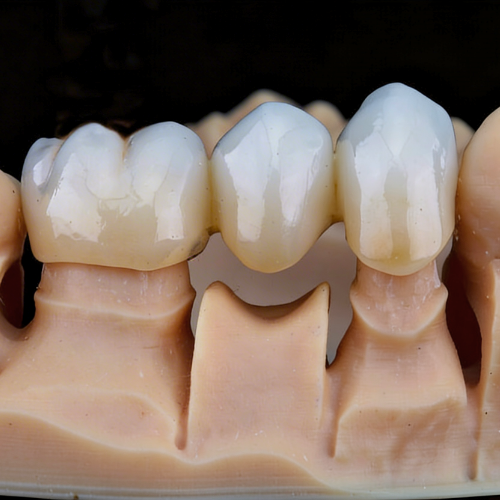
How Long Does It Take For Bone Loss After Tooth Extraction? Our mouths don't waste much time at all before beginning the resorption process. Bone loss often starts appearing within six weeks, and it stays at a rapid pace. Within the first year, most patients lose as much as 25% of their existing bone where their extracted tooth had been. After the first year, this bone loss rate slows down, but it doesn't stop unless a dental implant is used. Can Bone Loss In The Jaw Be Reversed? Unfortunately, bone loss in the jaw can't be naturally reversed. However, its effects can be treated and even prevented with professional help. Bone grafts are standard procedures to restore any missing bone material with one of three materials: Bone taken from the patient, often the chin or back of the jaw Donated bone from another person or, in some cases, bovine Artificial synthetic material made in a lab, called alloplastic This transplanted material will then fuse (or "osseointegrate") to the jaw for three to four months. It will also encourage the natural bone to regenerate, reinforcing your jawbone to its original healthy state. To prevent bone loss from occurring in the first place, many dentists will recommend a tooth implant to restore the missing tooth. Unlike other false teeth, implants are inserted directly into the jaw and provide the same amount of pressure and stimulation a natural tooth would. This tricks the mouth into thinking your tooth is still there, and the bone tissue regenerates as it should, preventing resorption. What Are My Tooth Replacement Options? Bridges A dental bridge replaces one or more missing teeth by anchoring itself on the teeth at either side of the tooth gap. This dental prosthetic sandwiches the false teeth with two dental crowns on either side. These crowns are affixed to the neighboring teeth, which are lightly shaved down to fit them. Once secure, this allows the new teeth to sit above the gums and bridge the space between. With proper care, bridges can last 10 to 15 years. Dentures Dentures allow patients to replace anything from a few teeth to an entire mouth of missing teeth. There are two types of dentures: partial and complete. Partial dentures restore anything less than a full arch of teeth, using the remaining healthy teeth as the base's anchor. For added stability, metal clasps can be used to attach the appliance to the teeth. When replacing an entire arch, complete dentures are necessary. They use the gum and bone structure rather than natural teeth as their support. While many patients worry about their dentures falling out while eating or speaking, they are made to fit your smile exactly and don't slip easily. After 5 to 7 years, you will need a replacement denture as bone loss changes your bite's shape. It usually takes six to eight weeks before your denture can be prepared, but you don’t have to worry about showing off a missing tooth gap in the meantime. As long as an emergency extraction isn’t needed, our Long Beach dental professionals can prepare an immediate denture weeks before your procedure. Using scans of your complete smile, we can prepare your prosthetic in advance so you can leave your tooth removal with a new set of teeth. However, these are only temporary. Dentures don’t stop bone resorption but only keep teeth from moving into the growing divot left behind. Soon, your immediate dentures will not fit as well as they used to as your mouth heals and your bite rapidly changes. We will replace them with more permanent dentures after two or three months. Dental Implants Dental implants are a three-part artificial tooth made up of an implant, an abutment, and a restoration piece. The implant is a metal post or screw surgically attached to the jaw where your tooth had been. It acts as the new tooth's root. The restoration piece, usually a dental crown, caps the new tooth and restores your smile's look and function. The abutment is the glue keeping the implant and crown together. With time to heal between surgeries, the entire process can be completed in 6 to 8 months. Before our prosthodontist can begin treatment, you must have enough healthy underlying bone structure for your procedure to be successful. If there is too much bone loss, the missing material will need to be restored with a bone graft, extending the implant process by 3 to 4 months. Dental implants are widely considered the best way to replace a missing tooth. As the only replacement tooth that prevents potential bone loss, they keep your mouth stronger and healthier than dental bridges and dentures. Another advantage of implants is that they are the longest-lived. With proper dental care, the crown can last more than 25 years and the implant itself a lifetime.
There are multiple types of dental implants, allowing you flexibility when repairing your smile: Traditional implants. This is the most common type of dental implant and is the standard. A single implant is used to replace one tooth, using a crown as the restoration. If two teeth are missing next to each other, an implant post can be used for each tooth, while two conjoined crowns cap it as a single piece. Mini dental implants. For patients without enough bone for a standard tooth implant, mini implants may be a viable solution without an additional bone graft surgery. They are similar to traditional implants but with a smaller post, requiring less bone to sufficiently anchor them. Implant-supported bridges. Unlike a traditional tooth bridge, implant bridges anchor the end crowns on dental implants with the bridge acting as the restorative piece. Your prosthodontist can replace three missing teeth at once without worrying about your new teeth's stability. And by preserving supporting bone, these bridges can last more than 20 years. Permanent dentures. A permanent denture is a denture anchored on an implant post, giving it more stability in your daily life. Similarly to implant bridges, this process can extend your denture's life by more than a decade. While most denture implants are still removable, there is a fixed option: All-on-4 dental implants. This full mouth denture is screwed into four implants along the jaw, keeping your bite as secure as possible without needing to take out your teeth at night. How Much Does It Cost To Replace A Tooth? Your dental prosthetic cost depends on several crucial factors: Type of tooth replacement Number of teeth to be replaced If bone grafting is necessary If dental sedation is needed Your insurance coverage For example, dental implants cost more than a standard dental bridge or partial denture, so they are more popular with patients restoring a single tooth. And implants that require a graft beforehand will also have a higher price. If you'd like to discuss your replacement tooth's exact cost, please schedule a consultation with our Long Beach dentists. We can discuss your planned procedure, dental insurance, and our office's alternative financing options.
Fresh news from the dental world






Mon 8AM - 5PM
Tue 8AM - 5PM
Wed-Thu 8AM - 5PM
Fri 8AM - 5PM
Sat 9AM - 3PM
Sun Closed
Check out what our patients are saying in Long Beach, CA...


“My favorite dentist...”
The service here is amazing and they make you feel comfortable. I'm one of those people that hates to go to the dentist and the dentists that I went to in the past were not that great with service. Overall I found my favorite dentist service now at Long Beach Family Dentist.

“Clean and friendly...”
Very clean and friendly crew. I really enjoyed myself.

“Answers any questions...”
I been a patient here for over twelve years. Andrea greeted me and got my folder set up. Toni is very friendly and answers any questions you have promptly, when I always come in she greets you with a smile and makes your appointment enjoyable. Today Jovani and Dr. Joan made this experience great. I recommend this dentist for new patients.

“A positive experience...”
Very clean and organized office! Entire staff was pleasant and friendly, and seems interested in ensuring I had a positive experience. Will definitely return! Affordable rates.
“My favorite dentist...”
The service here is amazing and they make you feel comfortable. I'm one of those people that hates to go to the dentist and the dentists that I went to in the past were not that great with service. Overall I found my favorite dentist service now at Long Beach Family Dentist.
“Clean and friendly...”
Very clean and friendly crew. I really enjoyed myself.
Check out our accreditations, sources, and relationships in the wide world of dentistry...


Check us out and follow our Long Beach, CA practice on social media...