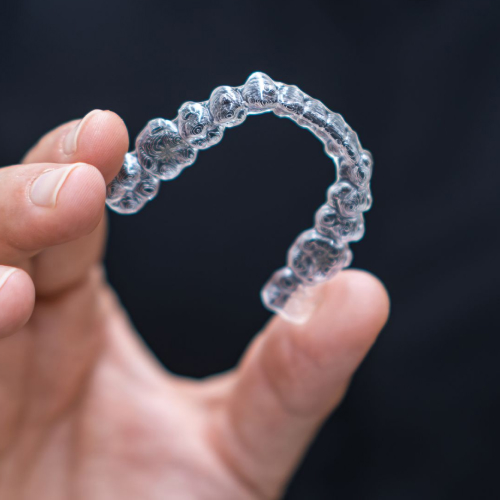
Why Your Invisalign Trays Aren't Fitting — And What to Do About It
Invisalign trays not fitting right in Long Beach? Learn why gaps happen, what tracking means, and when refinements are needed. Get answers from our dental team.
Read More
What is tooth decay? Tooth decay is damage that occurs to a person’s teeth, which can potentially result in cavities, dental abscesses, or even tooth loss. It is caused by the activity of certain species of bacteria, especially the bacteria streptococcus mutans that can live in dental plaque. The bacteria in plaque can convert the sugars present in your food into acids. If plaque is allowed to build up over time, these acids can begin to damage your teeth. Symptoms of tooth decay Tooth decay may not cause any pain. However, if you have dental caries, you might have: • Toothache: it can either cause continuous pain that keeps you awake or occasional sharp pain without an apparent cause • Tooth sensitivity: the person may feel tenderness or pain when eating or drinking something hot, cold, or sweet • Gray, brown, or black spots appearing on the person’s teeth • Bad breath • An unpleasant taste in your mouth • A cavity • An infection, which can lead to an abscess (pocket of pus) forming, the abscess can cause pain, facial swelling, and fever • Visible holes or pits in your teeth • Pain when you bite down
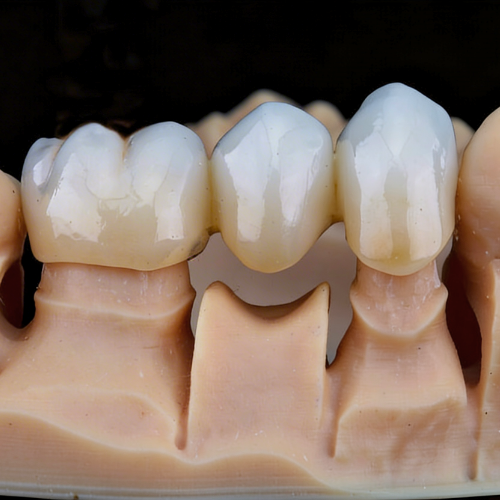
Treatment options for tooth decay Once the dentist has identified the type of cavity a patient has, they will recommend a treatment option to remove the tooth decay and restore the patient’s smile. Cavities treatments are dependent on the severity of the decay, and they are as follows: *Fluoride treatments: Fluoride can aid with enamel restoration, and in the very early stages of a cavity, it can even reverse the decay. Treatments come in liquid, gel, foam, or varnish form, which is brushed directly onto the teeth or placed in a mouth-fitting tray. *Fillings: When decay progresses beyond the early stages, fillings become the treatment option the general dentist will most likely take. A form of restoration, fillings involve the removal of decay with the affected area then filled with either porcelain, amalgam, or tooth-colored resin. *Crowns: To preserve a weakened or severely decayed tooth, before the infection reaches the root, the general dentist may recommend a crown. Made of gold, porcelain, resin, or composite material, a crown is tailor-made to fit over the affected tooth after decay has been drilled away. *Root canal: Once decay spreads to the inner layer of the patient’s tooth, known as the pulp, a root canal is often recommended to remove the diseased pulp. After the decay has been removed, a filling replaces the pulp. The dentist will also prescribe medication to help fight off infection and help protect against further tooth decay. *Extraction: If tooth decay is at its most severe stage, often the only option is to remove the tooth entirely to prevent the infection from spreading. The procedure is commonly referred to as tooth extraction and can leave gaps in the patient’s smile. A cosmetic procedure, often involving an implant or dental bridge, can help fix the patient’s smile and cover up any gaps. *Early-stage treatment: If your dentist detects a tooth cavity in its early stage, a fluoride treatment may restore your tooth enamel and prevent further decay. Prevention of tooth decay The best course of cavity treatment is to ensure decay never takes root in the first place. Keep cavities from forming with a few simple steps: ·Brush twice a day with fluoride toothpaste to remineralize weakened enamel ·Switch to an electric toothbrush to help make sure the patient is brushing the dentist-recommended two minutes and reaching every area of the oral cavity ·Floss at least once a day to remove anti-cavity mouthwash to further clean below the gum line ·Chew on sugar-free gum to stimulate saliva production to wash away plaque ·See your dentist or dental hygienist twice a year for check-ups and professional cleanings ·Eat fewer sugary and acidic foods, like sweets, candy, juice, soda, and refined carbohydrates ·Limit snacking between meals ·Consider getting dental sealants on your teeth The following foods can help fight tooth decay: ·Fiber-rich fruits and vegetables ·Calcium-rich foods ·Xylitol sugarless chewing gum ·Unsweetened black or green tea ·Water with fluoride
Risk factors for tooth decay Certain factors increase the risk of tooth decay. They are as follows: ·Conditions like Sjogren’s syndrome, or medications like antidepressants, that cause dry mouth ·Consuming sugary, starchy foods or drinks and snacking between meals ·Family history of cavities ·Previous radiation therapy to treat head and neck cancer ·Receding gums FAQs What does tooth decay look like? If the process of tooth decay is allowed to continue, the enamel will break down further. The person may notice that a white spot on a tooth darkens to a brownish color. As enamel is weakened, small holes in the teeth called cavities or tooth decay can form. Can you reverse tooth decay naturally? Fortunately, the beginning stages of a cavity can be reversed by taking steps toward good oral hygiene. During early demineralization, exposure to fluoride, daily brushing and flossing, and regular cleanings can all help prevent or even reverse tooth decay. How does tooth decay occur? An essential factor that contributes to tooth decay is the formation of plaque. Plaque is a tenacious sticky layer consisting of bacteria and food particles that covers the surfaces of the tooth. There are five stages of tooth decay. They are as follows: Stage 1: Initial demineralization This earliest stage of tooth decay can be reversed before more permanent damage occurs. This can be achieved by treating the teeth with fluoride. It is often applied to the person’s teeth in the form of a gel or varnish. Stage 2: Enamel decay When tooth decay enters this stage, cavities are often present. Fillings are used to treat cavities. Stage 3: Dentin decay Because dentin is softer than the enamel, decay moves at a faster rate when it reaches this stage. If identified early, dentin decay may be treated with a filling. Stage 4: Pulp damage When tooth decay has reached the pulp, it will often need a root canal. In a root canal, the damaged pulp is removed. The tooth cavity is then cleaned and filled in. A crown is placed on the affected tooth. Stage 5: Abscess If an abscess has formed in a person’s tooth, the dentist will likely perform a root canal to remove the infection and seal the tooth. In severe cases, the affected tooth may need to be removed completely.
Fresh news from the dental world






Mon 8AM - 5PM
Tue 8AM - 5PM
Wed-Thu 8AM - 5PM
Fri 8AM - 5PM
Sat 9AM - 3PM
Sun Closed
Check out what our patients are saying in Long Beach, CA...


“My favorite dentist...”
The service here is amazing and they make you feel comfortable. I'm one of those people that hates to go to the dentist and the dentists that I went to in the past were not that great with service. Overall I found my favorite dentist service now at Long Beach Family Dentist.

“Clean and friendly...”
Very clean and friendly crew. I really enjoyed myself.

“Answers any questions...”
I been a patient here for over twelve years. Andrea greeted me and got my folder set up. Toni is very friendly and answers any questions you have promptly, when I always come in she greets you with a smile and makes your appointment enjoyable. Today Jovani and Dr. Joan made this experience great. I recommend this dentist for new patients.

“A positive experience...”
Very clean and organized office! Entire staff was pleasant and friendly, and seems interested in ensuring I had a positive experience. Will definitely return! Affordable rates.
“My favorite dentist...”
The service here is amazing and they make you feel comfortable. I'm one of those people that hates to go to the dentist and the dentists that I went to in the past were not that great with service. Overall I found my favorite dentist service now at Long Beach Family Dentist.
“Clean and friendly...”
Very clean and friendly crew. I really enjoyed myself.
Check out our accreditations, sources, and relationships in the wide world of dentistry...


Check us out and follow our Long Beach, CA practice on social media...