What Patients Ask Before Getting Veneers: Stains, Nightguards, and Whitening
Do veneers stain? Do you need a nightguard? Learn the facts about porcelain veneers and whitening. Schedule your consultation at Long Beach Family Dentist now!
Read More
Tooth loss doesn’t always come with a flashing red light. More often, it starts quietly, in the background, with signs that are easy to dismiss as normal or temporary. But catching these signs early can mean the difference between saving your tooth and losing it.
Let’s break down three subtle warning signs that something deeper might be going on in your mouth, and why ignoring them is the last thing you want to do.
It usually starts small. A strange feeling when you bite down. A slight wobble. Or maybe you’re noticing that your gums don’t look the same in the mirror anymore. These might not seem like red flags, but they could be early warning signs of tooth loss.
Here’s what to pay attention to:
1. A Tooth That Feels “Off”
Maybe it feels a bit loose. Maybe it shifts slightly when you press on it with your tongue. You might even avoid chewing on that side, not because it hurts, but because it just feels weird. This could be early tooth mobility, a sign that the structures holding your tooth in place are starting to weaken.
Tooth mobility can result from gum disease, bone loss, or even trauma that you’ve long forgotten. Over time, if the root isn’t supported properly, your body might begin reabsorbing the bone around it, accelerating the problem.
2. Gum Recession or Changes in Your Bite
If your gums are pulling back, you’re seeing more of your tooth than you used to. That’s not just a cosmetic issue. Gum recession exposes the root surface of your teeth, making them more vulnerable to sensitivity and decay. And once the gums pull back, they rarely come back without treatment.
Changes in your bite are another clue. If your teeth no longer align the way they used to or chewing feels different, your jaw may be compensating for a tooth that’s shifting out of place. It’s subtle, but it matters.
3. Bleeding or Inflamed Gums That Don’t Go Away
We’ll go deeper into this in a moment, but persistent bleeding is never just “normal.” If your gums are red, inflamed, or bleed easily, especially when brushing or flossing, that’s a sign of inflammation. And inflammation that sticks around too long leads to damage beneath the surface.
Yes. And it happens more often than you might think.
Bleeding gums are one of the earliest and most ignored signs of gum disease. If you brush your teeth and see blood in the sink, that’s your gums waving a red flag. It might not hurt, but it’s still serious.
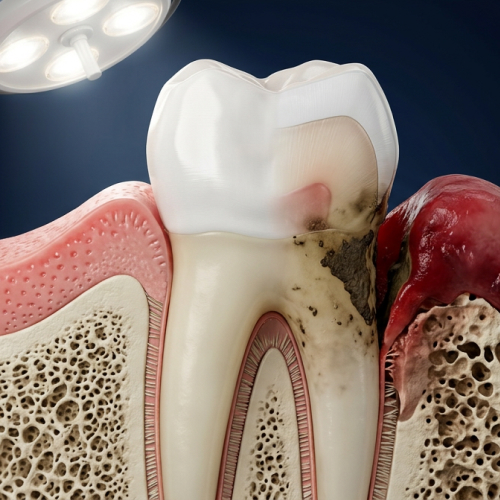
What Causes the Bleeding? The most common cause is plaque buildup along the gumline. When plaque isn’t removed thoroughly, bacteria begin to irritate the soft tissues around your teeth. Your body responds by inflaming the area, which is why your gums might look puffy or red.
If this inflammation is left untreated, it turns into gingivitis, and then into periodontitis. That’s when the real damage starts. The bone that holds your teeth in place begins to deteriorate. The gums pull away, forming pockets where more bacteria can thrive.
The result? A slow but steady breakdown of the foundation holding your tooth in place. Eventually, the tooth becomes loose or falls out completely.
Why It’s Often Missed: Because it’s painless. Early gum disease doesn’t usually come with discomfort, so it’s easy to ignore. But that blood in the sink? It’s a warning.
If you notice bleeding even occasionally, it’s worth checking in with your dentist. At Long Beach Family Dentist, we can catch problems early and help you reverse damage before it leads to something permanent.
Not always, but it is always a reason to see your dentist.
A loose adult tooth is never normal. Whether it’s moving slightly or feels like it’s wobbling when you eat, that motion usually points to something happening below the surface.
Gum Disease: The Most Common Culprit
Advanced gum disease (periodontitis) weakens the bone and tissue supporting your teeth. When this structure breaks down, your tooth starts to move. Left untreated, this can eventually lead to tooth loss. In fact, gum disease is the leading cause of adult tooth loss in the U.S.
Other Possible Causes
What to Watch For
The sooner you get to the root of the issue, the better your chances of saving the tooth. Sometimes, a deep cleaning and medication are enough. Other times, a more involved treatment like scaling and root planing, a splint, or even surgery may be needed.
The best thing you can do is not wait.
A small symptom today can become a major dental issue tomorrow. And when it comes to tooth loss, the clock starts ticking long before you ever feel pain. That’s why regular checkups matter, even if your teeth “feel fine.”
At Long Beach Family Dentist, we don’t just check for cavities. We look at your entire oral health picture, from your bite and gum health to the strength of your jawbone and the early signs of recession or disease. If there’s a problem, we’ll catch it early and talk through your options.
We believe saving your natural teeth is always the best outcome. But that requires knowing what to look for and taking action when the signs appear.
If anything in this blog sounds familiar, a bleeding gum, a shifting tooth, or just a general sense that something isn’t quite right, don’t brush it off.
Schedule your appointment with Long Beach Family Dentist today. We’ll take a closer look, answer your questions, and help you protect your smile for the long haul.
Fresh news from the dental world





Mon 8AM - 5PM
Tue 8AM - 5PM
Wed-Thu 8AM - 5PM
Fri 8AM - 5PM
Sat 9AM - 3PM
Sun Closed
Check out what our patients are saying in Long Beach, CA...


“Answers any questions...”
I been a patient here for over twelve years. Andrea greeted me and got my folder set up. Toni is very friendly and answers any questions you have promptly, when I always come in she greets you with a smile and makes your appointment enjoyable. Today Jovani and Dr. Joan made this experience great. I recommend this dentist for new patients.

“Clean and friendly...”
Very clean and friendly crew. I really enjoyed myself.

“A positive experience...”
Very clean and organized office! Entire staff was pleasant and friendly, and seems interested in ensuring I had a positive experience. Will definitely return! Affordable rates.

“My favorite dentist...”
The service here is amazing and they make you feel comfortable. I'm one of those people that hates to go to the dentist and the dentists that I went to in the past were not that great with service. Overall I found my favorite dentist service now at Long Beach Family Dentist.
“Answers any questions...”
I been a patient here for over twelve years. Andrea greeted me and got my folder set up. Toni is very friendly and answers any questions you have promptly, when I always come in she greets you with a smile and makes your appointment enjoyable. Today Jovani and Dr. Joan made this experience great. I recommend this dentist for new patients.
“Clean and friendly...”
Very clean and friendly crew. I really enjoyed myself.
Check out our accreditations, sources, and relationships in the wide world of dentistry...


Check us out and follow our Long Beach, CA practice on social media...