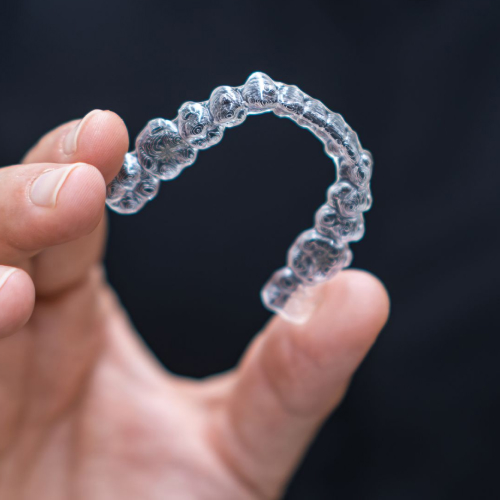
Why Your Invisalign Trays Aren't Fitting — And What to Do About It
Invisalign trays not fitting right in Long Beach? Learn why gaps happen, what tracking means, and when refinements are needed. Get answers from our dental team.
Read More
What Exactly Is A Root Canal? The Greek word for "inside" is "endo," while the word for "tooth" is "odont." Endodontic treatment is a treatment that is used to treat the pulp of a tooth. The process known as root canal therapy is included in endodontic treatment. It is quite significant to have a basic understanding of the tooth's anatomy in order to comprehend the endodontic way of therapy. A soft tissue termed the pulp is located within the tooth, underneath the white enamel and a hard layer known as the dentin. The pulp is responsible for the tooth's life. The pulp includes blood arteries, nerves, and connective tissue. The pulp of the tooth spreads from the crown to the root tip, where it interacts with the surrounding tissues. The pulp is essential in creating and developing a tooth's structure and function. However, after a tooth has achieved full maturity, it may be able to survive without the presence of the pulp since the tissues around it still feed the tooth. How To Know If One Needs A Root Canal Endodontic therapy is essential if the pulp becomes inflamed or diseased. Various reasons, such as significant decay, routine dental procedures, or a fracture or chip in the tooth, might result in inflammation or infection of the teeth. An injury to the tooth may also result in pulp damage, even if there are no visible chips or fractures in the tooth. The presence of pulp inflammation or infection should be treated immediately to avoid pain or an abscess from forming.
Procedure For Root Canal A dentist or endodontist may perform a root canal. Endodontists are dentists who specialize in the causes, diagnosis, prevention, and treatment of disorders and injuries to the dental pulp or the tooth's nerve. If you have a more complicated root canal, your general dentist may recommend that you consult an endodontist. The method will be as follows: 1. Your dentist will do an X-ray to assess the root canals' geometry and rule out any infections in the surrounding bone. They'll numb the region around the tooth using a local anesthetic. While you may not need an anesthetic since the nerve is dead, the majority of dentists will still anesthetize the region to help you relax. 2. During treatment, your dentist will put a rubber dam (a sheet of rubber) over the tooth to keep it dry and saliva-free. 3. Drilling an access hole into the tooth is the next step. The tooth's pulp, germs, and decaying nerve tissue are removed. A set of root canal files is used to clear up the region. They are inserted into the access hole and make their way down the tooth's length, scraping and cleaning the root canal walls. The area will be sprayed with water or sodium hypochlorite to wash away debris as work progresses. 4. After properly cleaning the tooth, it is sealed. Certain dentists choose to seal the tooth after a week. For instance, if your dentist detects an infection, they may place a drug into the tooth to treat it. Others may choose to seal the tooth immediately after its cleaning. If the root canal treatment is not completed the same day, a temporary filling is put in the tooth's shallow hole to keep saliva and food out between sessions. 5. At the subsequent session, a sealer paste and a rubber compound called gutta-percha are injected into the root canal to cover the inside of the tooth. A filler will be inserted to seal the access hole established at the start of therapy. 6. The final stage may include further tooth repair. Frequently, a tooth that needs a root canal has a large filling, extensive decay, or another weakness. As a result, you may need a dental crown, crown and post, or another kind of repair to safeguard it, keep it from breaking, and return it to full performance. Your dentist will discuss any additional dental treatment that may be necessary with you. What Are The Signs That You Could Need A Root Canal? There are several signs that you may need a root canal- -Severe discomfort during eating or biting -Gum pimples -A chipped or cracked tooth -Persistent sensitivity to heat or cold, even if the feeling is no longer there -Gums that are swollen or painful -Deep degradation or gum discoloration Do Patients Experience Discomfort During Or After The Root Canal Operation? In order to relieve the pain associated with toothaches caused by pulp inflammation or infection, a variety of endodontic therapies are performed. Today's methods and anesthesia techniques allow the vast majority of patients to report feeling comfortable during the operation. Your tooth may be sensitive immediately after treatment, especially if you were experiencing pain or infection before the procedure. This discomfort may be alleviated with over-the-counter or prescription medications. Adhere to your endodontist's recommendations. It is likely that your tooth may continue to feel different from the rest of your teeth for some time after the completion of your endodontic treatment. However, if you are suffering significant pain or pressure, or if the discomfort persists for more than a few days, you should immediately see your dentist. What Can You Eat After A Root Canal? The following are some meals that are recommended after your treatment- -Fruits such as bananas, mangos, pears, peaches -Fruit smoothies -Applesauce -Cereals -Yogurt, milkshakes, and ice cream without chunks or nuts -Pudding -Eggs -Tofu -Tuna salad -Humus -Pancakes -Mashed vegetables such as potatoes and cauliflower -Sushi -Cream of wheat and oatmeal -Noodles and pasta Some of these things, such as fruit smoothies, yogurt, and soft porridge, may be consumed immediately after surgery to minimize swelling. They will satisfy your appetite while also alleviating any pain in the region of your mouth where the root canal was performed.
Can You Drink Out Of A Straw After A Root Canal? It is recommended that you abstain from sucking on a straw, drinking from a bottle, rinsing, spitting, or smoking during the first 24 to 48 hours following surgery. Hot and spicy foods and carbonated and alcoholic beverages should be avoided at all costs. Can You Go To Work After A Root Canal? After having a root canal, your mouth will remain numb for many hours. The great majority of individuals are able to immediately return to work, school, or other activities. You may choose to delay eating until the numbness has totally passed. During the first few days after the completion of a root canal treatment, the tooth may be sensitive due to tissue inflammation, especially if there was pain or infection previous to the procedure being performed. In many cases, over-the-counter analgesics such as ibuprofen (Advil, Motrin) or naproxen (Aleve) can reduce the discomfort.
Fresh news from the dental world




Mon 8AM - 5PM
Tue 8AM - 5PM
Wed-Thu 8AM - 5PM
Fri 8AM - 5PM
Sat 9AM - 3PM
Sun Closed
Check out what our patients are saying in Long Beach, CA...


“My favorite dentist...”
The service here is amazing and they make you feel comfortable. I'm one of those people that hates to go to the dentist and the dentists that I went to in the past were not that great with service. Overall I found my favorite dentist service now at Long Beach Family Dentist.

“Clean and friendly...”
Very clean and friendly crew. I really enjoyed myself.

“Answers any questions...”
I been a patient here for over twelve years. Andrea greeted me and got my folder set up. Toni is very friendly and answers any questions you have promptly, when I always come in she greets you with a smile and makes your appointment enjoyable. Today Jovani and Dr. Joan made this experience great. I recommend this dentist for new patients.

“A positive experience...”
Very clean and organized office! Entire staff was pleasant and friendly, and seems interested in ensuring I had a positive experience. Will definitely return! Affordable rates.
“My favorite dentist...”
The service here is amazing and they make you feel comfortable. I'm one of those people that hates to go to the dentist and the dentists that I went to in the past were not that great with service. Overall I found my favorite dentist service now at Long Beach Family Dentist.
“Clean and friendly...”
Very clean and friendly crew. I really enjoyed myself.
Check out our accreditations, sources, and relationships in the wide world of dentistry...


Check us out and follow our Long Beach, CA practice on social media...