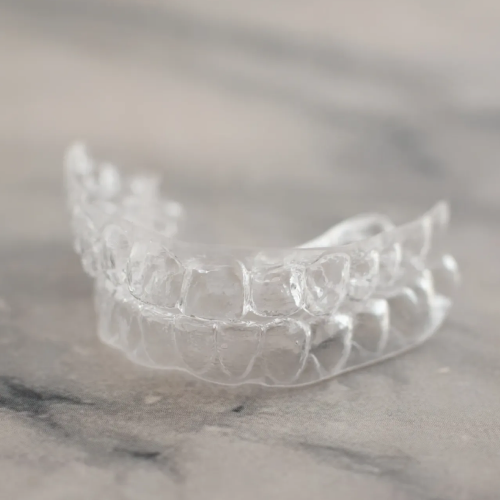
How Long Does Invisalign Take to Straighten Teeth Compared to Braces?
How long does Invisalign take compared to braces? Compare treatment times for metal and ceramic braces. Schedule your consultation in Long Beach today!
Read More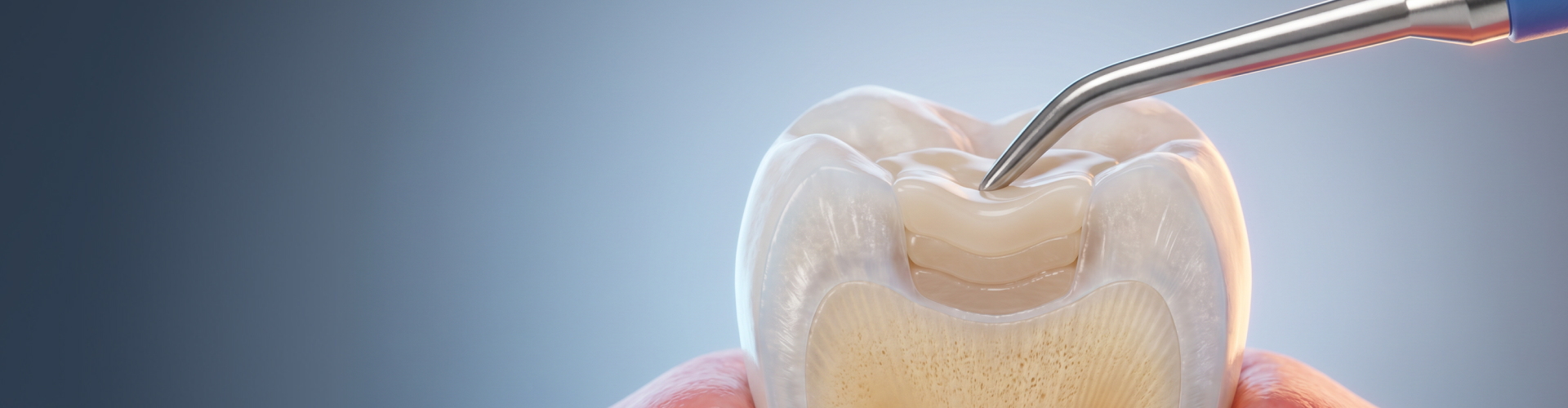
Over-the-counter filling kits can mask pain temporarily, but they're engineered from materials that are designed to dissolve — and they seal active bacteria inside your tooth. Professional cavity fillings remove decay, disinfect the cavity, and bond a durable material to your tooth structure in ways no drugstore kit can replicate.
When you press a DIY filling kit into a cavity, it feels like you're solving the problem. You're not. You may actually be accelerating it. For Long Beach-area patients, understanding the risks of DIY kits is essential.
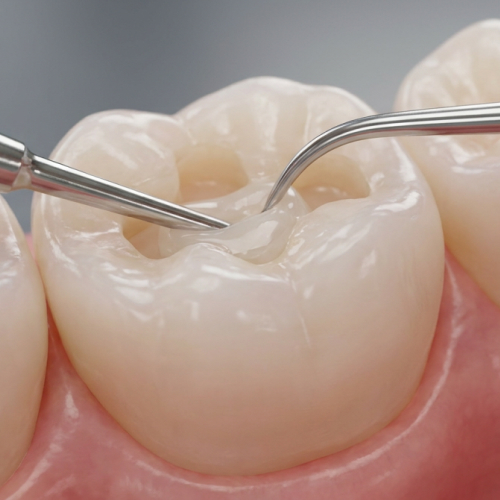
Here's why. A dentist doesn't just fill a cavity — they first use a high-speed handpiece to remove every trace of necrotic, bacteria-laden tissue. Then they disinfect the site before placing any material. That step is the entire point of the procedure.
A drugstore kit skips all of that. The bacteria already living inside the decay don't disappear when you cover them. They get sealed in. Without oxygen, certain aggressive anaerobic bacteria thrive in exactly these conditions — dark, warm, and nutrient-rich. The decay process doesn't pause. It accelerates toward the nerve.
What started as a straightforward cavity can become irreversible pulpitis or an abscess in a matter of weeks. According to Healthline, temporary fillings are explicitly designed as emergency measures until a dentist can perform proper treatment — not as standalone solutions. Using one as a permanent fix is like putting tape over a check engine light.
The financial math matters too. A simple filling might cost a few hundred dollars. A root canal and crown — which becomes necessary once bacteria reach the pulp — can run several thousand. The DIY kit doesn't save money. It defers a smaller bill and replaces it with a much larger one.
Most people assume "filling material" is a universal category. It isn't.
The majority of over-the-counter kits use zinc oxide eugenol (ZOE) — a material that is intentionally hydrophilic and water-soluble. It's designed to slowly dissolve over time so a dentist can remove it easily at a follow-up appointment. WebMD notes that DIY sealants are typically only reliable for around 48 hours before degradation begins.
Professional composite resin is a completely different substance. It's hydrophobic, chemically bonded to the tooth structure through an acid-etching process that opens microscopic pores in the enamel, allowing the resin to mechanically lock in place. Research published in PMC confirms that modern resin composites are engineered for durability, wear resistance, and minimal polymerization shrinkage — properties that require precise placement protocols no kit can replicate at home.
Human molars generate 150–200 pounds of biting force. A ZOE-based OTC filling is structurally incapable of sustaining that load. Micro-leakage develops at the margins — invisible to you, but a direct pathway for saliva, food particles, and bacteria to re-enter the tooth. The failure isn't dramatic. It's silent, until the pain returns worse than before.
There's a consequence of DIY fillings that almost never gets discussed: what happens when the material is too thick.
Dentists use articulating paper — thin marking film — to check your bite after every filling. They contour and polish the material until your jaw closes in perfect alignment. This process is meticulous because even 0.5mm of extra height creates a mechanical interference your jaw detects with every bite, every swallow, every unconscious jaw movement during sleep.
Your jaw's proprioceptive system responds to that interference by recruiting compensating muscle patterns. Over days, this can produce acute TMJ pain, chronic headaches, or percussion sensitivity — where the tooth becomes excruciatingly tender to touch because the periodontal ligament is being bruised repeatedly. In some cases, the opposing tooth (the one above or below the DIY filling) can crack under the abnormal load distribution, potentially requiring a tooth crown or even a tooth extraction.
The ADA has consistently cautioned that dental products are never one-size-fits-all, and that self-administered treatments carry real risk of irreversible complications. A bite that's off by less than a millimeter is not something you can detect or correct on your own.
Professional fillings aren't just "better quality" versions of what's in a drugstore kit. They're a fundamentally different clinical procedure.
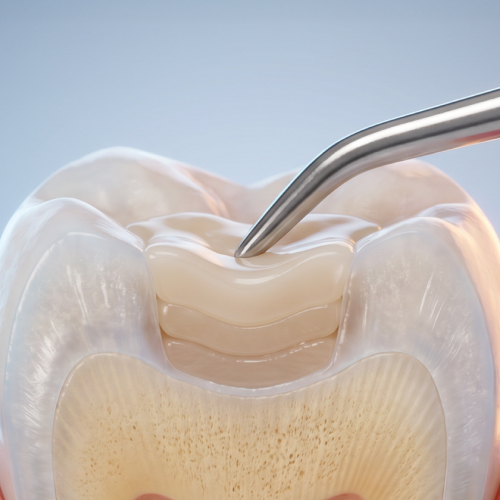
A dentist begins with a thorough examination — often including X-rays — to determine how deep the decay extends and whether the nerve is involved. The decay is removed completely under magnification and suction. The cavity is disinfected. A bonding agent is applied. The composite resin is placed in layers and cured with a calibrated light source. The bite is checked and adjusted. Staying current with your cleaning and exam appointments is the best way to catch decay before it ever reaches this stage.
The ADA's guidance on direct restorative materials outlines that modern composite resins require adhesive systems with highly reactive chemicals and precise curing devices — neither of which exists in any consumer product. The result of professional placement is a restoration that bonds to tooth structure, supports full occlusal load, and seals the margin against bacterial ingress.
Temporary OTC kits have a legitimate role: if you lose a filling on a Friday night and can't reach a dentist until Monday, a kit can protect the exposed tooth and reduce sensitivity. That's the appropriate use case. It is not a substitute for care, and using it as one carries consequences that compound quickly. If you're experiencing severe pain or swelling, treat it as a dental emergency and seek professional care as soon as possible.
If you have a cavity — or you've been using a temporary kit longer than a day or two — it's time to get it properly addressed. Long Beach Family Dentist provides professional cavity treatment for patients throughout the Long Beach area, using modern composite materials that are bonded, contoured, and built to last. Don't let a temporary fix become a permanent problem. Contact us to schedule your appointment today.
Medical disclaimer: This article is intended for informational purposes only and does not constitute professional dental or medical advice. Always consult a licensed dentist for diagnosis and treatment of dental conditions.
Fresh news from the dental world


Mon 8AM - 5PM
Tue 8AM - 5PM
Wed-Thu 8AM - 5PM
Fri 8AM - 5PM
Sat 9AM - 3PM
Sun Closed
Check out what our patients are saying in Long Beach, CA...


“Answers any questions...”
I been a patient here for over twelve years. Andrea greeted me and got my folder set up. Toni is very friendly and answers any questions you have promptly, when I always come in she greets you with a smile and makes your appointment enjoyable. Today Jovani and Dr. Joan made this experience great. I recommend this dentist for new patients.

“Clean and friendly...”
Very clean and friendly crew. I really enjoyed myself.

“A positive experience...”
Very clean and organized office! Entire staff was pleasant and friendly, and seems interested in ensuring I had a positive experience. Will definitely return! Affordable rates.

“My favorite dentist...”
The service here is amazing and they make you feel comfortable. I'm one of those people that hates to go to the dentist and the dentists that I went to in the past were not that great with service. Overall I found my favorite dentist service now at Long Beach Family Dentist.
“Answers any questions...”
I been a patient here for over twelve years. Andrea greeted me and got my folder set up. Toni is very friendly and answers any questions you have promptly, when I always come in she greets you with a smile and makes your appointment enjoyable. Today Jovani and Dr. Joan made this experience great. I recommend this dentist for new patients.
“Clean and friendly...”
Very clean and friendly crew. I really enjoyed myself.
Check out our accreditations, sources, and relationships in the wide world of dentistry...


Check us out and follow our Long Beach, CA practice on social media...