Why Your Invisalign Trays Aren't Fitting — And What to Do About It
Invisalign trays not fitting right in Long Beach? Learn why gaps happen, what tracking means, and when refinements are needed. Get answers from our dental team.
Read More
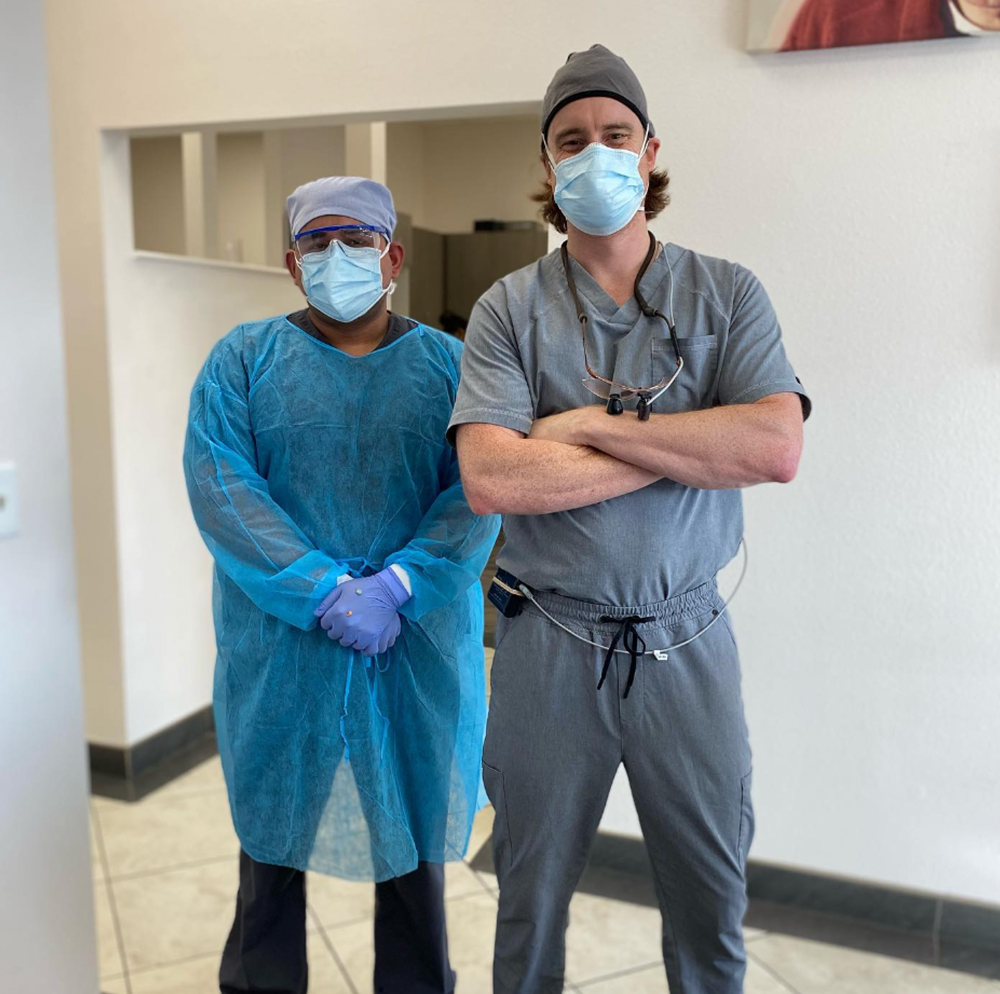
Written by Dr. Arkady Tsibel, DDS | Chief of Staff
Medically Reviewed by Dr. Peter Nguyen, DDS | USC Graduate
If you're in the Long Beach area and currently going through Invisalign treatment, you've probably had a moment where you looked at your tray, pressed it down, and thought — wait, is that gap normal? Honestly, you're not alone. I hear this question constantly from patients, and it's one of those things that sounds simple but actually involves a few layers worth unpacking.
Gaps, tracking issues, refinements — these are all connected. And understanding the difference between a minor fit hiccup and a real problem can save you months of confusion. In this post, I'll walk you through the three most common questions I get about Invisalign fit, starting with why your trays might not be seating all the way.
Here's the thing — a gap between your tray and your teeth isn't automatically a crisis, but it's also not something to ignore.
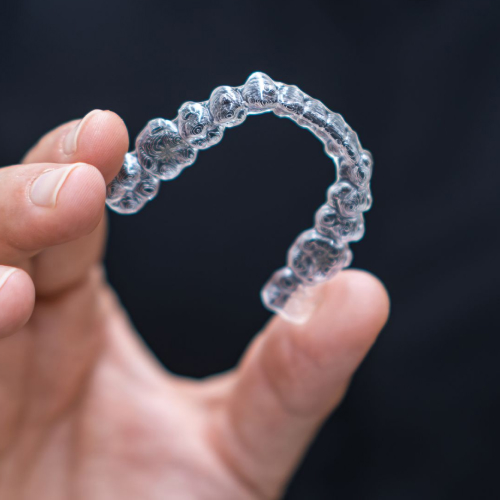
Invisalign trays are fabricated from 3D scans of your teeth and designed to fit snugly, applying controlled pressure to move teeth straightening gradually. When there's a visible gap — usually at the back teeth or along the bottom edge — it typically means one thing: your teeth haven't fully caught up to where the tray expects them to be.
Why does that happen? A few reasons.
The most common culprit is compliance. I had a patient last month who was skipping a few hours here and there — sleeping with trays out, removing them for coffee and "forgetting" to put them back in. She was wearing them maybe 16 hours a day instead of the required 20-22. Her trays? Wouldn't seat all the way. And I get it — life happens — but those hours matter more than people realize.
But compliance isn't the only reason. Sometimes the digital treatment plan didn't include enough overcorrection to account for how a specific tooth moves, according to a peer-reviewed study on overcorrection planning in clear aligner therapy. Some teeth, especially back molars, are just biomechanically stubborn. The planned movement outpaces what the tooth actually does.
Inaccurate tooth movement. Delayed tray changes. Poor overcorrection in the original plan. These all contribute.
What can you do? First — try aligner chewies. Biting down on them for 5-10 minutes helps seat the tray fully and closes those gaps. Second, don't just move to the next tray if the current one isn't fitting. That compounds the problem. And third — call your dentist. A gap that persists across multiple trays usually signals something that needs clinical attention, not just patience.
Bottom line? Gaps happen. Not every gap means failure, but every gap deserves attention.
"Tracking" is a word you'll hear a lot in Invisalign consultations, and it sounds more technical than it is.
Tracking simply means: are your teeth actually moving the way the computer planned? Your treatment was designed using ClinCheck® software, which maps out every tooth movement in a precise, stepwise sequence. Each aligner is built to move your teeth approximately 0.25mm per stage. When your teeth follow that plan accurately, you're "tracking well." When they deviate — that's an off-track situation.
And here's where it gets a little complicated.
Actually, scratch that — it depends on which movement we're talking about. Simple tipping movements track fairly well. Rotations, extrusions, and torque? Those are notoriously harder to predict, and that's where tracking breaks down most often.
How do you know if you're off-track? Honestly, it's not always obvious from the outside. The clearest signs are trays that don't fit snugly (there's that gap again), teeth that look visually different from the projected ClinCheck® images, or your dentist flagging a discrepancy at a checkup. Some practices use iTero Element scanning to compare your actual tooth positions against the predicted digital model — which is helpful, though I'm not 100% sure why, but my theory is that these tools sometimes overestimate progress, so clinical judgment still matters enormously.
Can you self-diagnose tracking issues? Sort of. Look at your attachments — those small tooth-colored bumps bonded to certain teeth. If your tray isn't engaging those attachments properly, that's a red flag.
Poor tracking doesn't mean treatment is failing. But it does mean your plan probably needs adjustment. The longer you wait, the harder the correction becomes — and that's where refinements come in.
Look, if someone told you before starting Invisalign that you'd definitely finish in exactly 12 months with zero extra trays — they were being optimistic. Generous, even.
Refinements are additional aligner sets prescribed after your initial treatment phase ends — or sometimes mid-treatment — to correct movements that didn't fully happen as planned. New 3D scans are taken, the treatment plan is updated, and a fresh set of aligners is fabricated to address whatever's left.
Here's the reality: 94% of Invisalign patients require at least one refinement scan. The average patient goes through about 2.5 refinement rounds, and total treatment time with refinements averages around 22.8 months — roughly five months longer than most initial estimates. That statistic surprises people, but it shouldn't. Teeth are biological. They don't always read the plan.
The good news? Refinements work. The first refinement typically produces a 64-78% improvement in final tooth position accuracy. After that, the returns diminish — more than four refinement rounds rarely produces dramatic additional change.
How complex your case is matters a lot here. Severe spacing cases, for example, have a dramatically higher chance of needing refinements than straightforward mild crowding. Rotations and Class II corrections are also notorious for requiring extra rounds.
One slightly controversial opinion? I think patients aren't warned about refinements often enough upfront. Setting realistic expectations from day one — including the likelihood of needing extra trays — makes the whole experience less stressful. It's not a sign that something went wrong. It's just how the process often works, at least in my experience.
Refinements aren't a failure. They're part of the journey for most people.
If your trays aren't fitting right, you're unsure about your tracking, or you've hit a point where refinements might be needed, don't sit on it. At Long Beach Family Dentist, we work with patients throughout the Long Beach Metro Area to make sure Invisalign treatment stays on course — not just in theory, but in your actual mouth.
Give us a call or stop by. Whether you're just starting out or mid-treatment and frustrated, our team is here to help you get to the smile you started this process for.
This content is for informational purposes only and does not replace professional medical advice, diagnosis, or treatment. Always consult with a qualified healthcare provider.
Fresh news from the dental world






Mon 8AM - 5PM
Tue 8AM - 5PM
Wed-Thu 8AM - 5PM
Fri 8AM - 5PM
Sat 9AM - 3PM
Sun Closed
Check out what our patients are saying in Long Beach, CA...


“My favorite dentist...”
The service here is amazing and they make you feel comfortable. I'm one of those people that hates to go to the dentist and the dentists that I went to in the past were not that great with service. Overall I found my favorite dentist service now at Long Beach Family Dentist.

“Clean and friendly...”
Very clean and friendly crew. I really enjoyed myself.

“Answers any questions...”
I been a patient here for over twelve years. Andrea greeted me and got my folder set up. Toni is very friendly and answers any questions you have promptly, when I always come in she greets you with a smile and makes your appointment enjoyable. Today Jovani and Dr. Joan made this experience great. I recommend this dentist for new patients.

“A positive experience...”
Very clean and organized office! Entire staff was pleasant and friendly, and seems interested in ensuring I had a positive experience. Will definitely return! Affordable rates.
“My favorite dentist...”
The service here is amazing and they make you feel comfortable. I'm one of those people that hates to go to the dentist and the dentists that I went to in the past were not that great with service. Overall I found my favorite dentist service now at Long Beach Family Dentist.
“Clean and friendly...”
Very clean and friendly crew. I really enjoyed myself.
Check out our accreditations, sources, and relationships in the wide world of dentistry...


Check us out and follow our Long Beach, CA practice on social media...