Do Veneers Stain? A Long Beach Dentist Explains What's Really Happening
Do veneers stain over time? Learn what causes discoloration, how porcelain compares to composite, and when to see a dentist in Long Beach.
Read More
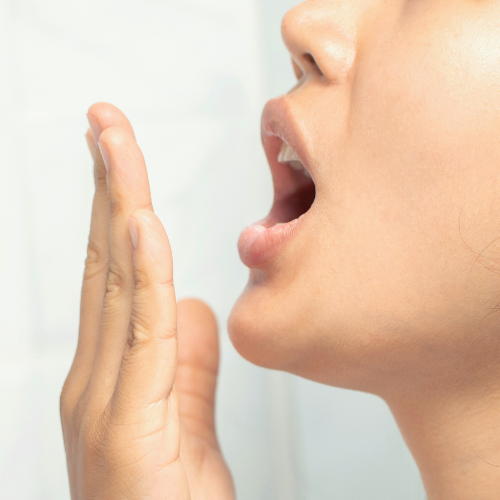
Almost everyone has had a moment when they worry about their breath. Maybe you wake up with a bad taste in your mouth. Maybe you notice an odor later in the day even after brushing. Or maybe someone politely offers you gum and you suddenly start wondering if there is a bigger issue.
Occasional bad breath is normal. Persistent bad breath is different.
Chronic bad breath, also known as halitosis, can affect confidence, social interactions, and even your overall health. It can make people hesitant to speak up in meetings, lean in during conversations, or feel fully at ease around others.
The good news is that bad breath usually has a cause. And once the cause is identified, it can often be treated.
At Long Beach Family Dentist, we see many patients who are surprised to learn that their breath concerns are connected to something deeper than skipping mouthwash or forgetting to floss. Sometimes the source is in the mouth. Sometimes it is connected to the throat, sinuses, digestion, or underlying health conditions.
Understanding what may be behind bad breath is the first step toward fixing it.
Bad breath develops when odor producing bacteria break down food particles, dead cells, and proteins in the mouth. As these bacteria work, they release sulfur compounds that create unpleasant smells.
However, bacteria alone are rarely the whole story.
Some of the most common contributors include:
In many cases, more than one factor is present at the same time.
Bad breath is best viewed as a signal rather than just a nuisance. It often means something in the mouth or body needs attention.
Temporary bad breath usually comes from:
This type of odor tends to go away once oral hygiene is restored or after eating and drinking normally.
Halitosis, on the other hand, is persistent. It sticks around despite brushing, flossing, and using mouthwash. If you find yourself constantly trying to mask odor instead of eliminating it, that is a sign something deeper may be happening.
The tongue has thousands of tiny grooves and ridges that trap bacteria and debris. If the tongue is not cleaned regularly, it can become one of the biggest sources of odor in the mouth.
A white or yellow coating on the tongue often contains:
Brushing the teeth alone does not address this buildup.
Daily tongue cleaning can make a noticeable difference in breath freshness.
Using a tongue scraper or gently brushing the tongue with a toothbrush helps reduce odor causing bacteria and improves overall oral hygiene.
Many people notice that their breath is worse in the morning, improves after brushing, and then becomes unpleasant again later in the day. This pattern can feel confusing and frustrating.
Several factors influence this cycle.
Reduced Saliva Flow: Saliva plays a major role in washing away bacteria and neutralizing acids. When saliva flow slows down, bacteria multiply more easily.
Saliva production decreases:
This is why morning breath is so common.
If saliva flow stays low throughout the day, odors may return quickly even after brushing.
Bacteria Recolonization: Brushing removes a large portion of bacteria, but it does not sterilize the mouth. Bacteria begin repopulating almost immediately.
If plaque buildup, gum disease, or tongue coating is present, bacteria rebound faster and produce odor sooner.
Food Trapped Between Teeth: Tiny food particles stuck between teeth or under the gumline can continue breaking down for hours. This process feeds odor producing bacteria.
Flossing or using interdental brushes is essential for preventing this type of odor.
Dry Mouth from Lifestyle Habits: Common contributors include:
All of these dry out the mouth and make bad breath more noticeable.
If your breath worsens as the day goes on, it often points to dry mouth, plaque buildup, or gum issues rather than brushing technique alone.
Yes. While the mouth is the most common source of bad breath, it is not the only one.
Tonsil Stones: Tonsil stones are small, whitish lumps that form in the crevices of the tonsils. They are made of:
As they break down, they release a strong sulfur odor.
Signs of tonsil stones include:
Tonsil stones can exist even if your teeth and gums are healthy.
Sinus Infections and Postnasal Drip: When mucus drains from the sinuses into the back of the throat, it provides a food source for bacteria.
This can lead to:
Chronic sinus issues often contribute to breath problems that do not improve with brushing alone.
Mouth Breathing: People who breathe through their mouth due to nasal congestion or airway issues tend to have drier mouths. Dry environments allow odor producing bacteria to thrive.
If dental causes are ruled out, your dentist may recommend collaborating with a physician or ENT specialist to explore tonsil or sinus involvement.
This is a common and understandable concern.
Cavities are only one potential source of bad breath. A cavity free mouth can still have conditions that allow bacteria to flourish.
Gum Disease: Gum disease often produces odor long before pain appears.
Early gum disease (gingivitis) can cause:
More advanced gum disease (periodontitis) creates deep pockets between the teeth and gums. These pockets trap bacteria and debris, leading to persistent smell.
Even small amounts of gum inflammation can contribute to halitosis.
Plaque and Tartar Buildup: Tartar cannot be removed by brushing alone. It harbors bacteria that continuously release odor.
Professional cleanings remove tartar and significantly reduce bacterial load.
Old Dental Restorations: Worn fillings, cracked crowns, or poorly fitting restorations can trap food and bacteria.
These areas are difficult to clean at home and may become hidden sources of odor.
Tongue Coating: Many patients with no cavities still have heavy tongue coating. Without addressing the tongue, bad breath may persist.
Dry Mouth: Dry mouth is one of the most overlooked causes of halitosis.
Even with excellent oral hygiene, a dry environment allows odor to develop.
In short, no cavities does not always mean no cause. A thorough evaluation looks at gums, tongue, saliva flow, restorations, and overall oral environment.
Healthy gums form a tight seal around teeth. This seal keeps bacteria out. When gums become inflamed, that seal weakens.
Bacteria then:
Bleeding gums are a major warning sign.
If you notice:
These symptoms deserve attention, even if you feel no pain.
Treating gum disease often leads to dramatic improvement in breath.
Mouthwash can temporarily mask odor. Some formulas also reduce bacteria for a short time.
However, mouthwash does not:
Think of mouthwash as a support tool, not a solution.
Long term freshness comes from addressing the root cause.
Small changes can make a big difference.
Brushing twice daily: Use a fluoride toothpaste and brush for a full two minutes.
Flossing or interdental cleaning: Once per day at minimum.
Cleaning the tongue: Daily tongue scraping or brushing.
Staying hydrated: Sip water throughout the day.
Limiting odor promoting foods: Garlic, onions, and heavy coffee intake can contribute.
Avoiding tobacco: Smoking and vaping worsen dry mouth and odor.
Regular dental visits: Professional cleanings remove what home care cannot.
While oral causes are most common, persistent halitosis may sometimes be linked to:
If dental evaluation does not reveal a clear cause, your dentist may suggest medical follow up.
This collaborative approach helps ensure nothing important is overlooked.
At Long Beach Family Dentist, evaluating halitosis is more than a quick glance.
It may include:
From there, a personalized treatment plan is created.
This may involve:
Bad breath is extremely common.
Dental professionals talk about it every day.
Bringing up concerns allows us to help you find answers and relief.
Silence keeps the problem going.
Fresh breath affects more than your mouth.
It influences:
Solving chronic bad breath often brings a noticeable boost in confidence.
If you have been dealing with ongoing bad breath, you do not have to guess your way through it.
A professional evaluation can uncover the cause and point you toward real solutions.
Schedule an appointment with Long Beach Family Dentist today to take the first step toward healthier gums, a cleaner mouth, and fresher breath you can feel confident about.
Fresh news from the dental world



Mon 8AM - 5PM
Tue 8AM - 5PM
Wed-Thu 8AM - 5PM
Fri 8AM - 5PM
Sat 9AM - 3PM
Sun Closed
Check out what our patients are saying in Long Beach, CA...


“Answers any questions...”
I been a patient here for over twelve years. Andrea greeted me and got my folder set up. Toni is very friendly and answers any questions you have promptly, when I always come in she greets you with a smile and makes your appointment enjoyable. Today Jovani and Dr. Joan made this experience great. I recommend this dentist for new patients.

“Clean and friendly...”
Very clean and friendly crew. I really enjoyed myself.

“My favorite dentist...”
The service here is amazing and they make you feel comfortable. I'm one of those people that hates to go to the dentist and the dentists that I went to in the past were not that great with service. Overall I found my favorite dentist service now at Long Beach Family Dentist.

“A positive experience...”
Very clean and organized office! Entire staff was pleasant and friendly, and seems interested in ensuring I had a positive experience. Will definitely return! Affordable rates.
“Answers any questions...”
I been a patient here for over twelve years. Andrea greeted me and got my folder set up. Toni is very friendly and answers any questions you have promptly, when I always come in she greets you with a smile and makes your appointment enjoyable. Today Jovani and Dr. Joan made this experience great. I recommend this dentist for new patients.
“Clean and friendly...”
Very clean and friendly crew. I really enjoyed myself.
Check out our accreditations, sources, and relationships in the wide world of dentistry...


Check us out and follow our Long Beach, CA practice on social media...