Do Veneers Fix Gaps and Crooked Teeth? What Long Beach Patients Need to Know
Wondering if veneers can fix gaps or crooked teeth? Learn how this cosmetic treatment transforms smiles. Schedule your consultation with our Long Beach team!
Read More
Porcelain veneers resist staining far better than natural enamel, but the bonding margins can discolor over time. Whitening before veneers is smart—but timing matters more than most dentists explain. And if you grind, the type of nightguard you choose could determine whether your veneers last a decade or a few years.
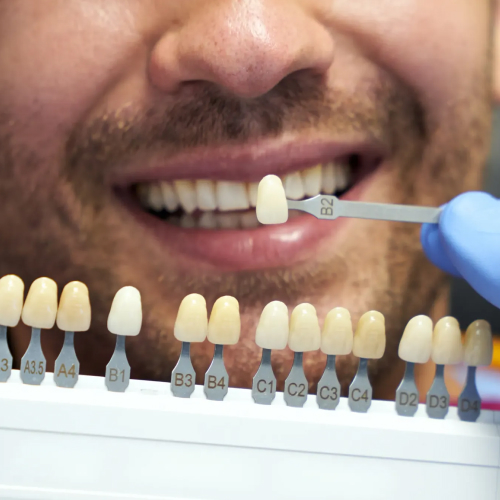
This is the sequencing question I see patients get wrong most often. For Long Beach-area patients, we always recommend whitening first. Porcelain is color-stable, meaning the shade we match on day one is permanent. Cleveland Clinic explains that veneers conceal discoloration rather than respond to bleaching agents—so whitening after placement does nothing to the porcelain itself.
The logic is straightforward: brighten your natural teeth first, then we match the veneers to that brighter baseline.
Here's where most explanations stop—and where the real clinical risk begins.
If you whiten too close to your bonding appointment, your veneers are significantly more likely to debond prematurely. This comes down to oxygen inhibition. Hydrogen peroxide from whitening gels releases residual oxygen into the tooth structure. That oxygen remains active in the enamel for several days and interferes with the resin cement's ability to cure and bond properly. The adhesive layer simply cannot polymerize fully against an oxygen-saturated surface.
My standard protocol: complete your final whitening session at least 14 days before the bonding appointment. This gives the residual peroxide time to dissipate and allows the enamel surface to restabilize. Skipping this window risks a weakened bond that looks fine initially but fails under normal chewing forces months later.
Harvard Health notes that bleaching results generally stabilize within one to three weeks, which aligns perfectly with this waiting period.
Patients often hear "porcelain doesn't stain" and assume their smile is permanently protected from coffee and red wine. That's partially true and partially misleading.
The porcelain surface itself is highly stain-resistant. Research on ceramic materials confirms that glazed ceramic surfaces reduce surface roughness and minimize plaque and pigment accumulation. Research published in PMC found that surface texture has a substantial impact on the color stability of ceramic restorations—polished and glazed surfaces perform dramatically better than rough ones.
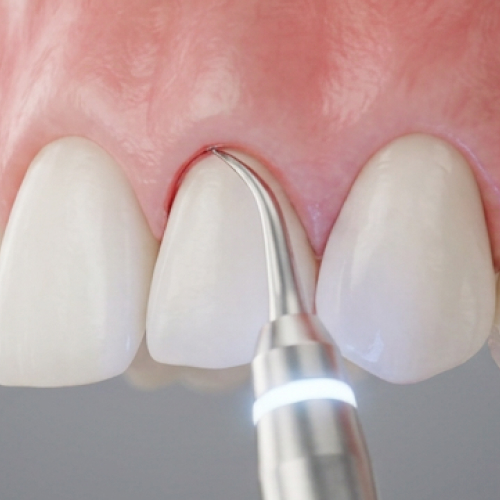
The vulnerability isn't the porcelain. It's the margin—the thin line where the veneer edge meets your natural tooth. That interface is sealed with resin cement, and resin absorbs pigment over time. Coffee, red wine, and tea are the primary offenders. Micro-leakage at the margin allows chromogens to penetrate the bonding agent, creating the brown or gray lines patients sometimes notice years after placement.
This distinction matters for how you maintain your veneers. Abrasive whitening toothpastes won't touch the porcelain shade, but they can roughen the margin area and accelerate staining. I recommend non-abrasive polishing pastes and regular cleaning and exam appointments where we can re-polish the margins directly.
For patients who drink significant amounts of coffee or wine, periodic professional re-glazing appointments help restore the smoothness of both the veneer surface and its edges, keeping the margin as stain-resistant as possible.
If you grind or clench, you need a nightguard before we place veneers. That part isn't debatable. Research published in PubMed on long-term veneer survival found that bruxism was associated with a 7.7-times greater risk of veneer failure compared to non-bruxing patients. Fracture of the ceramic was the leading cause of failure.
What most patients aren't told is that not all nightguards protect veneers equally—and the wrong type can make grinding worse.
Soft, over-the-counter guards are the most common purchase. They're inexpensive and widely available. The problem is that soft, compressible material can trigger a chewing reflex during sleep. The jaw muscles engage against the cushion, increasing lateral forces on the teeth. For veneer patients, those lateral forces are exactly what cause porcelain to chip or debond at the margins.
For my veneer patients, I prescribe either a full hard-acrylic guard or a dual-laminate guard with a hard outer surface and thin soft inner layer. The hard occlusal surface is critical—it allows the lower teeth to glide smoothly across without "catching" on the porcelain edges. That smooth slide dissipates force rather than concentrating it at the veneer-tooth junction.
WebMD notes that veneer success depends significantly on patient self-care following placement. A properly fitted hard guard is one of the highest-impact protective steps available after the procedure is complete.
Custom-fitted guards from our office also allow us to build in canine guidance—a design feature that protects anterior veneers by directing lateral forces away from the front teeth during sleep movements.
Three questions, three clear answers. Whiten first, wait two weeks before bonding. Protect the margins with non-abrasive care and pro teeth whitening professional polishing. Get a hard-acrylic nightguard if you grind.
These aren't minor details—they're the factors that separate veneers lasting five years from veneers lasting twenty. Mouthhealthy.org from the ADA describes veneers as thin shells bonded to the front of teeth, which underscores why the bonding interface and protective habits matter so much for long-term outcomes.
At Long Beach Family Dentist, we take the time to walk through every pre-treatment question before a single tooth is prepared. Serving patients throughout the Long Beach metro area, our team combines aesthetic dentistry planning with the clinical depth to handle every stage—from whitening sequencing to custom nightguard fabrication. Contact us to schedule your consultation.
Medical disclaimer: This article is intended for general informational purposes only and does not constitute professional dental advice, diagnosis, or treatment. Always consult a qualified dental professional regarding your individual oral health needs.
Fresh news from the dental world


Mon 8AM - 5PM
Tue 8AM - 5PM
Wed-Thu 8AM - 5PM
Fri 8AM - 5PM
Sat 9AM - 3PM
Sun Closed
Check out what our patients are saying in Long Beach, CA...


“My favorite dentist...”
The service here is amazing and they make you feel comfortable. I'm one of those people that hates to go to the dentist and the dentists that I went to in the past were not that great with service. Overall I found my favorite dentist service now at Long Beach Family Dentist.

“Clean and friendly...”
Very clean and friendly crew. I really enjoyed myself.

“A positive experience...”
Very clean and organized office! Entire staff was pleasant and friendly, and seems interested in ensuring I had a positive experience. Will definitely return! Affordable rates.

“Answers any questions...”
I been a patient here for over twelve years. Andrea greeted me and got my folder set up. Toni is very friendly and answers any questions you have promptly, when I always come in she greets you with a smile and makes your appointment enjoyable. Today Jovani and Dr. Joan made this experience great. I recommend this dentist for new patients.
“My favorite dentist...”
The service here is amazing and they make you feel comfortable. I'm one of those people that hates to go to the dentist and the dentists that I went to in the past were not that great with service. Overall I found my favorite dentist service now at Long Beach Family Dentist.
“Clean and friendly...”
Very clean and friendly crew. I really enjoyed myself.
Check out our accreditations, sources, and relationships in the wide world of dentistry...


Check us out and follow our Long Beach, CA practice on social media...