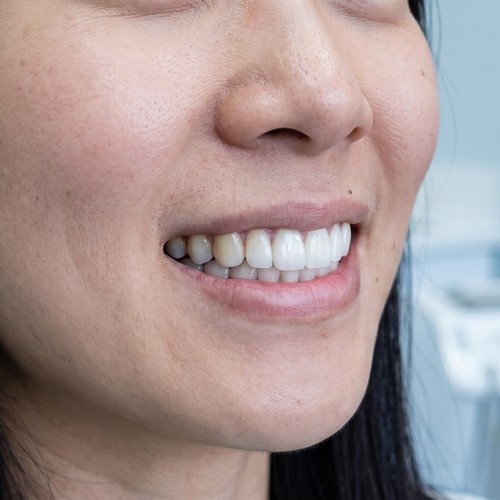
What Patients Ask Before Getting Veneers: Stains, Nightguards, and Whitening
Do veneers stain? Do you need a nightguard? Learn the facts about porcelain veneers and whitening. Schedule your consultation at Long Beach Family Dentist now!
Read More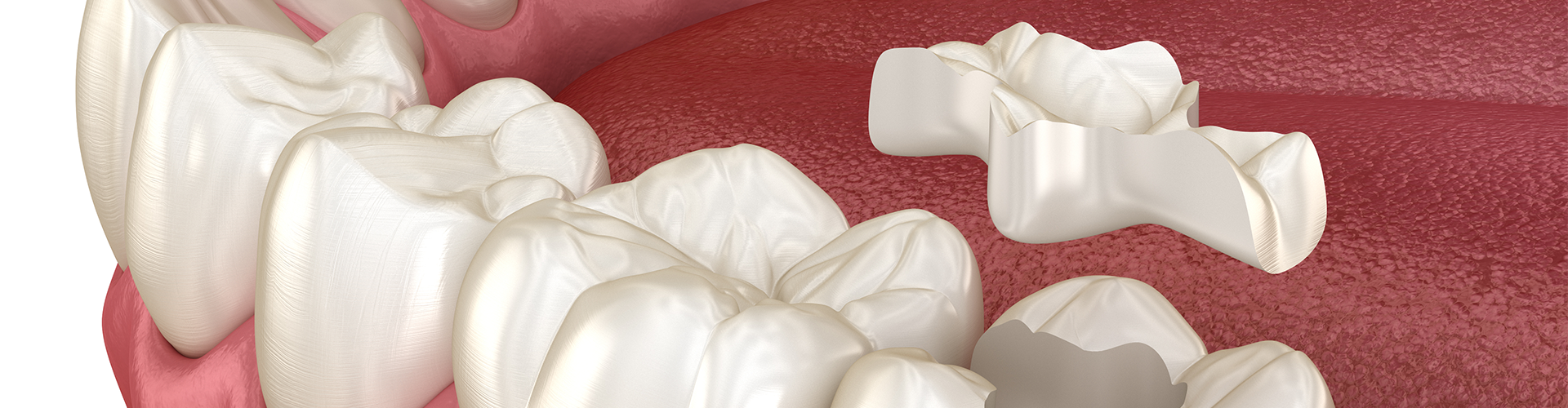
If you’ve ever had tooth damage that’s too big for a simple filling but not quite a dental emergency, chances are you’ve heard words like “inlay,” “onlay,” or “crown” tossed around. And unless you’re in the dental field, they probably sound a little too similar. But choosing the right restoration makes all the difference in how your tooth functions, feels, and lasts over time.
At Long Beach Family Dentist, we often see patients unsure of what they need. And while every case is unique, there’s one option that tends to stand out as the most reliable, long-term fix: the dental crown. Let’s take a closer look at what these restorations do, how they compare, and why a crown might just be the best decision for your smile.
Let’s start with the basics. These three treatments are used to restore teeth that have been damaged by decay or trauma, but they each cover a different area and serve a slightly different purpose.
Inlays are used when the damage is too extensive for a filling but doesn’t affect the tooth’s cusps (the pointed parts). An inlay fits inside the tooth like a puzzle piece, filling the space between the cusps.
Onlays cover more surface area than inlays. They’re sometimes called “partial crowns” because they extend over one or more cusps of the tooth. If your tooth has moderate damage but still has some strong structure left, an onlay can preserve more of your natural tooth than a crown would.
Crowns, on the other hand, cover the entire visible portion of the tooth. If your tooth is cracked, broken, or severely decayed, a crown offers full protection and stability. It acts as a cap, sealing the tooth underneath and restoring its shape, strength, and appearance.
While all three treatments are custom-made and typically fabricated in a dental lab, crowns provide the most coverage and durability. Inlays and onlays require the existing tooth to be relatively intact, which is why they’re not as commonly used in everyday general dentistry.
A crown is often the better choice when the tooth is structurally compromised. If a large portion of your tooth has been lost to decay, or if it has cracks running through it, placing an inlay or onlay could be risky. These partial restorations depend on having enough strong, healthy tooth structure to support them. Without that foundation, they may fail, or worse, the tooth could break even further.
Crowns step in when protection needs to be the top priority. They shield the entire tooth from biting pressure and bacteria, allowing you to chew comfortably without worrying about more damage. They’re especially useful for molars, which do most of the heavy lifting when you eat.
There are also times when a tooth simply won’t respond well to smaller restorations. If you’ve had a failed filling in the past or have recurring issues with the same tooth, your dentist may recommend going straight to a crown to avoid future problems.
Crowns are also often recommended after a root canal. That’s because a root canal-treated tooth no longer has a living nerve inside, making it more brittle. A crown helps hold the tooth together and prevents fractures.
At Long Beach Family Dentist, we often find that when patients opt for crowns early enough, they end up saving the tooth, and avoiding more complex procedures down the road.
On paper, yes. Inlays and onlays can be slightly less expensive than full crowns, especially when you consider the materials used and the time involved. Because they’re smaller and cover less of the tooth, they often require less work and fewer materials during fabrication.
However, the difference isn’t always dramatic. And when you factor in the long-term value, crowns can sometimes come out ahead. Here’s why:
If an inlay or onlay fails because the tooth underneath weakens, you may need to replace it with a crown, or, in the worst-case scenario, extract the tooth and get a dental implant. That means paying twice, or even three times, what you would’ve spent on a crown in the first place.
Crowns tend to last longer as well. While inlays and onlays can last 5 to 10 years with proper care, crowns often last 10 to 15 years or more. With the right hygiene and regular dental visits, some crowns can even last decades.
It’s also worth noting that many insurance plans cover crowns at the same rate they cover inlays and onlays. So the price you see on paper may not be the final cost you pay out of pocket.
We always work with our patients to discuss not just the upfront price, but the long-term outlook. A slightly higher cost today might save you a lot of money, and pain, later on.
While we believe in conservative dentistry and always try to preserve natural tooth structure when possible, the reality is that many cases call for more protection than inlays or onlays can offer. That’s why crowns are often our go-to solution.
They’re predictable. They’re strong. They protect your tooth from further damage. And when done properly, they blend in beautifully with the rest of your smile.
We’ll always walk you through your options, but if you’re dealing with a tooth that’s been through a lot, whether it’s an old filling, deep decay, or a crack, it’s often better to be safe than sorry.
You don’t need to know everything about dental restorations to make the right choice. You just need a dentist who listens, explains, and cares about the health and longevity of your smile. Whether your tooth needs a crown, inlay, onlay, or something else entirely, we’ll make sure you understand the “why” behind the recommendation.
If you're unsure what your tooth needs or just want to get ahead of any problems, we’re here to help.
Fresh news from the dental world




Mon 8AM - 5PM
Tue 8AM - 5PM
Wed-Thu 8AM - 5PM
Fri 8AM - 5PM
Sat 9AM - 3PM
Sun Closed
Check out what our patients are saying in Long Beach, CA...


“Answers any questions...”
I been a patient here for over twelve years. Andrea greeted me and got my folder set up. Toni is very friendly and answers any questions you have promptly, when I always come in she greets you with a smile and makes your appointment enjoyable. Today Jovani and Dr. Joan made this experience great. I recommend this dentist for new patients.

“Clean and friendly...”
Very clean and friendly crew. I really enjoyed myself.

“A positive experience...”
Very clean and organized office! Entire staff was pleasant and friendly, and seems interested in ensuring I had a positive experience. Will definitely return! Affordable rates.

“My favorite dentist...”
The service here is amazing and they make you feel comfortable. I'm one of those people that hates to go to the dentist and the dentists that I went to in the past were not that great with service. Overall I found my favorite dentist service now at Long Beach Family Dentist.
“Answers any questions...”
I been a patient here for over twelve years. Andrea greeted me and got my folder set up. Toni is very friendly and answers any questions you have promptly, when I always come in she greets you with a smile and makes your appointment enjoyable. Today Jovani and Dr. Joan made this experience great. I recommend this dentist for new patients.
“Clean and friendly...”
Very clean and friendly crew. I really enjoyed myself.
Check out our accreditations, sources, and relationships in the wide world of dentistry...


Check us out and follow our Long Beach, CA practice on social media...