Why Your Invisalign Trays Aren't Fitting — And What to Do About It
Invisalign trays not fitting right in Long Beach? Learn why gaps happen, what tracking means, and when refinements are needed. Get answers from our dental team.
Read More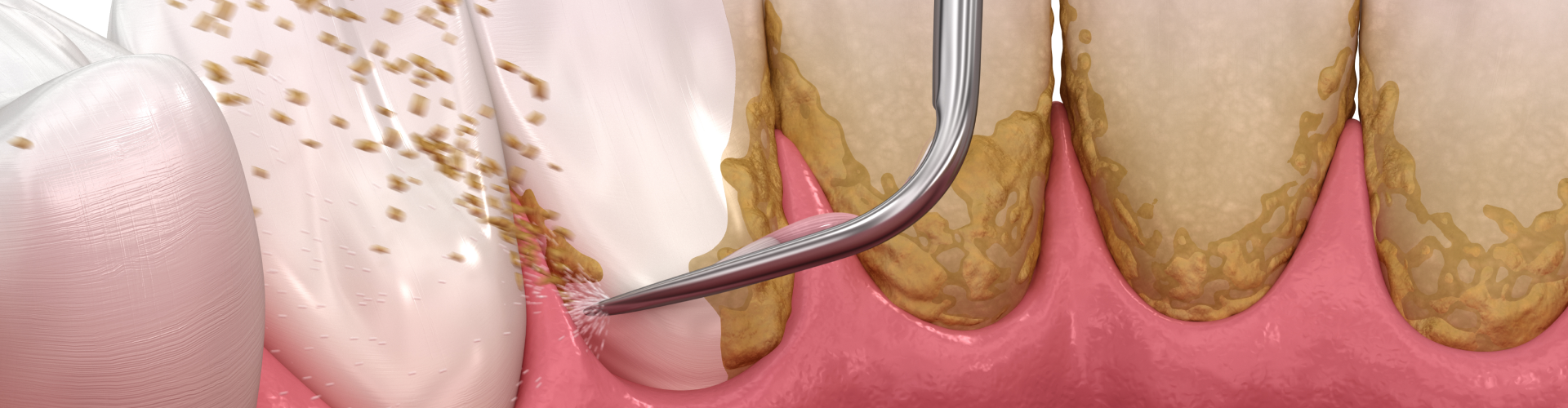
You brush, you floss (most days), and maybe you even use mouthwash now and then. But when was the last time you really thought about your gums? They do more than just hold your teeth in place. They’re the foundation of your oral health, and when they’re in trouble, your entire smile is at risk.
That’s where periodontal disease comes in. It doesn’t always start with pain. In fact, it often sneaks in quietly. A little bleeding when you brush. Some puffiness. Maybe your breath isn’t as fresh as usual. It’s easy to ignore, until it’s not.
Let’s break down what periodontal disease really is, how it starts, what it can lead to, and what you can do to prevent it or stop it from getting worse.
Periodontal disease (also known as gum disease) starts with bacteria. Your mouth is full of them, both good and bad. Every time you eat or drink, especially sugary or starchy foods, the bacteria in your mouth feed on those leftovers and form plaque. This sticky film clings to your teeth, and if it’s not brushed or flossed away, it hardens into tartar.
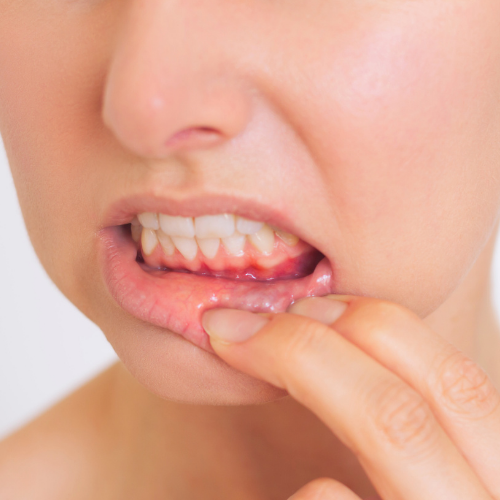
Tartar is like a hardened shell that locks in bacteria and gives them a cozy home just beneath your gumline. Once there, they start to irritate your gums, triggering an immune response that causes inflammation. This is gingivitis, the earliest stage of periodontal disease. At this point, your gums might look red or puffy, and they may bleed when you brush.
But gingivitis is only the beginning. If you don’t take action, it can turn into periodontitis, where the inflammation and bacteria start attacking the tissues and bone that hold your teeth in place.
There are several risk factors that can speed up or worsen gum disease:
Even stress can play a role, since it affects your immune system’s ability to fight off infections.
The bottom line? Periodontal disease is caused by bacteria, but it’s fueled by habits, health conditions, and sometimes even your genes.
Here’s the part that too many people underestimate. Periodontal disease isn’t just a gum issue. It’s a whole-body issue. Left untreated, it doesn’t just cause a little bleeding or bad breath. It can lead to bone loss, shifting teeth, receding gums, and even tooth loss.
The deeper the infection goes, the harder it is to treat, and the more damage it can do. Think of it like a tree. If the roots get infected and start to rot, the whole tree becomes unstable. Your gums and the bone underneath are your roots. Once they’re compromised, your teeth can become loose and eventually fall out.
Even worse? Researchers have linked periodontal disease to other serious health conditions. These include:
There’s also growing evidence that inflammation from gum disease might be connected to Alzheimer’s disease. While research is still ongoing, one thing is clear: ignoring periodontal disease doesn’t just risk your smile, it risks your health.
This is where things get a little more hopeful.
Gingivitis, the early stage of gum disease, can almost always be reversed. With a professional cleaning and a consistent routine at home (think brushing twice a day, daily flossing, and maybe an antimicrobial rinse), your gums can bounce back. You’ll notice the bleeding stops, the puffiness goes down, and your breath gets fresher.
But once gum disease progresses into periodontitis, it’s no longer reversible. The damage can’t be undone, but it can be stopped. The goal shifts from curing the disease to managing it. That means halting the progression and preventing further loss of gum or bone tissue.
At Long Beach Family Dentist, we tailor your treatment plan based on how far the disease has progressed. Options might include:
1. Deep Cleaning (Scaling and Root Planing): This isn’t your standard cleaning. It goes beneath the gumline to remove tartar and bacteria, and smooths out the tooth roots so the gums can heal and reattach.
2. Antibiotic Therapy: In some cases, we may apply antibiotics directly into the gum pockets to reduce infection and inflammation.
3. Surgical Treatments: For more advanced cases, surgery might be necessary. This can include flap surgery to lift the gums and clean deeper areas or bone and tissue grafts to rebuild what’s been lost.
4. Maintenance: This is key. Once you’ve had periodontitis, it becomes a chronic condition you manage, not something that goes away. You’ll need more frequent cleanings (often every 3 to 4 months) and a strict at-home routine.
One important note: catching gum disease early can save you from all of this. The earlier we treat it, the less invasive the treatment and the better the outcome.
So many people write off the signs of gum disease. A little bleeding when brushing? Must be brushing too hard. Puffy gums? Maybe it's the weather. Bad breath? Just need a mint.
But your gums are telling you something. And the sooner you listen, the better the outcome.
The truth is, periodontal disease is one of the most common, and most preventable, dental problems out there. It affects nearly half of adults over 30, and even more as we age. Yet with regular checkups, proper cleanings, and good daily habits, it’s also something you can keep under control.
If you’ve noticed any signs of gum problems, or if it’s just been a while since your last dental visit, we’re here to help. At Long Beach Family Dentist, we take your gum health seriously, and we’re here to keep your whole smile in good shape.
Your gums support everything else in your mouth. Let’s make sure they’re getting the care they need.
Schedule an appointment today and let’s take a closer look at your gum health. It's one small step that can make a big difference, for your smile and your overall health.
Fresh news from the dental world





Mon 8AM - 5PM
Tue 8AM - 5PM
Wed-Thu 8AM - 5PM
Fri 8AM - 5PM
Sat 9AM - 3PM
Sun Closed
Check out what our patients are saying in Long Beach, CA...


“My favorite dentist...”
The service here is amazing and they make you feel comfortable. I'm one of those people that hates to go to the dentist and the dentists that I went to in the past were not that great with service. Overall I found my favorite dentist service now at Long Beach Family Dentist.

“Clean and friendly...”
Very clean and friendly crew. I really enjoyed myself.

“Answers any questions...”
I been a patient here for over twelve years. Andrea greeted me and got my folder set up. Toni is very friendly and answers any questions you have promptly, when I always come in she greets you with a smile and makes your appointment enjoyable. Today Jovani and Dr. Joan made this experience great. I recommend this dentist for new patients.

“A positive experience...”
Very clean and organized office! Entire staff was pleasant and friendly, and seems interested in ensuring I had a positive experience. Will definitely return! Affordable rates.
“My favorite dentist...”
The service here is amazing and they make you feel comfortable. I'm one of those people that hates to go to the dentist and the dentists that I went to in the past were not that great with service. Overall I found my favorite dentist service now at Long Beach Family Dentist.
“Clean and friendly...”
Very clean and friendly crew. I really enjoyed myself.
Check out our accreditations, sources, and relationships in the wide world of dentistry...


Check us out and follow our Long Beach, CA practice on social media...