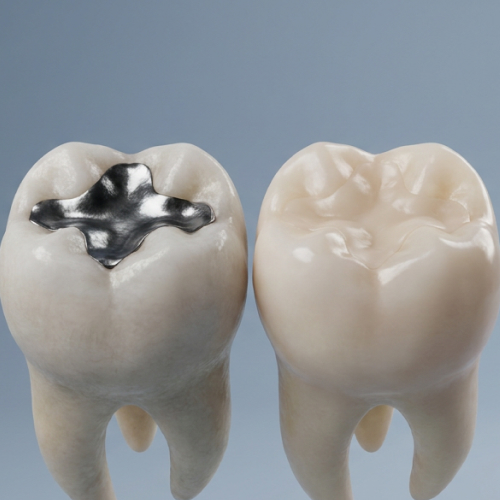
Composite vs. Silver Fillings: What Long Beach Patients Should Know Before Choosing
Choosing between composite vs. silver fillings? Discover which option looks natural and lasts. Call Long Beach Family Dentist to schedule your visit today!
Read More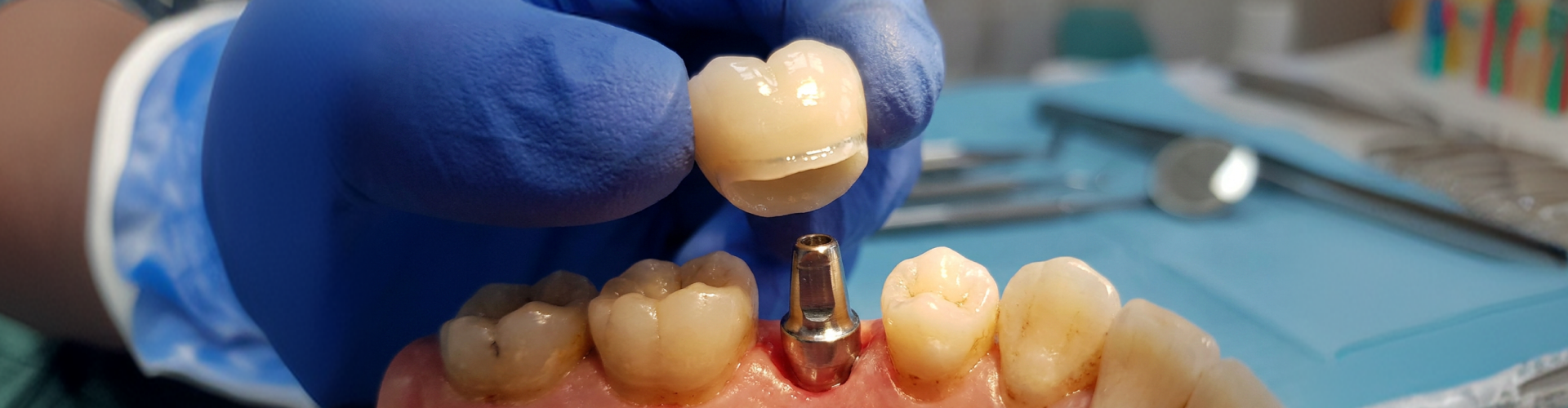
The "better" option between a dental implant and a partial denture depends on your health history, bone density, and specific medical conditions — not just preference. Some patients have systemic conditions that make implants genuinely unsafe, while others face long-term hidden tradeoffs with partials that only become clear years later. Here's what your dentist is actually weighing when making a recommendation.
For Long Beach-area patients, most assume a dentist steers them toward a partial denture because implants cost more or require surgery. That's rarely the full picture. There are specific medical thresholds where implant surgery becomes clinically risky, and a partial denture isn't a compromise — it's the protective choice.
Two of the most significant factors are bisphosphonate medications and uncontrolled diabetes.
Patients taking oral or intravenous bisphosphonates — drugs like Fosamax or Zometa prescribed for osteoporosis or certain cancers — face a serious risk called Medication-Related Osteonecrosis of the Jaw (MRONJ). This condition involves bone tissue in the jaw dying after surgical trauma. Mayo Clinic explains that successful implant integration requires healthy bone healing, and bisphosphonates directly interfere with that process. For these patients, the surgical drilling required to place an implant can trigger irreversible jawbone damage.
The second threshold involves blood sugar control. Patients with Type 2 diabetes whose HbA1c consistently runs above 8% experience significantly impaired wound healing and immune response. Osseointegration — the process where bone grows around the implant post — depends on the body's ability to heal correctly. When that healing is compromised, implant failure rates climb considerably. A partial denture, which requires no surgical site and no osseointegration, sidesteps that risk entirely.
Neither of these situations reflects a dentist being overly cautious. They reflect a clinical reality: implants are surgical devices, and surgery requires a body capable of healing from it.
Here's what rarely gets discussed when comparing these two options: a partial denture doesn't just replace the missing teeth. It physically loads the healthy teeth around them.
Partial dentures use metal clasps that wrap around adjacent "abutment" teeth to stay anchored in the mouth. During chewing, those clasps transmit lateral torque forces onto the anchor teeth — forces those teeth were never designed to absorb. Over time, this acts like a slow, repetitive lever on the tooth root, gradually loosening the periodontal ligament and increasing mobility. The American Academy of Periodontology notes that fixed bridges and partial dentures both cause the bone previously surrounding the missing tooth root to begin deteriorating, while also allowing gum and bone recession around the anchor points themselves.
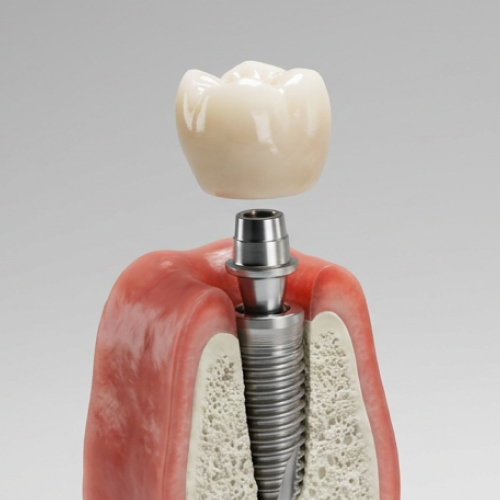
The clasp design also creates a plaque trap. The metal-to-enamel junction at the gumline is difficult to clean thoroughly, and the micro-environment it creates accelerates decay right at the cervical margin of otherwise healthy teeth. This is also why staying current with cleaning and exam appointments becomes especially important for partial denture wearers. A freestanding dental implant, by contrast, doesn't touch adjacent teeth at all. It replaces the missing root independently, leaving neighboring teeth structurally untouched.
This is worth considering carefully. Choosing a partial to preserve teeth may, paradoxically, accelerate the loss of the very teeth it relies on.
When patients ask whether implants are worth it, they're usually comparing the upfront treatment investment. That framing misses the longer view.
A dental implant, once integrated, is remarkably low-maintenance. Research published on NCBI cites a 10-year success rate above 97%, and Healthline reports that implant survival rates remain strong at 15 years, often requiring only minor maintenance like screw tightening or eventual tooth crown replacement.
A partial denture carries a different maintenance profile over that same decade:
Cleveland Clinic confirms the average lifespan of a denture is 7 to 10 years with proper care — meaning most patients will replace a partial at least once within the window an implant is still performing without significant intervention.
The cumulative maintenance burden of a partial often narrows the gap considerably over a decade. That doesn't make implants the automatic answer — candidacy still matters — but it does mean the "cheaper" option deserves a longer look before you decide.
The honest answer is: it depends on your specific clinical picture, and no article can substitute for a proper examination.
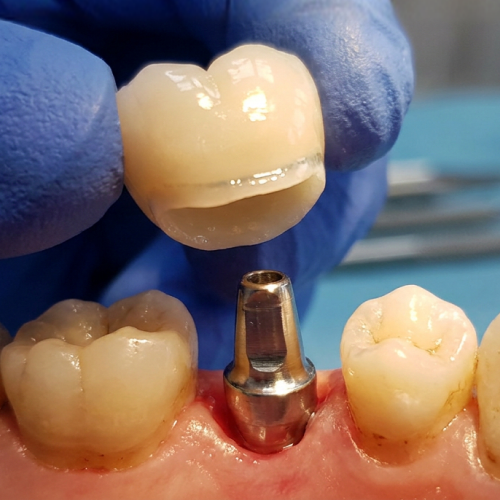
Implants are the longest-lasting, most structurally independent option available. They preserve jawbone, protect adjacent teeth, and function closest to natural teeth. WebMD notes that dental implants more closely resemble the feel of real teeth than any denture alternative. For patients with adequate bone density, stable systemic health, and no contraindications, they're typically the stronger long-term investment.
Partial dentures remain a valid, well-established solution — particularly for patients with medical contraindications to surgery, insufficient bone without willingness to graft, or those who need a faster, less invasive path to restored function. In some cases, a gum disease evaluation may also factor into which option is appropriate, since active periodontal disease can affect candidacy for both treatments.
The most important step is an honest conversation with your dentist about your full health history, not just your teeth. The recommendation you receive should reflect your whole picture, not a default protocol.
If you're weighing dental implants against a partial denture, the team at Long Beach Family Dentist can walk through your candidacy with a thorough examination — including your bone health, medical history, and long-term goals. We serve patients throughout Long Beach and the surrounding metro area. Schedule a cavity fillings consultation or a full restorative evaluation and get a recommendation built around your actual situation, not a one-size-fits-all answer.
Medical disclaimer: This article is intended for informational purposes only and does not constitute medical or dental advice. Always consult a licensed dental professional for diagnosis and treatment recommendations specific to your oral health needs.
Fresh news from the dental world



Mon 8AM - 5PM
Tue 8AM - 5PM
Wed-Thu 8AM - 5PM
Fri 8AM - 5PM
Sat 9AM - 3PM
Sun Closed
Check out what our patients are saying in Long Beach, CA...


“A positive experience...”
Very clean and organized office! Entire staff was pleasant and friendly, and seems interested in ensuring I had a positive experience. Will definitely return! Affordable rates.

“Clean and friendly...”
Very clean and friendly crew. I really enjoyed myself.

“Answers any questions...”
I been a patient here for over twelve years. Andrea greeted me and got my folder set up. Toni is very friendly and answers any questions you have promptly, when I always come in she greets you with a smile and makes your appointment enjoyable. Today Jovani and Dr. Joan made this experience great. I recommend this dentist for new patients.

“My favorite dentist...”
The service here is amazing and they make you feel comfortable. I'm one of those people that hates to go to the dentist and the dentists that I went to in the past were not that great with service. Overall I found my favorite dentist service now at Long Beach Family Dentist.
“A positive experience...”
Very clean and organized office! Entire staff was pleasant and friendly, and seems interested in ensuring I had a positive experience. Will definitely return! Affordable rates.
“Clean and friendly...”
Very clean and friendly crew. I really enjoyed myself.
Check out our accreditations, sources, and relationships in the wide world of dentistry...


Check us out and follow our Long Beach, CA practice on social media...