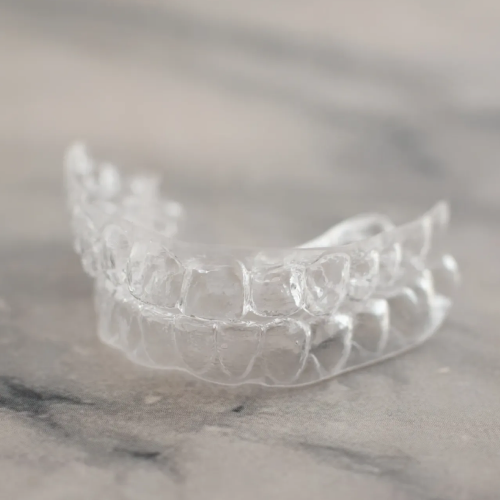
How Long Does Invisalign Take to Straighten Teeth Compared to Braces?
How long does Invisalign take compared to braces? Compare treatment times for metal and ceramic braces. Schedule your consultation in Long Beach today!
Read More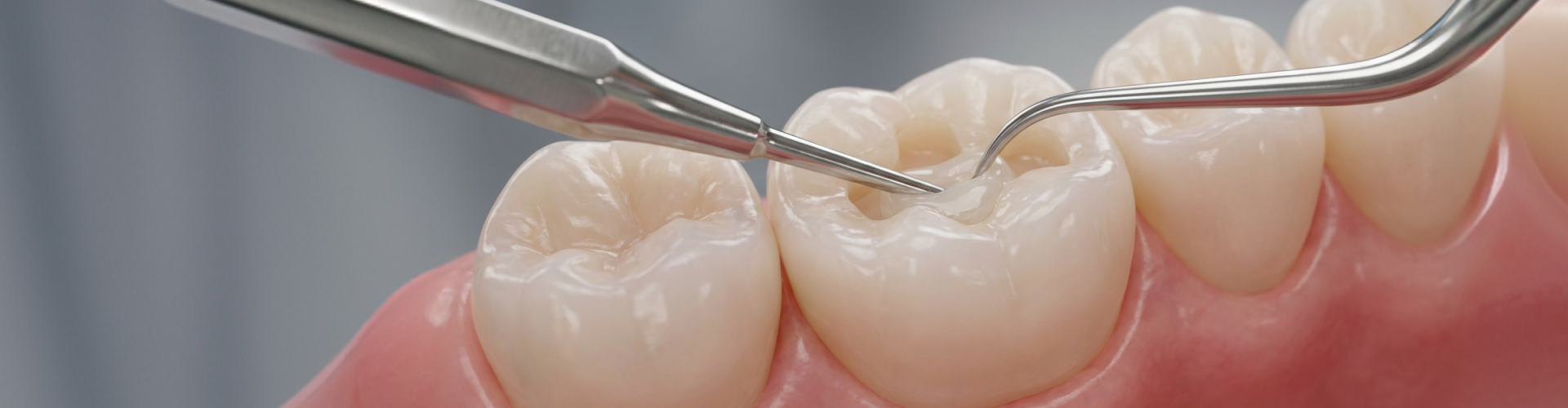
Composite and amalgam fillings each have real trade-offs — and the "better" option depends on tooth location, your health priorities, and how your insurance actually pays. Before your next appointment, there are a few things worth understanding that most patients never hear about.
For Long Beach patients, many assume composite fillings — the tooth-colored kind — are simply the modern standard. They are increasingly common. But the way most dental insurance policies work, they're not always treated as a standard benefit.
Here's what catches people off guard: most insurance plans contain something called an Alternative Benefits Provision. For posterior teeth (your back molars and premolars), insurers often only reimburse the equivalent of what an amalgam filling would cost. If your dentist places a composite on a back molar, your plan may classify the difference as a "cosmetic upgrade" — and bill you for it out of pocket.
Coverage for anterior teeth (front teeth) is different. Because appearance is clearly functional in that region, composites on front teeth are typically covered at their full rate.
Before your appointment, ask your insurance provider these specific questions:
Getting those answers before you sit in the chair prevents billing surprises after. The ADA's guidance on direct restoration materials notes that durability, strength, and coverage issues have all contributed to amalgam remaining in use despite the broader shift toward composite. Understanding your cavity fillings options ahead of time puts you in a much stronger position when discussing treatment with your dentist.
Patients seeking to avoid mercury often land on composite resin as the obvious alternative. That instinct makes sense. But composite isn't without its own chemistry concerns — and understanding them helps you ask better questions.
Standard composite resins are built on a resin matrix that typically includes Bis-GMA (bisphenol A glycidyl methacrylate), a high-viscosity monomer derived from BPA. Research published in PMC has found that residual uncured monomers — including Bis-GMA and TEGDMA — can leach from composite restorations and produce cytotoxic effects in cell studies. Importantly, complete polymerization is rarely achieved, meaning a portion of these monomers may remain chemically active after placement.
For patients specifically trying to minimize BPA-adjacent exposure, there are alternatives worth discussing with your dentist:
Neither option is universally appropriate for every cavity. Large posterior restorations still perform most predictably with conventional composite or amalgam. But for smaller cavities in lower-stress areas, these alternatives are clinically viable and worth requesting by name. Patients interested in children's dentistry should note that glass ionomer cements are particularly common in pediatric settings given their suitability for primary teeth.
When comparing filling longevity, most discussions stop at "amalgam lasts longer." That's accurate — according to NIDCR, composite materials are increasingly used but may need replacement more often. What rarely gets explained is the mechanism behind composite failure, and why it creates a diagnostic challenge.
When composite resin cures, it undergoes polymerization shrinkage — the material contracts slightly as it hardens. This creates a microscopic gap between the filling and the tooth wall. Over time, bacteria, fluids, and pigments penetrate that gap, producing marginal staining — sometimes called "shadowing" — visible on X-rays.
The clinical challenge: that shadowing can look nearly identical to secondary (recurrent) caries on a radiograph. A dentist examining the X-ray must distinguish between:
A clinical evaluation study via PMC found that secondary caries was the most common reason composite restorations needed replacement, while amalgam showed lower rates of secondary caries overall. Amalgam, by contrast, tends to corrode slightly over time — a process that actually helps seal the marginal gap, reducing bacterial entry.
This is why a dentist might recommend replacing a composite filling that causes no pain. It's not unnecessary treatment — it's addressing a failure mode that composite restorations are structurally prone to before it becomes a situation requiring an endodontic root canal.
With the chemistry and insurance picture clearer, here's how the two materials compare on the dimensions that matter most clinically.
Durability: According to the ADA's amalgam overview on MouthHealthy, amalgam's strength makes it particularly well-suited for large cavities in back teeth where chewing forces are greatest. Composite has improved substantially, but long-term studies still show amalgam outlasts composite in high-stress posterior applications.
Appearance: Composite wins clearly. It's color-matched to your tooth and essentially invisible. Amalgam is silver-gray and visible when you open your mouth. Patients who prioritize a seamless look may also want to explore options in aesthetic dentistry beyond fillings alone.
Safety: Both materials have been studied extensively. The NIH's NIDCR notes that current evidence does not show mercury exposure from dental amalgam causes harm — mercury vapor released during chewing remains well within established safety limits. Composite carries its own chemistry considerations, as outlined above. Neither material is risk-free; both are considered clinically safe for general use.
Tooth preservation: Composite bonds directly to tooth structure, often allowing more conservative cavity preparation. Amalgam requires slightly more tooth removal to achieve mechanical retention.
Placement complexity: Amalgam is more tolerant of moisture during placement — useful in difficult-to-isolate areas. Composite demands a dry field; any contamination compromises the bond and accelerates marginal failure.
The bottom line: neither filling is universally superior. Tooth location, cavity size, patient preference, and insurance coverage all factor into the right choice — which is exactly why shared decision-making with your dentist matters. Staying current with your cleaning and exam appointments is one of the best ways to catch decay early, when filling choices are simpler and less costly.
If you have questions about which filling material is right for your specific situation — or you want to understand your options before your next appointment — Long Beach Family Dentist is here to help. Our team serves patients throughout Long Beach and the surrounding metro area with straightforward, evidence-based guidance. If you're ever dealing with sudden tooth pain or a damaged filling, don't wait — contact us right away for a dental emergency consultation. Reach out to schedule a consultation and get the answers you need before you're in the chair.
Medical disclaimer: This article is for informational purposes only and does not constitute dental or medical advice. Always consult a licensed dental professional for diagnosis and treatment recommendations specific to your oral health needs.
Fresh news from the dental world



Mon 8AM - 5PM
Tue 8AM - 5PM
Wed-Thu 8AM - 5PM
Fri 8AM - 5PM
Sat 9AM - 3PM
Sun Closed
Check out what our patients are saying in Long Beach, CA...


“Answers any questions...”
I been a patient here for over twelve years. Andrea greeted me and got my folder set up. Toni is very friendly and answers any questions you have promptly, when I always come in she greets you with a smile and makes your appointment enjoyable. Today Jovani and Dr. Joan made this experience great. I recommend this dentist for new patients.

“Clean and friendly...”
Very clean and friendly crew. I really enjoyed myself.

“A positive experience...”
Very clean and organized office! Entire staff was pleasant and friendly, and seems interested in ensuring I had a positive experience. Will definitely return! Affordable rates.

“My favorite dentist...”
The service here is amazing and they make you feel comfortable. I'm one of those people that hates to go to the dentist and the dentists that I went to in the past were not that great with service. Overall I found my favorite dentist service now at Long Beach Family Dentist.
“Answers any questions...”
I been a patient here for over twelve years. Andrea greeted me and got my folder set up. Toni is very friendly and answers any questions you have promptly, when I always come in she greets you with a smile and makes your appointment enjoyable. Today Jovani and Dr. Joan made this experience great. I recommend this dentist for new patients.
“Clean and friendly...”
Very clean and friendly crew. I really enjoyed myself.
Check out our accreditations, sources, and relationships in the wide world of dentistry...


Check us out and follow our Long Beach, CA practice on social media...