Do Veneers Fix Gaps and Crooked Teeth? What Long Beach Patients Need to Know
Wondering if veneers can fix gaps or crooked teeth? Learn how this cosmetic treatment transforms smiles. Schedule your consultation with our Long Beach team!
Read More
Veneers can address gaps, minor crowding, and cosmetic misalignment — but whether they're the right tool depends heavily on your specific bite, tooth shape, and gap size. Some situations demand orthodontic preparation first to avoid irreversible tooth damage or an unnatural-looking result.
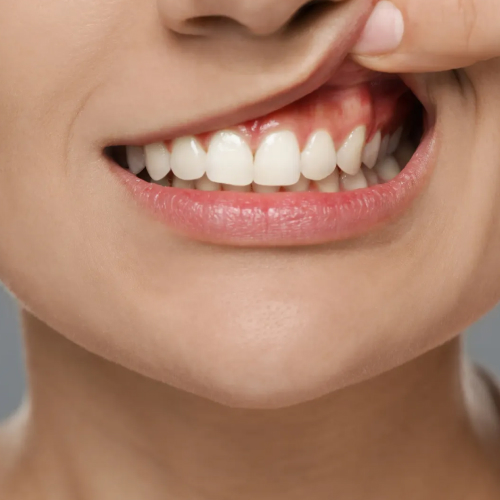
Closing a gap with veneers sounds simple. It isn't. For Long Beach patients, when your dentist places porcelain veneers to close a midline diastema (the space between your two front teeth), those teeth must become physically wider to fill the space. That's where proportion becomes critical.
Smile design follows a principle called the Golden Proportion — the ideal tooth width-to-length ratio sits around 75–80%. A tooth that's too wide looks square and unnatural. Patients sometimes call this the "chiclet" effect, and it happens when the gap being closed is simply too large for veneers alone to handle gracefully.
Here's a rough self-evaluation checklist:
If your gap is large, a dentist may recommend a short course of clear aligners — often just three to six months — to narrow the space before veneer placement. This "hybrid approach" lets the veneers remain ultra-thin and conservative, preserving far more natural enamel. According to Healthline, veneers are slightly wider than natural teeth by design, which is exactly how they conceal gaps — but that widening has a structural and aesthetic limit.
Veneers and braces solve different problems, even when the visible result looks similar.
Braces — including clear aligners like Invisalign — physically move teeth and their roots into new positions. The correction is structural. A WebMD overview of cosmetic dentistry notes that veneers improve appearance, while orthodontic treatment corrects position. That distinction matters enormously for long-term outcomes.
For minor gaps or slight crowding, veneers are a legitimate cosmetic solution. They're placed in far fewer appointments than a full orthodontic course, and the results are immediate. For patients whose primary concern is color, shape, and the look of their smile — not structural bite correction — veneers often win on practicality.
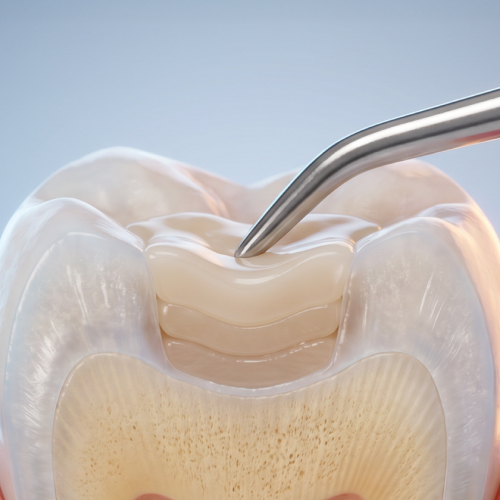
But there's a hidden tradeoff called the enamel preservation limit. Straightening a tooth with a veneer doesn't move the tooth — it disguises its position by shaving down the part that sticks out. A mildly rotated tooth may only require 0.3–0.5mm of reduction. A more severely crooked tooth can require 1.5mm or more of aggressive enamel removal to achieve the same optical effect. Strip away enough enamel and you expose sensitive dentin, dramatically raising the risk of sensitivity and eventual endodontic root canal treatment.
Mouthhealthy.org from the American Dental Association emphasizes that veneers should only be placed over healthy teeth by a licensed dentist — and that point cuts both ways. Healthy teeth with minor cosmetic issues are ideal veneer candidates. Teeth that require aggressive structural correction to look straight are not.
The practical answer: if your teeth are significantly rotated or crowded, three to six months of orthodontic alignment first will protect your tooth structure and let veneers do what they actually do well — refine color, shape, and minor contour.
This is the question most cosmetic dentistry articles skip entirely. Yes, you can get veneers with an overbite — but the physics of your bite will determine whether those veneers survive.
A normal bite places mostly compressive force on teeth. Porcelain handles compression well. A deep overbite introduces shear forces — lateral sliding contact during chewing and jaw movement that acts like a blade against porcelain. Shear forces are what cause veneers to chip or delaminate, sometimes within the first year.
The clinical solution lies in how the veneer preparation is designed. A butt-joint incisal preparation wraps the porcelain over the biting edge of the tooth, so forces are absorbed vertically rather than as a shearing sideways load. A feather-edge preparation, by contrast, leaves the porcelain thin and exposed at the edge — fine for patients with ideal bites, but a liability for overbite patients. Research published in PMC confirms that adhesive bonding to enamel is critical for veneer longevity, and that preparation design directly influences how ceramic restorations handle functional stress.
For overbite patients, a nightguard is non-negotiable after veneer placement. Even patients who don't consciously grind their teeth apply shear forces during sleep. A custom nightguard distributes those forces and protects the porcelain investment.
The takeaway: overbite severity exists on a spectrum. Mild overbites are manageable with proper prep design and a nightguard. Severe overbites — particularly those involving deep bites where lower teeth contact the backs of upper veneers — may require orthodontic correction before veneer placement is appropriate. WebMD's overview of dental veneers notes that worn-down or bite-compromised teeth are common veneer candidates, but the underlying bite mechanics must be addressed in the treatment plan.
Veneers work beautifully in the right clinical situation. They work poorly — and can cause irreversible harm — in the wrong one.
Strong candidates share a few traits: their teeth are structurally healthy, their gap or misalignment is minor to moderate, and their bite doesn't generate destructive shear loads on the front teeth. A Healthline guide on dental veneers lists chipped, discolored, slightly crooked, and gapped teeth as appropriate indications — all with the implicit assumption that the underlying tooth structure is sound.
Poor candidates include patients with severe crowding, large gaps that would require disproportionate tooth widening, active gum disease gingivitis, or deep overbites that haven't been evaluated for bite path conflicts.
The honest version of the veneers-versus-braces conversation isn't about which is faster or more convenient. It's about which approach preserves more of your natural tooth structure, produces a result that lasts, and doesn't create new problems while solving cosmetic ones. Sometimes the answer is veneers alone. Sometimes it's a short orthodontic phase followed by conservative veneers. A thorough clinical evaluation — including bite analysis and proportion planning — is the only way to know.
If you're weighing veneers, braces, or a combination approach, the starting point is a conversation about your specific teeth, bite, and goals. Long Beach Family Dentist serves patients throughout the Long Beach metro area and offers comprehensive aesthetic dentistry consultations to help you understand exactly what your smile needs — and what it doesn't. Reach out to schedule your evaluation.
This article is for informational purposes only and does not constitute dental or medical advice. Always consult a licensed dental professional for diagnosis and personalized treatment recommendations.
Fresh news from the dental world


Mon 8AM - 5PM
Tue 8AM - 5PM
Wed-Thu 8AM - 5PM
Fri 8AM - 5PM
Sat 9AM - 3PM
Sun Closed
Check out what our patients are saying in Long Beach, CA...


“My favorite dentist...”
The service here is amazing and they make you feel comfortable. I'm one of those people that hates to go to the dentist and the dentists that I went to in the past were not that great with service. Overall I found my favorite dentist service now at Long Beach Family Dentist.

“Clean and friendly...”
Very clean and friendly crew. I really enjoyed myself.

“A positive experience...”
Very clean and organized office! Entire staff was pleasant and friendly, and seems interested in ensuring I had a positive experience. Will definitely return! Affordable rates.

“Answers any questions...”
I been a patient here for over twelve years. Andrea greeted me and got my folder set up. Toni is very friendly and answers any questions you have promptly, when I always come in she greets you with a smile and makes your appointment enjoyable. Today Jovani and Dr. Joan made this experience great. I recommend this dentist for new patients.
“My favorite dentist...”
The service here is amazing and they make you feel comfortable. I'm one of those people that hates to go to the dentist and the dentists that I went to in the past were not that great with service. Overall I found my favorite dentist service now at Long Beach Family Dentist.
“Clean and friendly...”
Very clean and friendly crew. I really enjoyed myself.
Check out our accreditations, sources, and relationships in the wide world of dentistry...


Check us out and follow our Long Beach, CA practice on social media...