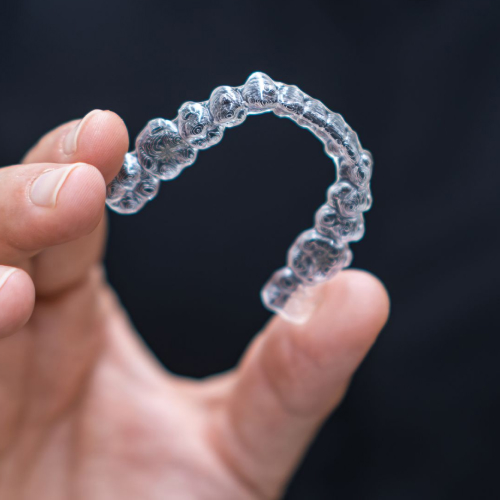
Why Your Invisalign Trays Aren't Fitting — And What to Do About It
Invisalign trays not fitting right in Long Beach? Learn why gaps happen, what tracking means, and when refinements are needed. Get answers from our dental team.
Read More
Most people think tooth loss starts with a cavity or a sudden accident. In reality, it often begins quietly in the gums. Gum disease is one of the leading causes of tooth loss in adults, and it usually progresses without pain in the early stages. By the time teeth start to feel loose or shift, the damage has often been building for years.
At Long Beach Family Dentist, we see this pattern often. Patients are surprised to learn that their teeth themselves were not the original problem. The issue started below the gumline, where infection slowly weakened the foundation that keeps teeth in place. Understanding how this happens can make a big difference in protecting your smile.
Teeth are not held in place by gums alone. They rely on a support system made up of bone, connective tissue, and ligaments that anchor each tooth securely in the jaw. Healthy gums act as a protective seal around this system, keeping bacteria out.
When gum disease develops, that seal begins to break down.
Gum disease starts with plaque, a sticky film of bacteria that forms on teeth every day. If plaque is not removed through proper brushing, flossing, and professional cleanings, it hardens into tartar. Once tartar settles below the gumline, brushing alone cannot remove it. This is where inflammation and infection begin.
Over time, the body’s immune response to this infection can actually cause more harm than good.
Gum disease affects much more than the surface of the gums. As bacteria spread below the gumline, they irritate the surrounding tissues and trigger chronic inflammation. This inflammation begins to break down the periodontal ligament and the bone that support the teeth.
Here is what typically happens step by step:
This is why gum disease is so dangerous. The damage happens out of sight, and once the supporting structures are compromised, saving the tooth becomes much more difficult.
Yes, and this is one of the most misunderstood aspects of gum disease. Teeth do not simply fall out overnight. Instead, untreated gum disease slowly weakens their foundation until they can no longer be saved.
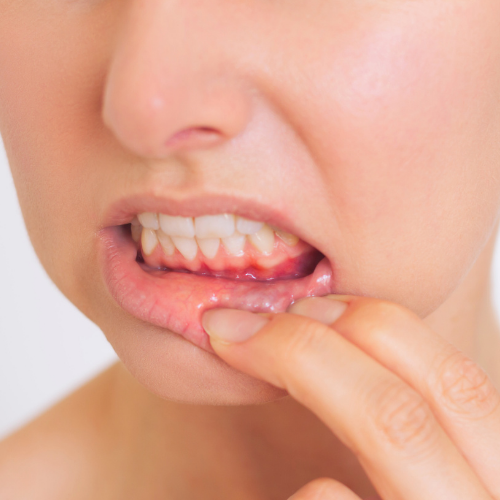
In the early stage, known as gingivitis, gums may bleed, swell, or appear red. At this point, there is no bone loss, and the condition is completely reversible with proper care.
When gingivitis is left untreated, it can progress to periodontitis. This is where long-term damage begins.
In periodontitis:
It is important to understand that tooth loss from gum disease is not always dramatic. Sometimes teeth are extracted not because they are painful, but because keeping them would lead to infection, further bone loss, or damage to nearby teeth.
The good news is that with early diagnosis and consistent care, gum disease can often be controlled before tooth loss occurs.
One of the reasons gum disease leads to tooth loss so frequently is that it often progresses quietly. Many people assume that if they are not in pain, everything must be fine.
Common misconceptions include:
None of these are true.
Healthy gums do not bleed regularly. Persistent bad breath can be a sign of infection below the gumline. Adult teeth are meant to last a lifetime, and looseness is always a warning sign.
Because gum disease often lacks severe pain in its early and middle stages, regular dental exams become essential. Dentists can detect gum disease long before symptoms become obvious.
While gum disease can be subtle, there are signs your body may be giving you. Paying attention to these changes can help prevent serious damage.
Common warning signs include:
It is especially important to take note if several of these symptoms appear together or worsen over time. Gum disease does not improve on its own. Without treatment, it almost always progresses.
Treatment for gum disease depends on how advanced it is at the time of diagnosis. The earlier it is caught, the simpler and more effective treatment tends to be.
Treatment options may include:
The goal of treatment is not just to improve how your gums look, but to stabilize the structures that keep your teeth in place.
Healthy gums do more than protect your teeth. They support your overall oral health and can even affect your general well being. Chronic gum infection has been linked to systemic inflammation, making gum care an important part of maintaining overall health.
Protecting your gums means:
At Long Beach Family Dentist, we focus on prevention just as much as treatment. Helping patients understand what is happening beneath the surface empowers them to make better choices for their smiles.
Gum disease does not have to lead to tooth loss. With early care, consistent monitoring, and the right treatment plan, it is often possible to stop its progression and protect your teeth.
If you have noticed bleeding gums, persistent bad breath, or changes in how your teeth feel, it is worth having them checked. Scheduling an appointment now could make the difference between preserving your natural teeth and facing more extensive treatment later.
Fresh news from the dental world






Mon 8AM - 5PM
Tue 8AM - 5PM
Wed-Thu 8AM - 5PM
Fri 8AM - 5PM
Sat 9AM - 3PM
Sun Closed
Check out what our patients are saying in Long Beach, CA...


“My favorite dentist...”
The service here is amazing and they make you feel comfortable. I'm one of those people that hates to go to the dentist and the dentists that I went to in the past were not that great with service. Overall I found my favorite dentist service now at Long Beach Family Dentist.

“Clean and friendly...”
Very clean and friendly crew. I really enjoyed myself.

“Answers any questions...”
I been a patient here for over twelve years. Andrea greeted me and got my folder set up. Toni is very friendly and answers any questions you have promptly, when I always come in she greets you with a smile and makes your appointment enjoyable. Today Jovani and Dr. Joan made this experience great. I recommend this dentist for new patients.

“A positive experience...”
Very clean and organized office! Entire staff was pleasant and friendly, and seems interested in ensuring I had a positive experience. Will definitely return! Affordable rates.
“My favorite dentist...”
The service here is amazing and they make you feel comfortable. I'm one of those people that hates to go to the dentist and the dentists that I went to in the past were not that great with service. Overall I found my favorite dentist service now at Long Beach Family Dentist.
“Clean and friendly...”
Very clean and friendly crew. I really enjoyed myself.
Check out our accreditations, sources, and relationships in the wide world of dentistry...


Check us out and follow our Long Beach, CA practice on social media...