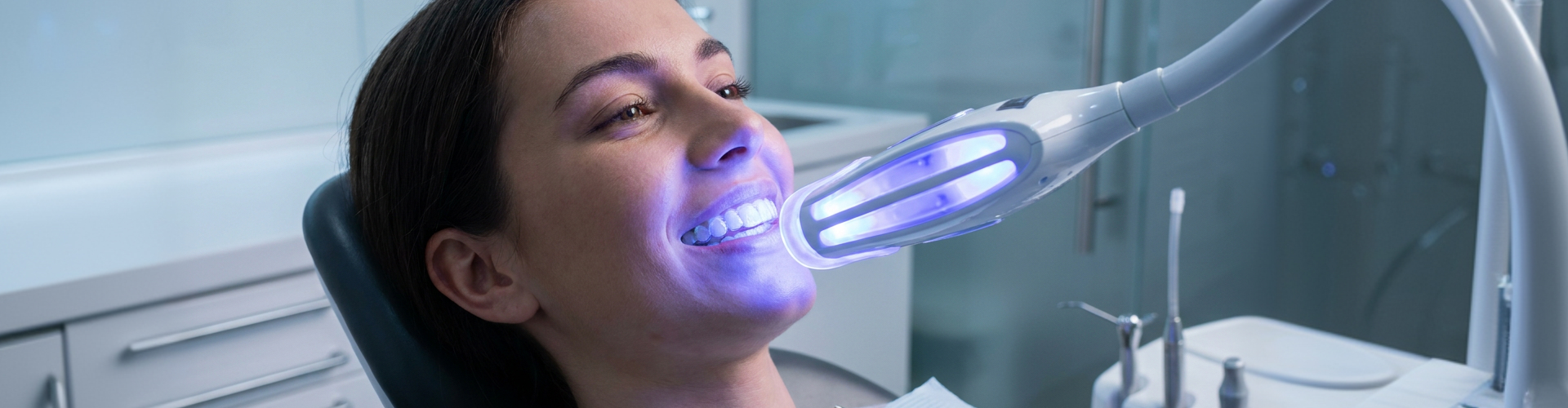
You can whiten your teeth during Invisalign treatment, and your aligners can actually double as bleaching trays — but the timing, the gel you choose, and how you manage combined sensitivity all matter. For Long Beach-area patients, here's what the science says about doing it safely and effectively.
The "Polka Dot" Fear: Will Attachments Block the Whitening?
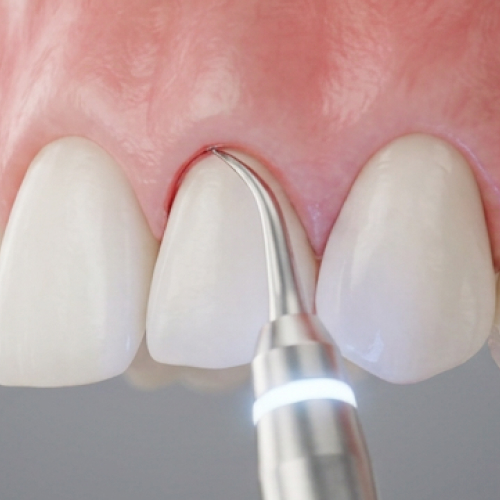
This is the question patients ask most — and it's a smart one. Invisalign attachments are small composite resin buttons bonded directly to tooth enamel. If whitening gel only worked on exposed surfaces, removing those attachments after treatment would reveal dark, unbleached squares surrounded by whiter enamel. That outcome would be cosmetically worse than not whitening at all.
The good news: that's not how professional-grade carbamide peroxide works.
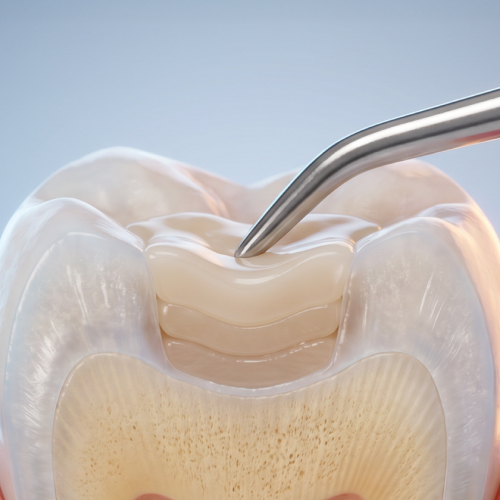
Research published in PubMed confirms that carbamide peroxide molecules are small enough to permeate tooth structure — including the enamel and dentin lying directly beneath a composite attachment. The oxygenation process isn't a surface scrub. It's a diffusion reaction that travels through the tooth itself. The area under the attachment whitens along with everything else.
This is sometimes called the "halo effect" — the whitening radiates outward from where the gel contacts the tooth, moving through the mineral lattice of enamel in all directions.
OTC whitening strips, however, do not work this way during aligner treatment. Strips adhere to the flat facial surface of teeth and cannot conform around attachments. The gel stays on exposed enamel only. If you use strips while wearing Invisalign, you are almost guaranteed to see uneven results when the attachments come off. This is one reason professional gel applied inside your own aligner tray is the clinically appropriate method — not strips or paint-on products.
The Sensitivity Stack: Managing Two Types of Pain at Once
Most whitening guides treat Invisalign soreness and whitening sensitivity as separate problems. For patients doing both simultaneously, that's an oversimplification that can lead to treatment dropout.
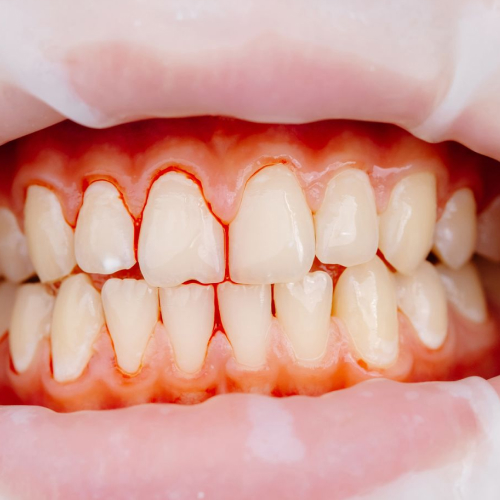
Invisalign causes mechanical sensitivity — pressure on the periodontal ligament as teeth shift position. This tends to peak in the first 24–72 hours after switching to a new tray. Whitening agents cause chemical sensitivity — hydrogen peroxide temporarily dehydrates dentinal tubules, creating a sharp, cold-triggered ache that's completely different in character.
When both are active at the same time, the compounded discomfort can make wearing the aligner feel unbearable. Patients pull their trays out early. Treatment slows. Results suffer on both fronts.
A practical management protocol for dual treatment:
- Wait 48 hours after a new tray swap before applying whitening gel. Let the mechanical soreness subside first.
- Pre-load with desensitizing toothpaste. Potassium nitrate blocks nerve signal transmission in dentinal tubules. Hydroxyapatite toothpastes physically occlude tubule openings. Using either for several days before a whitening session meaningfully reduces chemical sensitivity. A clinical trial published in PMC found that low-concentration carbamide peroxide significantly reduces sensitivity compared to higher-concentration alternatives — worth discussing with your dentist when selecting a gel.
- Whiten on "stable" tray days — days 4 through 12 of a two-week tray cycle tend to be the lowest-sensitivity window.
- Limit gel sessions to 30–60 minutes during active aligner treatment rather than overnight wear.
Healthline notes that tooth sensitivity and discoloration concerns are among the most common reasons patients pause or abandon orthodontic treatment. Managing both proactively keeps patients on track. Patients who stay consistent with their pro teeth whitening plan alongside their aligner schedule tend to see the best combined outcomes.
What Whitening Gel Does to Your Aligner Plastic
Most whitening content focuses entirely on the teeth. Almost none addresses what the bleaching agent does to the aligner itself — and this matters for treatment accuracy.
Invisalign trays are made from a proprietary multilayer thermoplastic polymer called SmartTrack. The trays work by applying precise, calibrated force to specific teeth. If the plastic degrades — becoming softer, more porous, or dimensionally altered — the force delivery changes, and tooth movement becomes less predictable.
An in vitro study published in PMC tested the effect of 10% carbamide peroxide on Invisalign physical properties over two weeks of simulated use. The results showed no statistically significant change in tensile strength or translucency. However, surface hardness decreased and surface roughness increased modestly. The conclusion: Invisalign can be used as a bleaching tray without excessive material distortion, but the interaction is not zero.
What this means practically:
- Use 10% carbamide peroxide, the ADA gold-standard concentration, rather than higher-strength hydrogen peroxide gels. Higher concentrations increase the chemical exposure to the plastic and offer no proven whitening advantage for at-home use.
- Avoid acidic whitening formulations. Some whitening gels use acidic stabilizers that can accelerate polymer degradation. A neutral-pH gel is the appropriate choice during aligner treatment.
- High glycerin content is problematic. Thick, glycerin-heavy gels may not distribute evenly inside the tray and can leave the aligner surface tackier over time.
- Don't whiten in a tray you'll keep wearing for another week. Apply gel in aligners toward the end of their two-week cycle, not in a fresh set you're relying on for precise teeth straightening tooth movement.
ADA News coverage of aligner research also highlights that aligners already reduce natural saliva flow across tooth surfaces — another reason maintaining aligner hygiene and choosing the right gel formulation matters more than patients often realize.
Is It Better to Wait Until After Invisalign Is Done?
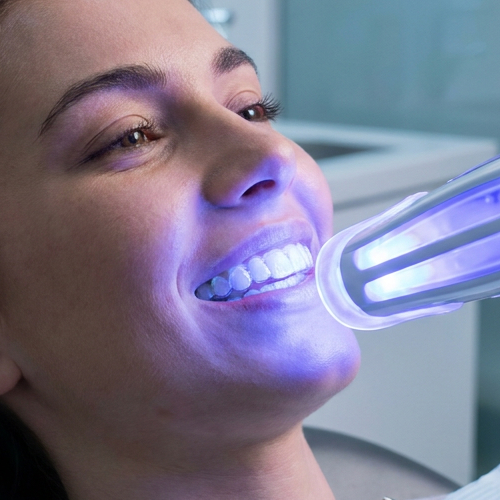
Waiting until after treatment has real advantages. Teeth are fully accessible, sensitivity from tray pressure is gone, and your dentist can deliver professional in-office whitening at a higher concentration safely. Final shade is also more predictable because the attachments have been removed and tooth surfaces are fully exposed.
That said, whitening concurrently with treatment is clinically viable and well-documented. Dental bleaching research in PubMed found no clinically relevant difference in whitening effectiveness between trays with reservoirs and Invisalign aligners used as bleaching trays — and patients reported complete satisfaction with results. The procedure also costs less and requires no additional clinical time when the aligner doubles as the bleaching tray.
The right answer depends on your specific situation:
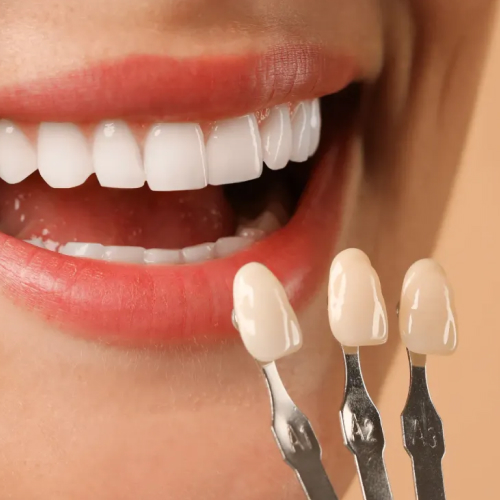
- If you have heavy extrinsic staining or significant discoloration goals, professional in-office whitening after treatment completion gives more control. Options like porcelain veneers may also be worth exploring for patients seeking a comprehensive smile transformation after orthodontic treatment.
- If your goals are moderate and you want to arrive at your retention phase already whitened, concurrent treatment is a reasonable, evidence-supported approach.
- If you have a high sensitivity baseline, waiting is the lower-risk path.
Your dentist should evaluate attachment placement, your current shade, sensitivity history, and tray stage before recommending a whitening timeline. A thorough cleaning and exam before starting any whitening protocol ensures your teeth and gums are in the best possible condition for treatment.
Ready to Whiten Smarter in Long Beach?
If you're currently in Invisalign treatment — or thinking about starting — the team at Long Beach Family Dentist can help you build a whitening plan that works alongside your orthodontic timeline, not against it. We serve patients throughout the Long Beach metro area and take the time to match gel concentration, timing, and sensitivity management to your specific case. Our aesthetic dentistry services are designed to complement every stage of your smile journey. Schedule a consultation to find out what your teeth are ready for.
This article is for informational purposes only and does not constitute dental or medical advice. Always consult a licensed dental professional before beginning any whitening or orthodontic treatment.