Professional whitening delivers real, lasting results — but it's not permanent, and it doesn't work equally on every type of stain. Understanding why tells you far more about what treatment you actually need than any before-and-after photo ever could. For a complete picture of your oral health, a cleaning and exam is always a smart starting point.
The 48-Hour Rebound: What Your Teeth Are Actually Doing After Whitening
One of the most common concerns I hear from patients is that their whitening "wore off" within days of treatment. For Long Beach-area patients, what they're describing is real — but it's not failure. It's chemistry.
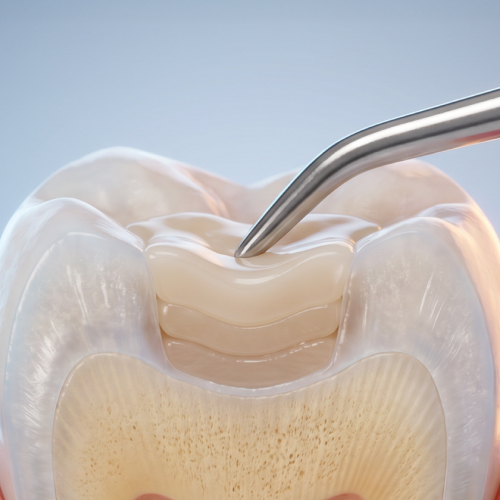
During professional whitening, the bleaching agent (typically hydrogen peroxide or carbamide peroxide) penetrates the enamel and oxidizes the chromogen molecules responsible for discoloration. Simultaneously, the process pulls moisture out of the tooth structure. Dehydrated enamel scatters light differently — it looks chalky, almost neon-white. That's the shade you see walking out of the chair.
Over the following 48 hours, saliva gradually rehydrates your enamel. The tooth regains its normal translucency, and the shade settles into something slightly less dramatic. This is not regression — this is your actual whitening result revealing itself.
According to Cleveland Clinic, professional treatments use stronger peroxide concentrations than any OTC product, which is why even the "settled" shade after rehydration is meaningfully brighter than where you started. The oxidation of chromogens is real and lasting. The desiccation effect is temporary.
So when patients ask me whether whitening is permanent — my honest answer is no, but for reasons that matter. Results from in-office bleaching typically hold for one to three years. Harvard Health notes that dentist-prescribed home bleaching can maintain results for roughly two years with good oral hygiene. Lifestyle habits — coffee, red wine, tobacco — accelerate re-staining by reintroducing chromogens onto enamel that has been opened up by the bleaching process. Touch-ups extend results significantly.
The permanence question is really a maintenance question.
When Whitening Makes Stains Look Worse, Not Better
Here's what most whitening content doesn't tell you: bleaching can make certain stains more visible, not less.
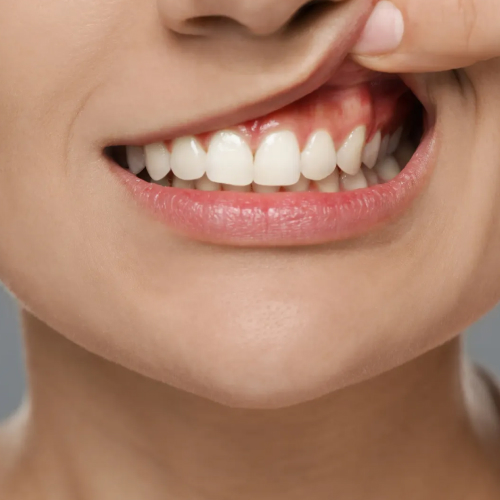
This happens with hypocalcification — white spots on enamel caused by braces, fluorosis, or developmental disruptions. These lesions have a different mineral density than surrounding enamel. When you bleach the entire tooth, the healthy enamel brightens. The hypocalcified spot, already lighter in color, doesn't respond the same way. The result is increased visual contrast between the spot and the surrounding tooth.
Brown or banded staining from tetracycline exposure presents a similar problem. As Healthline explains, tetracycline binds to calcium during tooth mineralization, embedding gray, brown, or yellow pigment below the gum line — before the tooth even erupts. These are intrinsic stains embedded in dentin, not surface chromogens. Standard bleaching agents work primarily on enamel-level oxidation. Tetracycline staining is highly resistant, and aggressive whitening attempts can paradoxically darken the banded appearance by contrast effects.
For patients with these presentations, I often recommend evaluating microabrasion or resin infiltration techniques before committing to whitening. Microabrasion removes a controlled layer of surface enamel to reduce the visual depth of hypocalcified lesions, evening out the canvas before brightening begins. In moderate-to-severe cases, composite bonding or porcelain veneers may be the only genuinely effective path forward — not because whitening "failed," but because there was never a pigment to oxidize in the first place.
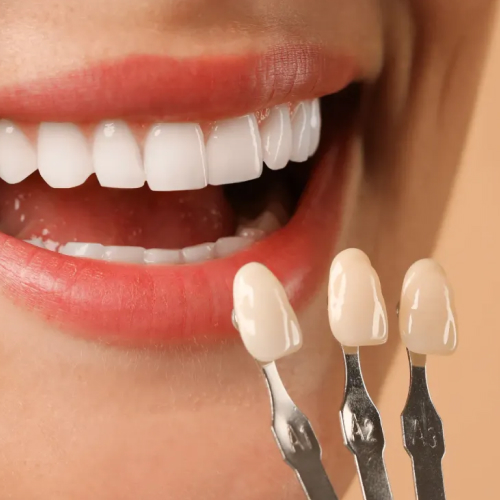
The ADA's overview on whitening confirms this distinction clearly: intrinsic stains require chemical reactions that change tooth color at a structural level, while extrinsic stains respond to surface-level bleaching. Knowing which type you have before starting treatment isn't optional — it's the difference between getting results and getting frustrated.
The Aging Tooth Problem: When the "Stain" Is Actually Your Skeleton Showing Through
Older patients sometimes tell me they've tried every whitening product available and seen minimal improvement. There's a structural reason for this that almost no one explains.
As we age, enamel gradually thins from decades of use. Simultaneously, the pulp chamber shrinks and secondary dentin — which is naturally yellow to brown — deposits along the inner walls of the tooth. The result is a tooth with less translucent enamel and more visible dentin underneath.
When patients in their 60s or 70s ask me why whitening isn't working, I explain that what they're seeing isn't a stain in the traditional sense. It's the tooth's internal architecture becoming visible through thinning enamel. Hydrogen peroxide oxidizes chromogens in enamel, but it cannot reverse the structural changes of aging dentin. There are no pigment molecules to break down — the yellow is the tooth's skeleton showing through.
Mayo Clinic's overview on whitening options acknowledges that professional treatments produce the most significant shade changes, but results vary depending on the underlying cause of discoloration. For aging-related dentin visibility, the conversation needs to shift from bleaching toward restorative options — composite bonding or veneers — that physically mask the dentin color rather than attempting to chemically alter it. In some cases, a tooth crown may also be an appropriate solution for restoring both appearance and function.
This doesn't mean whitening is useless for older patients. For those with meaningful extrinsic staining layered on top of age-related changes, bleaching removes the surface accumulation and does improve appearance. But managing expectations accurately is part of good clinical care.
How Professional Whitening Actually Removes Deep Stains
For stains that are genuinely bleachable — age-related yellowing, coffee and tea accumulation, tobacco-related extrinsic staining, mild intrinsic discoloration — professional whitening works through a well-established oxidation process.
In-office treatment uses hydrogen peroxide concentrations ranging from 25% to 40%, applied directly to the tooth surface with a protective barrier over gum tissue. The peroxide diffuses through enamel and breaks down the conjugated double bonds within chromogen molecules. Research published in PMC confirms that this oxidation converts large, dark-colored organic compounds into smaller, lighter ones — reducing the concentration of visible pigment within the tooth.
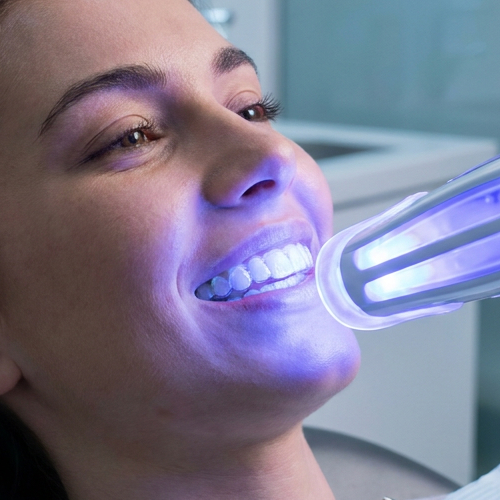
Light or heat activation accelerates the chemical reaction, which is why a single 60-minute in-office session can produce several shades of improvement. Custom tray whitening at home uses lower concentrations (typically 10–16% carbamide peroxide) over longer contact times — overnight wear allows deeper penetration at lower intensity, which is particularly effective for mild intrinsic staining. This approach is part of a broader range of aesthetic dentistry solutions available to patients seeking smile improvements.
Neither method works on restorations. Crowns, veneers, bonding, and tooth-colored fillings do not respond to peroxide bleaching. If you have visible restorations in your smile zone, whitening will brighten your natural teeth while leaving the restorations unchanged — creating a mismatch that may require replacing the restorations to match the new shade. Patients with missing teeth may also want to explore dental implants before finalizing any cosmetic treatment plan, to ensure a complete and consistent result.
The practical takeaway: professional whitening is highly effective for the right candidate with the right type of staining. The clinical evaluation before treatment matters as much as the treatment itself.
Ready to Find Out What Your Stains Actually Need?
Not every discolored tooth needs whitening — and not every whitening product will address your specific stain. At Long Beach Family Dentist, we evaluate the type, depth, and cause of your discoloration before recommending any treatment. Whether you're a Long Beach resident dealing with surface staining, tetracycline banding, or age-related dentin changes, we'll give you an honest assessment — and a plan that actually works for your teeth. Explore our pro teeth whitening service to learn more about what professional treatment can do for your smile.
Medical disclaimer: This article is written for general informational purposes and does not constitute clinical advice. Individual results vary. Consult a licensed dental professional before beginning any whitening treatment.