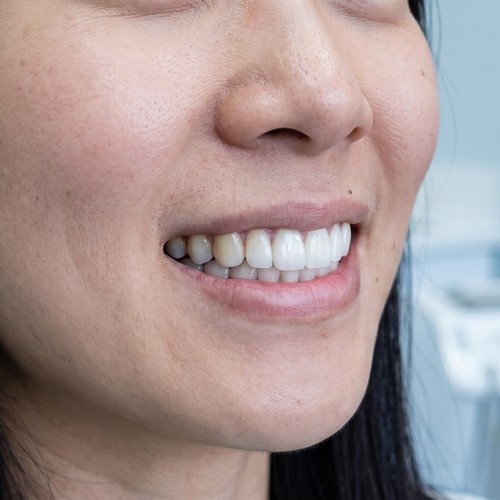
What Patients Ask Before Getting Veneers: Stains, Nightguards, and Whitening
Do veneers stain? Do you need a nightguard? Learn the facts about porcelain veneers and whitening. Schedule your consultation at Long Beach Family Dentist now!
Read More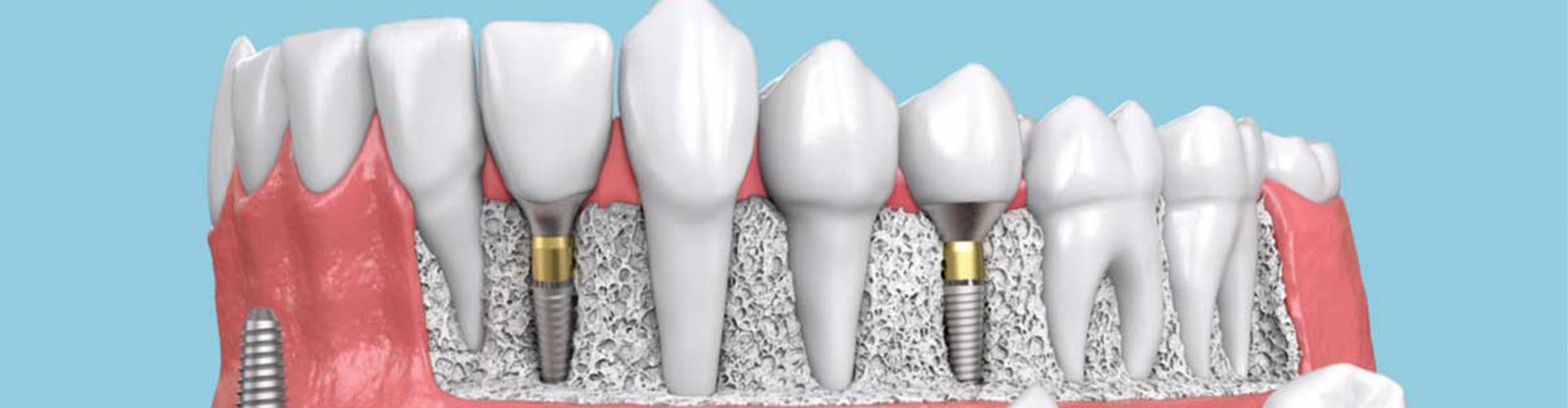
Dental implants, also known as tooth implants, are replacements for a missing or extracted tooth. They are primarily screw-like posts or are threaded in appearance. The dental implants are fixed or are fused into the alveolar bone surgically for over 3 to 4 months. This fusion of these implants is the closest to mimicking the normal function of the dentition. Dental implants provide superb strength and stability by holding the pontic tooth in place without disturbing the adjacent teeth. Types of dental implants Dental implants each have different coatings, connectors, and sizes that are recommended to the patient. Based on the placement of the dental implants in the oral cavity, there are two types of dental implants which are as follows: 1. Endosteal implants These dental implants are also known as endosseous implants. As the name indicates, it means the placement of the dental implants in the jaw bone. They are the most common type of dental implant and are usually used in the two-stage dental implant procedure. They are used in the place of complete or partial removable dentures and bridges. Endosteal implants are further classified into: · Screw-like (threaded) · Cylinder types (smooth) · Bladed types These dental implants are very biocompatible and do not react with oral fluids. They are mostly made of titanium which is the most suitable and biocompatible material for dental implants. Endosteal implants are deeply rooted in the gum surgically to replace the roots of the tooth. 2. Subperiosteal implants Subperiosteal refers to the rest of the implant on the jawbone under the gum tissue. These implants are less often used due to the poor long-term effects as compared to the endosteal dental implants. Subperiosteal implants are used when a healthy jawbone is not present to support the endosteal implant. These dental implants are placed on or above the jawbone rather than inside the jaw.
Reasons why dental implants are expensive Dental implants are the most suitable option when considering a replacement for a missing tooth. They do not come with additional costs, as in the case of bridges and dentures. Moreover, dental implants have a lifespan of 15 years or longer. No special equipment is required for their cleaning, just the regular tooth brushing and flossing. They do not abrade the opposing natural teeth. There are many reasons why dental implants are so expensive. They are mentioned as follows: 1. Surgical procedure The number one reason is the surgery that is involved. Since it is a surgery, it involves the staff during the operation, the materials used, and the medicines included. This surgery is also time, and the patient is billed for the amount of time taken for the surgery to be completed. This leads to the rise in the price of dental implants. 2. Longevity of the dental implants Dental implants are the permanent option for replacing a missing tooth. The patient would not have to worry about getting more implants. But getting an implant can be costly, so you should start saving up to get the treatment. The offset of this is that with age, it does not get challenging to take care of them. Dental implants are resistant to decay and damage and will last longer through even old age. The longevity of dental implants certainly helps them to be more cost-effective as time goes on. Although patients may feel as though they are paying a high price, they may save money down the line. Investing at the right time helps the treatment to be a better investment. 3. Superior to other options Apart from dental implants, the other options are not so promising and are not the permanent fix, too. There is an option to just leave the space in the mouth. Most people will not want to do this because it will affect many things in life, like speaking and eating. Another option is a dental bridge. The bridge will go across two natural teeth and allow the fake tooth to fit in between. Getting a bridge is also a costly procedure but not quite as expensive as the implants. It is not a permanent fix. The other problem with a bridge is that the dentist will probably have to do a bit of work on the other teeth to get the bridge to work. Then is the option of getting a partial denture. The partial denture will be the cheapest option, but it is also the hardest to take care of. The process is time-consuming, and most people do not want to deal with it for the rest of their lives. 4. Cosmetic procedure Many people get a dental implant not because they need to but because they want to. Since this is a cosmetic procedure, it is not covered by the insurance companies, and so it is quite costly. 5. Dentist labor Visiting a dentist is quite expensive in itself. The person to get to the level of a working dentist has to go through the years of dental school, so they are being compensated for their time as they are working on the implants. The labor for a dentist is high because of the education they had to go through to get to the point they are in life. Among all the medical professionals, only dentists are capable of installing dental implants. If a person is going to get dental implants, they naturally have to pay for them. 6. Additional features and procedures required When a patient gets dental implants, they will require some additional work. The first thing is to see if the person is even eligible for getting dental implants. The dentist takes an x-ray of the jaw to see if dental implants are suitable for the patient. If the jawline is not correct, then they are not an option. The appointments for these consultations, cleanings, teeth inspections, and x-rays are all going to add to the overall cost of the implants. 7. Multiple dentist appointments The implant procedure can't be completed in an hour or so. Most people expect that getting an implant is to go to the dentist and come out of the dental office in an hour with a new tooth replacement. But this is not the case. It requires multiple appointments for its completion. There are appointments before the implants are put in, then the surgery, and then the follow-up as well. The process is time-consuming and costly. The prices vary depending on the type of dental implant the person is getting and the length of the appointment. Some dentist offices group the entire package as one lump cost for implants. Others are going to charge individual amounts for each appointment on top of the total cost of the implant itself. 8. Titanium material Dental implants are made with solid titanium material. Titanium is difficult to manufacture, and it is made to last for a very long time. This makes the cost of the implant very high. In addition to the fact that the implants are made of a material that is difficult to manufacture, they also have to be made to fit a person exactly. When an implant is made, it has to go through an extensive process, and it must be manufactured to fit precisely as it needs to in a patient’s mouth. This process is time-consuming and costly.
To conclude: Dental implants are prostheses that are used to replace extracted or missing teeth. They are quite durable and are costly as well. They are expensive because of the surgery required, the dentist work, additional work done, it is not covered by the insurance companies, and it requires multiple appointments. But still, opt for dental implants because they, although expensive, are the permanent fix for a missing tooth. FAQs What are dental implants? Dental implants are dental prostheses used as a replacement for extracted or missing teeth. They are a permanent treatment and are superior to the other options available. They also have a lifespan of about 15 years and thus last longer even though old age. How much do dental implants cost? The average cost of dental implants varies. It includes the post, abutment, and crown placement. Bone grafting, tooth extraction, CT scan, and X-ray are paid for separately. What is the cheapest tooth implant? The cheapest tooth implant is the single unit implant that replaces a single missing tooth compared to implants for the whole arch or half arch, which includes implant-supported bridges or dentures.
Fresh news from the dental world





Mon 8AM - 5PM
Tue 8AM - 5PM
Wed-Thu 8AM - 5PM
Fri 8AM - 5PM
Sat 9AM - 3PM
Sun Closed
Check out what our patients are saying in Long Beach, CA...


“Answers any questions...”
I been a patient here for over twelve years. Andrea greeted me and got my folder set up. Toni is very friendly and answers any questions you have promptly, when I always come in she greets you with a smile and makes your appointment enjoyable. Today Jovani and Dr. Joan made this experience great. I recommend this dentist for new patients.

“Clean and friendly...”
Very clean and friendly crew. I really enjoyed myself.

“A positive experience...”
Very clean and organized office! Entire staff was pleasant and friendly, and seems interested in ensuring I had a positive experience. Will definitely return! Affordable rates.

“My favorite dentist...”
The service here is amazing and they make you feel comfortable. I'm one of those people that hates to go to the dentist and the dentists that I went to in the past were not that great with service. Overall I found my favorite dentist service now at Long Beach Family Dentist.
“Answers any questions...”
I been a patient here for over twelve years. Andrea greeted me and got my folder set up. Toni is very friendly and answers any questions you have promptly, when I always come in she greets you with a smile and makes your appointment enjoyable. Today Jovani and Dr. Joan made this experience great. I recommend this dentist for new patients.
“Clean and friendly...”
Very clean and friendly crew. I really enjoyed myself.
Check out our accreditations, sources, and relationships in the wide world of dentistry...


Check us out and follow our Long Beach, CA practice on social media...