What Patients Ask Before Getting Veneers: Stains, Nightguards, and Whitening
Do veneers stain? Do you need a nightguard? Learn the facts about porcelain veneers and whitening. Schedule your consultation at Long Beach Family Dentist now!
Read More
If you’ve already passed your teen years, you can still achieve your dream smile with braces and aligner treatment. If you were asked to imagine someone wearing braces, what would you picture in your head? Do you see a child with a full mouth of metal brackets and rainbow elastic bands? Or perhaps a teenager trying to hide their smile behind closed lips? However, you most likely didn’t picture an adult. Braces and other teeth straightening treatments are typically seen as a teen treatment. Why is that? When children are about seven years old, their dentist will want to perform a comprehensive orthodontic exam of their mouth. This allows us to ensure that their smile is developing as it should or make plans if trouble arises. If their permanent teeth are going to come in crooked, crowded, or have difficulty erupting at all, we can start preparing for their braces treatment. What age is best for braces? In general, the best time to correct a patient’s smile is between 8 and 14. Baby teeth are falling out, permanent ones are emerging, and the jaw is still growing. This makes it easier to move the teeth and jaws where we want them with less pressure and time required. But not everyone gets braces during their preteen and adolescent years. Once people enter adulthood, they often wonder if their window of opportunity is gone and they missed it. Is it normal for adults to get braces? Absolutely! It will just take a little more time and pressure to get the job done. By the end, you’ll still achieve the same braces before and after at age 35 or 45 that you would have at 11 or 12 years old. These days, more adults than ever are straightening their smiles with the help of an orthodontist. About 1 in 5 people over the age of 18 are currently getting orthodontic work done. You most likely have a friend, coworker, or loved one who has spent some time correcting their teeth with braces or clear aligners. What Type Of Braces Are Best For Adults? Even as an adult, you still have several types of braces to choose from. What’s best for you depends on both your smile’s individual needs and your preferences.
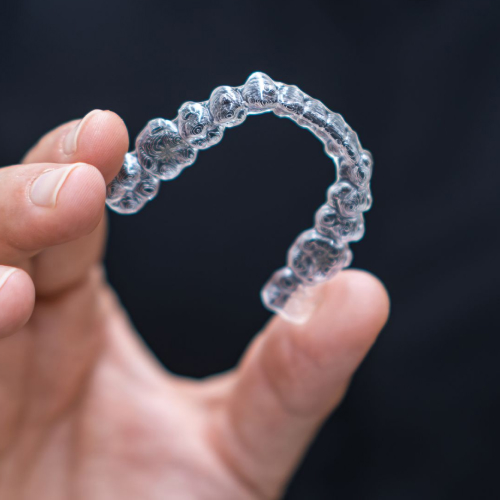
Invisalign Having multiple braces colors may seem fun and creative when you’re a kid or teen, but many adults instead prefer a completely invisible braces look. Invisalign is a completely metal-free treatment that uses a series of custom-fit transparent trays to shift your smile’s alignment. Each of these trays focuses on a specific and different area of your mouth. By switching them out every two weeks for the next in the series, an orthodontist can streamline the straightening process. This pressure is much more gradual and gentler than traditional braces, making it the quickest to adjust to wearing. Invisalign is great for correcting mild to moderate alignment problems, from crookedness and crowding to overbite and gapped teeth. Clear aligners are typically completed faster than bracket braces. While brackets and wires gradually tighten teeth into alignment in 18 months to 3 years, Invisalign often requires only eight to eighteen months. Some patients with milder malocclusions may need as few as six months with aligners. However, if a patient needs more extensive work done, aligners may not be enough to correct their smile fully. Invisalign often has trouble with specific bite problems in particular: Severely rotated teeth Teeth that need to be moved vertically Wide gaps between teeth One of the greatest advantages of Invisalign is that it is easily removable. It also only needs to be worn for 22 hours each day, so you have two hours to take them out for mealtimes and dental hygiene. Just be sure to rinse them with cool water before putting them back in, or else you may run the risk of developing cavities. Clear aligners aren’t typically recommended for children who are likely to forget to put them in after eating or in the morning. However, this isn’t usually a problem for older patients. Pros: Removable Quicker treatment duration Almost invisible look Easiest to adjust to wearing Fewer visits to your orthodontist No dietary restrictions Most comfortable to wear Easiest to clean and maintain Cons: Can be misplaced or lost Cannot fix severe orthodontic issues Least durable Can stain Traditional Metal Braces Of course, you can instead have a traditional set of metal teeth braces. Using a system of brackets bonded to your teeth’s fronts and wired threaded through them, you can gradually push your teeth into their correct positions. Unlike aligners, bracket braces shift every tooth at once with equal force, which can allow it to take on some of the most severe orthodontics issues with ease. For example, Invisalign can’t move teeth vertically or rotate them more than 20 degrees, but braces can. This comprehensive approach means that the teeth straightening process is typically more uncomfortable and takes longer to adjust. Patients will need to see their dentist for a tightening appointment every four to six weeks. Additionally, it will take an average of 18 months to 3 years to complete your braces treatment. However, this longer timeline is well worth it as you have a beautiful smile you can’t help but love to show off to friends, family, and coworkers! Pros: Compulsory treatment Can tackle severe orthodontic problems You can choose your braces colors Most durable and unlikely to break or crack Cons: Obtrusive appearance Food restrictions Brackets and wires can be abrasive More drastic and uncomfortable tightening Longer treatment timeline Clear Braces Not to be confused with aligners, clear braces still use wires and brackets. However, they replace their metal brackets with clear or tooth-colored ceramic ones, allowing your treatment to be much less noticeable. While not near-invisible like Invisalign, ceramic braces can mask your treatment so that it blends in with your teeth. For our older patients who want to appear mature and professional, this can be invaluable. When it comes to adult braces, ceramic is the most popular option. Even A-listers like Tom Cruise have been known to use them! Clear braces can still take on even extreme bite problems with ease, just like metal ones. Ceramic also isn’t porous, so it’s highly resistant to staining at all. However, the clear elastic ligatures we use aren’t quite as impervious. While the effects are generally mild, if you want your treatment to blend in with your smile, you may want to avoid foods that are notorious for staining teeth, like coffee. Pros: More aesthetic appearance than metal braces Compulsory treatment Can tackle severe orthodontic problems Durable and unlikely to chip or crack Won’t stain Cons: Not as strong as metal braces Food restrictions Brackets and wires can be uncomfortable More drastic and uncomfortable tightening Longer treatment timeline
What Can You Not Eat While Wearing Braces? With both metal and ceramic braces, there are some foods you want to be wary of. Dental bonding and wire are strong, but they’re not invincible against the force of your bite. Eating the wrong snack with the right amount of pressure can bend wires, pull off elastics, and even pop your brackets clean off your teeth. You will need to avoid biting into: Hard foods like nuts and ice Crunchy foods like popcorn and chips Chewy foods like bagels and chewy candies Sticky foods like taffy and gum with sugar Foods you need to bite into, like apples, corn on the cob, carrots, and meat on the bone, are dangerous for bracket braces, but they aren’t off the table entirely. With these snacks, you’ll need to cut them into smaller and more manageable pieces that you can easily pop into your mouth. Clear aligners are removed for mealtimes, so there are no food restrictions like with traditional bracket braces. However, you must take them out whenever you are going to eat or drink anything other than water. Otherwise, you may permanently stain your trays, ruining their discreet look and taking away one of Invisalign’s greatest advantages. How Much Do Braces Cost? Thanks to orthodontics' advancement in the last few decades, braces, both metal and ceramic, and Invisalign cost about the same amount. When calculating your chosen treatment's price, an orthodontist will primarily look at the procedure's duration and your bite's severity. Orthodontics is often covered by dental insurance, especially if you have a full-coverage plan. Here at Long Beach Family Dentist, we accept all dental PPO plans and are in-network for Cigna, Aetna, Principal, United Concordia, United Healthcare, and Liberty. Our dental office is also in-network for Cigna HMO and offers in-house dental discount plans and indemnity insurance plans. We want to allow our patients the best opportunity for wholly affordable orthodontic care. Are you ready to finally correct your smile with braces or Invisalign treatment? You can schedule an appointment with our Long Beach orthodontists by calling us at (562) 999-3602 today!
Fresh news from the dental world





Mon 8AM - 5PM
Tue 8AM - 5PM
Wed-Thu 8AM - 5PM
Fri 8AM - 5PM
Sat 9AM - 3PM
Sun Closed
Check out what our patients are saying in Long Beach, CA...


“Answers any questions...”
I been a patient here for over twelve years. Andrea greeted me and got my folder set up. Toni is very friendly and answers any questions you have promptly, when I always come in she greets you with a smile and makes your appointment enjoyable. Today Jovani and Dr. Joan made this experience great. I recommend this dentist for new patients.

“Clean and friendly...”
Very clean and friendly crew. I really enjoyed myself.

“A positive experience...”
Very clean and organized office! Entire staff was pleasant and friendly, and seems interested in ensuring I had a positive experience. Will definitely return! Affordable rates.

“My favorite dentist...”
The service here is amazing and they make you feel comfortable. I'm one of those people that hates to go to the dentist and the dentists that I went to in the past were not that great with service. Overall I found my favorite dentist service now at Long Beach Family Dentist.
“Answers any questions...”
I been a patient here for over twelve years. Andrea greeted me and got my folder set up. Toni is very friendly and answers any questions you have promptly, when I always come in she greets you with a smile and makes your appointment enjoyable. Today Jovani and Dr. Joan made this experience great. I recommend this dentist for new patients.
“Clean and friendly...”
Very clean and friendly crew. I really enjoyed myself.
Check out our accreditations, sources, and relationships in the wide world of dentistry...


Check us out and follow our Long Beach, CA practice on social media...