Root Canal vs Tooth Extraction
Comparing a root canal and tooth extraction? Learn how dentists choose the right treatment and the pros and cons of each option.
Read More
Don’t worry any longer about if you’ve missed out on getting the proper treatment your family needs! While there’s no wrong age to correct your teeth, the absolute best time is between ages 8 and 14. Children have lost most of their baby teeth, and many or all of their permanent teeth have come in. Their jaw is also still developing, making it easier for our orthodontists to gently correct their smiles. There are two primary phases of childhood orthodontic treatment—Phase I and Phase II—and each has its own optimum time. Phase I orthodontics, or early intervention treatment, is for children ages 6 to 10 years old who need to correct severe issues before all of their permanent teeth come in. These issues include crowding, gaps between teeth, and bite problems, which can damage a child’s teeth or prevent those last few teeth from coming in. Phase I usually sticks to limited dental appliances like palate expanders and partial braces. Phase II is usually done when children are older, often ages 11 to 14 years old, and their full set of adult teeth have emerged. This phase tends to involve full braces or Invisalign treatment. Afterward, your child will need a retainer to ensure their hard work lasts. Just as their teeth and jaws can be made malleable to our orthodontists’ needs, they can also start to move back to their original positions without a dental device to keep everything where we want them.
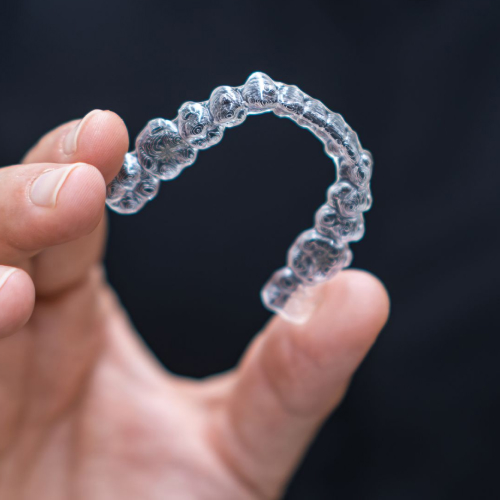
Invisalign vs Braces For My Child Even if your child is at the perfect age for orthodontic treatment, it can be difficult to choose the right procedure for them. Here at Long Beach Family Dentist, our orthodontists have two main methods to perfect your child’s smile: bracket braces and Invisalign. Bracket Braces Bracket braces straighten your child’s teeth using a complex system of brackets cemented to the fronts of their teeth and wires connecting them all. The wires are tightened with every visit to our Long Beach dental office, allowing them to gradually push your child’s smile into alignment. Brackets are the most effective way to tackle even the worst orthodontic problems, such as severe bite and jaw alignment problems and There are two types of bracket braces: metal braces and clear braces. Metal braces are what we typically think of when someone mentions braces—metal brackets and wires held in place with colorful elastic bands. While some children don’t want to show off their orthodontic treatment, others love the opportunity to express themselves and their style with the colors they choose. Clear braces go for a more understated look. These brackets are made of either clear or tooth-colored ceramic and elastics with a thinner wire to make your treatment much less noticeable. Ceramic braces are not as strong as metal, so you should make sure your child takes good care of them and watches what they eat to prevent potential chipping or a bracket popping off. Invisalign Invisalign is the completely unnoticeable treatment that is becoming increasingly more popular with kids and teens. While often thought of as “invisible braces,” Invisalign doesn’t actually use braces but instead what the dentistry world calls “clear aligners.” Clear aligners straighten our patients’ smiles by using clear plastic trays designed to fit their smile. Every two weeks, your child will replace their current aligner with the next in a series, allowing our orthodontists to push their teeth into place gently and efficiently. Not only are clear aligners more comfortable, but they also look better than even ceramic braces. Invisalign trays are also completely removable. They only need to be worn at least 22 hours each day to get the best results, meaning your child can take them out for meals and when brushing and flossing their teeth. Your child can be free to eat their favorite foods without worrying about bending a wire or popping a bracket. Just be sure they rinse their aligners with water before popping them back in to prevent plaque from building up. We want to make sure your child’s smile stays healthy and cavity-free throughout their treatment. Which Is Better: Braces or Invisalign? The answer to this question depends on what both you and your child are looking for in their treatment. For more moderate alignment issues, Invisalign is the fastest treatment around, often taking only 12 to 18 months to complete. Less severe problems can be fixed even quicker, lasting as little as 6 months before your child’s smile looks incredible. Ceramic and traditional braces are instead better for tackling more serious alignment problems because they are more comprehensive in their treatments. Both treatments take an average of 18 months to 3 years. Additionally, some children love the look of metal braces while others want their treatment to be less noticeable. While Invisalign is entirely unnoticeable, you should also take into account that they’re also removable. It can be hard for some children to remember to wear their aligners, or they easily lose their trays. In these cases, a permanent treatment is better for ensuring they never lose their progress or need replacement aligners made.
Frequently Asked Questions Why do I need an orthodontist? If you have any issues with the misalignment of your teeth or bite, your dentist will want to refer you to an orthodontist. Orthodontists are specially trained and experienced in gently and painlessly shifting your teeth and jaw into place until you have a picture-perfect smile. Orthodontists are experts in all varieties of teeth straightening methods, from braces and expanders to clear aligners and fixed retainers. You may need an orthodontist if you have these issues: Crooked and misaligned teeth Crowding Overbite Underbite Crossbite Open bite Other jaw misalignment Braces and Invisalign treatments don’t just help a smile look pretty. They can help improve your speech and eating. Often, mild speech impediments are reduced if not completely corrected with orthodontic treatment. Additionally, a straight smile can make it easier for you to clean your teeth, protecting them from decay, cavities, and gum disease. This can save you and your family quite a bit in the long run without constant fillings, crowns, or periodontal procedures. Plus, many patients—children, teens, and adults—experience a boost in the confidence and self-esteem with a healthy, beautiful smile that they’re proud to show off. Is it too late to straighten my teeth? Many patients are concerned that they’ve missed their window of opportunity to achieve a beautiful, straight smile. While your mouth may not be as in flux and your bones are denser and harder than a child or teen’s, that doesn’t mean that they’re not able to be moved. A little more pressure is needed for adult braces to get your teeth gradually shifting where you want them. Your treatment may take longer to prevent potential damage from this extra force. However, this is nothing to be scared about, as your orthodontist is an expert in treating patients of all ages. You can rest assured that they will make sure to keep your procedure gentle and as discomfort-free as possible. How much do braces cost? Your braces cost depends on the type of teeth braces you choose and the length of your orthodontic treatment. Ceramic braces are a bit more expensive than traditional braces, but this difference in price is minimal. And with the increasing popularity of clear aligners over the years, braces and Invisalign cost about the same amount now. As with standard braces, the exact cost of your aligners depends on how long you will need treatment. The longer you need treatment, the more aligner trays your orthodontist will need to make. Luckily, Invisalign work is typically months faster than both metal and clear braces, so you won’t have to worry. However, if you have any concerns about affordable orthodontic treatment, you can call our Long Beach office at (562) 999-3602. We'll schedule a consultation with one of our expert staff members to discuss your smile's specific needs, your procedure plan, and our office's financing options. We'll do everything we can to work with you and ensure that your treatment is always affordable. Is early orthodontic treatment necessary? While many of our young patients can wait until all of their adult teeth come in, some need earlier orthodontic treatment before all of the players are in the game. This prevents more severe problems occurring later, such as tooth impactions, damage to nearby teeth, and recurring pain and infection. For children with excessive crowding or spacing between their teeth, braces are needed to make sure that there's enough room for those last few straggling teeth to come in. With some overcrowding cases, particularly if a child has too many teeth, some treatments may include a dental extraction or a palate expander to widen the mouth. Your Long Beach orthodontist may also recommend early treatment with serious bite problems, including underbites, crossbites, and open bites.
Fresh news from the dental world




Mon 8AM - 5PM
Tue 8AM - 5PM
Wed-Thu 8AM - 5PM
Fri 8AM - 5PM
Sat 9AM - 3PM
Sun Closed
Check out what our patients are saying in Long Beach, CA...


“Answers any questions...”
I been a patient here for over twelve years. Andrea greeted me and got my folder set up. Toni is very friendly and answers any questions you have promptly, when I always come in she greets you with a smile and makes your appointment enjoyable. Today Jovani and Dr. Joan made this experience great. I recommend this dentist for new patients.

“Clean and friendly...”
Very clean and friendly crew. I really enjoyed myself.

“My favorite dentist...”
The service here is amazing and they make you feel comfortable. I'm one of those people that hates to go to the dentist and the dentists that I went to in the past were not that great with service. Overall I found my favorite dentist service now at Long Beach Family Dentist.

“A positive experience...”
Very clean and organized office! Entire staff was pleasant and friendly, and seems interested in ensuring I had a positive experience. Will definitely return! Affordable rates.
“Answers any questions...”
I been a patient here for over twelve years. Andrea greeted me and got my folder set up. Toni is very friendly and answers any questions you have promptly, when I always come in she greets you with a smile and makes your appointment enjoyable. Today Jovani and Dr. Joan made this experience great. I recommend this dentist for new patients.
“Clean and friendly...”
Very clean and friendly crew. I really enjoyed myself.
Check out our accreditations, sources, and relationships in the wide world of dentistry...


Check us out and follow our Long Beach, CA practice on social media...