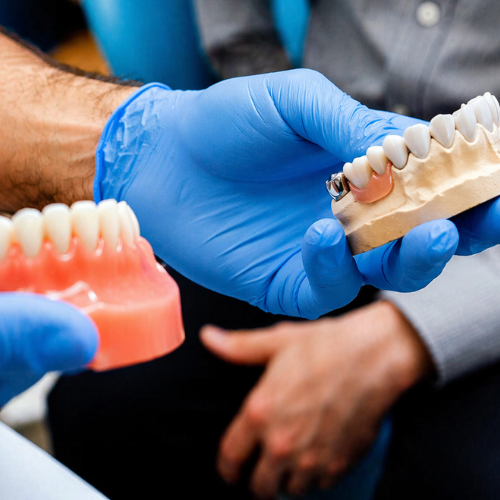
Closing the Gap Without Overthinking It
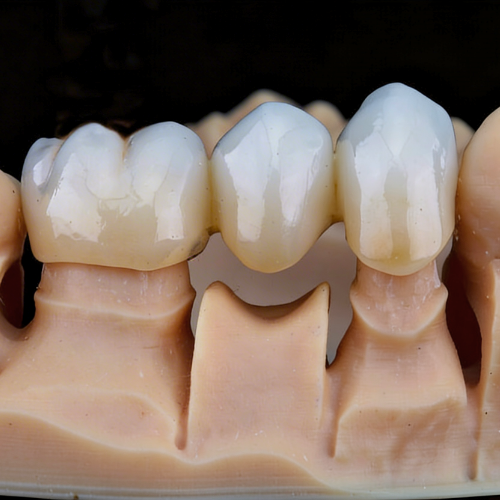
Learn how a dental bridge replaces a missing tooth, how long it lasts, and whether it is the right fit for your smile.
Read More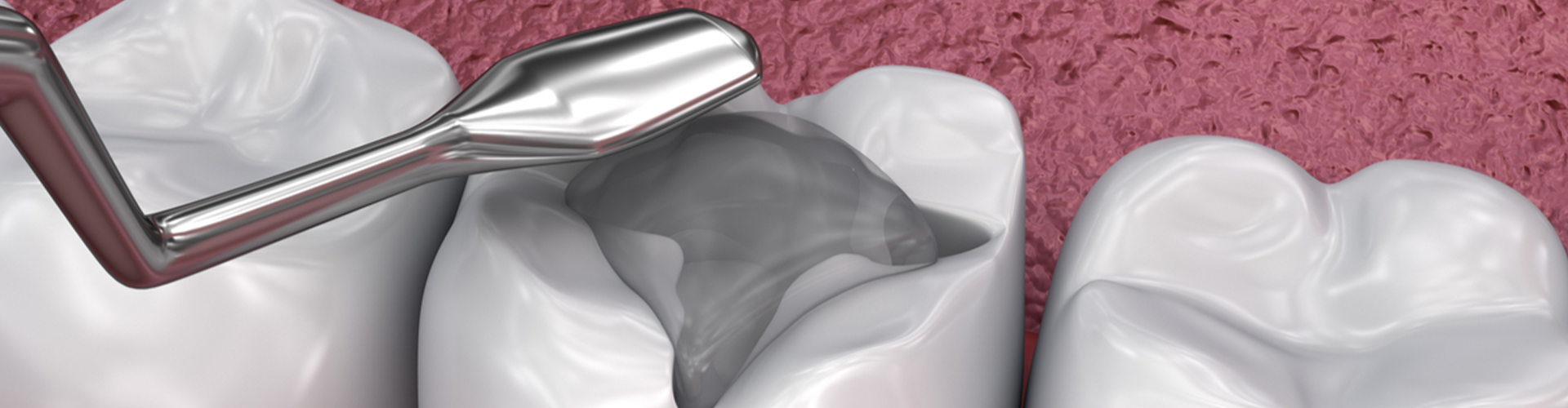
For over a century, amalgam fillings, also known as silver fillings, have been used to restore decayed or broken teeth. The presence of mercury in amalgams has led to some bad press in the past. Mercury makes up roughly 50 percent of amalgam, while tin, copper, silver, and zinc make up the remainder. Some people may not feel comfortable with mercury in their mouth because they are concerned about mercury poisoning, however, mercury levels in amalgam fillings have been deemed safe for people over six years of age. A silver amalgam filling will darken over time as it ages. Since the fillings are relatively conspicuous, some may find them unsightly. You might also consider replacing an old filling that is at risk of causing secondary decay or fracturing your teeth. However, it is your personal decision to retain amalgam fillings. Is it safe to have amalgam fillings removed? Even though the mercury in amalgam is toxic, if your amalgam fillings are in good condition and are not worn, chipped, or broken, it is recommended that those fillings remain in place and not be replaced. Fillings that become worn out, allowing decay to enter your tooth, need to be replaced before bacteria can enter deeper tooth structures, resulting in expensive treatment or tooth loss. Amalgam fillings last around 10 years. If your amalgam filling is in good condition and there is no decay beneath it, removing it is not recommended. Taking out intact amalgam fillings may result in you losing healthy tooth structure and possibly exposing you to mercury vapor. Any person with intact amalgam fillings, including pregnant or nursing mothers and children, should not have them removed in order to prevent a disease or health condition unless a healthcare professional believes it is medically necessary. If you have a health condition (especially having sensitivity or allergy to mercury, neurological, or kidney disease), then you should discuss the need for removal and replacement with your dentist or physician.
Comparison between composite and amalgam Based on their features, you might guess some positives and negatives, but let's dig deeper. Amalgam Fillings Advantages *Amalgam is very durable and can last for a decade or more if properly managed. *Amalgam fills relatively large cavities within teeth because of its strength. *Budget-conscious patients can benefit from amalgam fillings because they are less expensive. *Their fast hardening ability can make treatment less stressful for kids and people with special needs. Disadvantages *The ADA has deemed amalgam safe but requires removing more tooth structure due to its mercury content. *Patients with metal allergies may experience adverse reactions to amalgam in rare cases. *If you open your mouth wide, they are very noticeable, even on the back teeth. *Temperature exposure can cause amalgam fillings to expand and contract, causing fractures. *There are some dentists who do not perform amalgam fillings anymore. Composite Fillings Advantages: *Due to their ability to match the color of your natural teeth, they seem practically invisible. *Cavities that are small or moderate in size can be filled with them on the front or back of the tooth. *The resin compound bonds well to tooth enamel, making it less likely for fillings to come loose. *Additionally, they can be used to fix superficial flaws, such as a small chip in a tooth. *Furthermore, they are not affected by temperature or susceptible to contractions or expansions. Disadvantages *On average, they last five to seven years or about half the lifespan of amalgam fillings. However, the cost is higher than that of amalgam fillings. *Placement takes longer, which could cause worry for children or patients with dental anxiety or special needs. Which filling is better composite or amalgam? When you smile or laugh, a tooth near the front of your mouth that is easily visible will look more natural with a composite filling. An amalgam filling is preferred for teeth in the back of the mouth that have more significant decay since it is durable and long-lasting. Consider a dental crown, inlay, or onlay as an alternative if you are worried about the aesthetics or the mercury content of fillings. Should I replace amalgam fillings with composite? Well, if your metal fillings are getting old, it might be the right time to replace your old metal fillings with tooth-color matching composite fillings. Because amalgam fillings are not bonded to the tooth, they can leak over time.
Are dental amalgams considered safe? Even though dental amalgam is a safe, commonly used dental material, you may wonder how much mercury is in it. You should know that it is considered a safe, stable material when mixed with other metals. Studies confirm that amalgam is safe and effective for filling cavities. Dental amalgam is also considered safe and effective as a cavity-filling material by the American Dental Association, the Centers for Disease Control and Prevention, and the World Health Organization based on extensive scientific evidence. Organizations like the American Dental Association, the American Academy of Pediatrics, the Autism Society of America, and the National Multiple Sclerosis Society also state there is no health risk associated with amalgam. Always consult with your dentist about your specific situation before beginning any dental work. The Mayo Clinic's position on dental amalgam is that it is a safe and durable option for fillings. In addition, they note that there are several types of mercury. The methylmercury found in water that builds up in fish and can pose health problems if taken in large quantities is not the same type of mercury used in amalgam. The ADA supports the continued research on all dental filling materials and will alert the general public if the government regulators or scientific community determine that any material is unsafe for dental cavity filling. A dentist's top priority is the health and safety of you and your family. Therefore, the American Dental Association encourages you to discuss cavity treatment options with your dentist to decide what is right for you.
Fresh news from the dental world







Mon 8AM - 5PM
Tue 8AM - 5PM
Wed-Thu 8AM - 5PM
Fri 8AM - 5PM
Sat 9AM - 3PM
Sun Closed
Check out what our patients are saying in Long Beach, CA...


“My favorite dentist...”
The service here is amazing and they make you feel comfortable. I'm one of those people that hates to go to the dentist and the dentists that I went to in the past were not that great with service. Overall I found my favorite dentist service now at Long Beach Family Dentist.

“Clean and friendly...”
Very clean and friendly crew. I really enjoyed myself.

“A positive experience...”
Very clean and organized office! Entire staff was pleasant and friendly, and seems interested in ensuring I had a positive experience. Will definitely return! Affordable rates.

“Answers any questions...”
I been a patient here for over twelve years. Andrea greeted me and got my folder set up. Toni is very friendly and answers any questions you have promptly, when I always come in she greets you with a smile and makes your appointment enjoyable. Today Jovani and Dr. Joan made this experience great. I recommend this dentist for new patients.
“My favorite dentist...”
The service here is amazing and they make you feel comfortable. I'm one of those people that hates to go to the dentist and the dentists that I went to in the past were not that great with service. Overall I found my favorite dentist service now at Long Beach Family Dentist.
“Clean and friendly...”
Very clean and friendly crew. I really enjoyed myself.
Check out our accreditations, sources, and relationships in the wide world of dentistry...


Check us out and follow our Long Beach, CA practice on social media...